




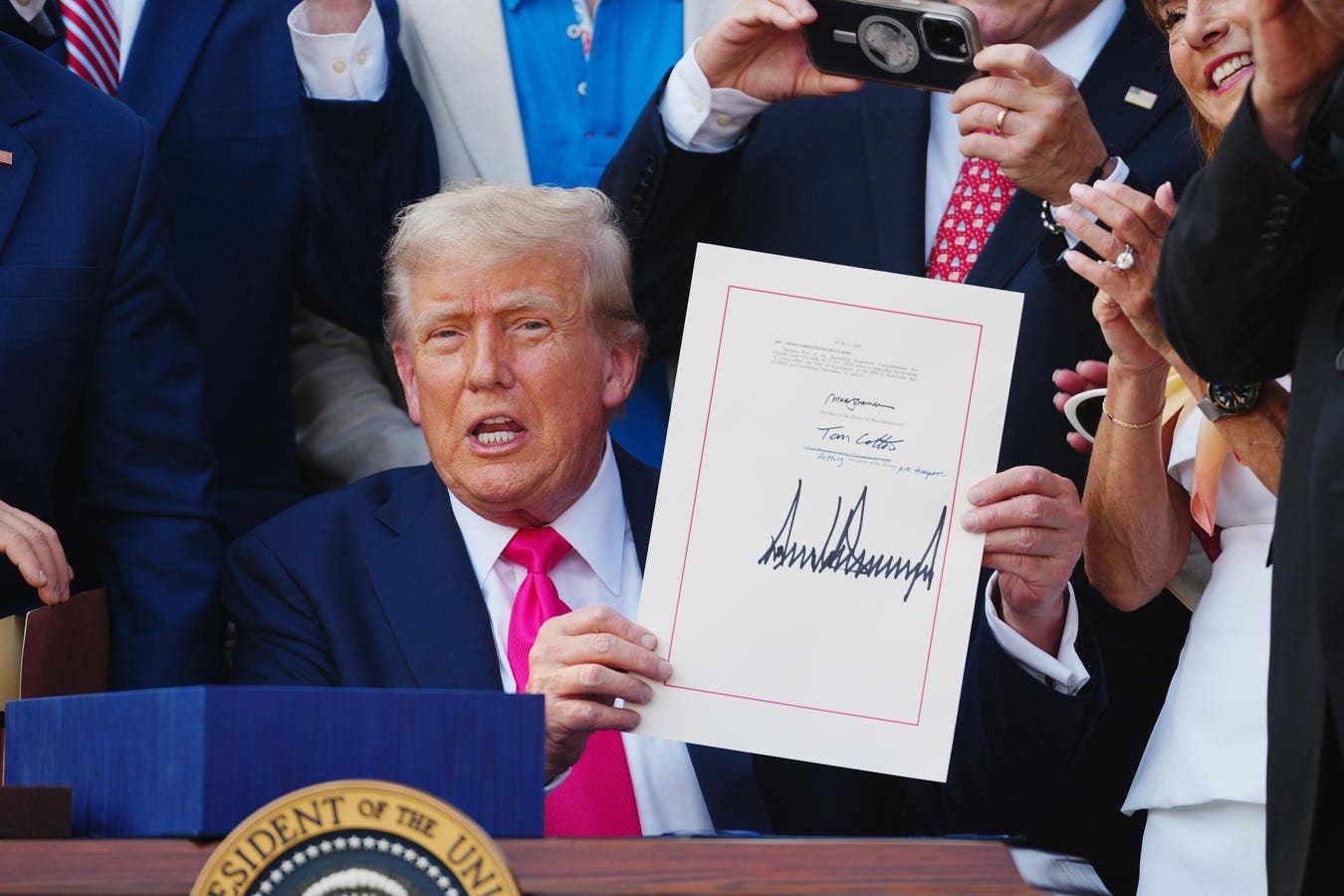
Federal student loans are in the midst of the most significant changes in a generation after Republican lawmakers in Congress and the Trump administration signed the “One Big, Beautiful Bill Act” last summer. The legislation enacts massive reforms to student loan programs. The Education Department is now rushing to finalize new rules and regulations implementing the OBBBA that will transform repayment and loan forgiveness.
While the changes under the OBBBA will be phased in over the course of the next two and a half years, a major cutoff is only six months away. That July 1, 2026 deadline will essentially divide student loan borrowers into two distinct groups, with very different rights and responsibilities when it comes to their student loans.
“In July 2025, President Trump signed into law a massive legislative package that makes major changes to federal higher education policy. The law restructures the federal student loan repayment system,” said The Institute for College Access and Success in a blog post earlier this month. “The Education Department is in the midst of a regulatory process to more clearly define how these changes will be implemented. These changes will go into effect at various dates between now and July 2028. The law divides borrowers into two categories based on when they took out their loans. Borrowers with loans taken out before July 1, 2026, will retain access to some existing plans but lose access to others. Borrowers who take out loans after July 1, 2026 will have fewer options.”
Here’s what student loan borrowers should know about the July 1, 2026 cutoff, and what you should do to avoid restricting your options for repayment and student loan forgiveness.
Student Loans Taken Out Prior To July 1, 2026
Borrowers who have federal student loans that were disbursed prior to July 1, 2026 will be able to retain access to at least some existing repayment and student loan forgiveness options.
Currently, there are nearly a dozen federal student loan repayment plans. These include repayment plans designed to pay off student loans in full over time, such as the Standard, Extended and Graduated repayment plans. There are also several income-driven repayment programs that allow borrowers to make payments based on their income and family size, with any remaining balance eligible for student loan forgiveness, typically after 20 or 25 years. IDR plans include Income-Contingent Repayment, Income-Based Repayment, and Pay As You Earn (ICR, IBR, and PAYE, respectively). There is also the SAVE plan, but that plan has been blocked for more than a year and is now set to be eliminated once a federal judge approves a pending settlement agreement to resolve a longstanding legal challenge.
Under the OBBBA, several IDR plans will be eliminated. The ICR and PAYE plans will be phased out by July 1, 2028 (SAVE was supposed to be phased out on that timeline, as well, but will almost certainly disappear much sooner than that now, under the pending settlement agreement). But borrowers who took out their student loans before July 1, 2026 will be able to maintain access to the IBR plan, which the Education Department recently expanded to higher income earners in accordance with the provisions of the OBBBA. They will also be able to maintain eligibility for the Standard, Extended, and Graduated plans, as well.
These borrowers will also be able to enroll in the new Repayment Assistance Plan, or RAP, which is a new IDR option created under the OBBBA that is expected to launch later this year. While RAP will have some significant benefits including a principal and interest subsidy that will prevent student loans from ballooning over time due to runaway interest, and more affordable payments than IBR in some cases, RAP will also have no caps or limits on monthly payments, a much less generous definition of family size as compared to existing IDR plans, and a 30-year repayment term before a borrower can qualify for student loan forgiveness. In some cases, this could make RAP more expensive overall than the “legacy” IDR options.
Student Loans Taken Out On Or After July 1, 2026
The repayment and student loan forgiveness landscape is going to be much different for borrowers who take out any new federal student loans, or consolidate their existing loans through the federal Direct consolidation loan program, on or after July 1, 2026. These borrowers will lose access to all currently available repayment plans, and will be limited to just two options: a tiered Standard repayment plan on a 10 to 25 year term (depending on the size of their loan balance), or RAP.
“Borrowers that take on any new loan — including borrowers that consolidate an existing federal loan —on or after July 1, 2026 will only be eligible for two repayment plans: the standard repayment plan or the RAP plan,” said the National Consumer Law Center in a blog post last summer explaining the OBBBA.
Importantly, taking out any new federal student loans (or consolidating existing loans) on or after this cutoff would cause the borrower’s entire student loan balance, including any pre-2026 student loans, to lose access to the legacy repayment plans like IBR. In other words, if you already have, say, $100,000 in federal student loans, and then you take out just $1,000 in new federal student loans on or after July 1, 2026, your entire federal student loan balance (in this example, $101,000) would lose eligibility for IBR and the other legacy repayment plans. Borrowers pursuing student loan forgiveness would be limited to RAP only, which means 30 years in repayment. RAP would also be the only eligible repayment plan option for those who are pursuing Public Service Loan Forgiveness. Since RAP has no cap or upper limit on payments, this could make student loan forgiveness under PSLF more expensive overall for certain borrowers.
In addition, Parent PLUS borrowers who take out any new student loans on or after July 1, 2026 would effectively be cut off from any income-driven repayment plan and any option for repayment-based student loan forgiveness, including through PSLF. These borrowers must jump through several hoops, including applying to consolidate their loans (if they haven’t already done so) no later than April 1, 2026, to have any shot at maintaining access to existing repayment plan options.
And any prospective students going back to school (or going to college for the first time) who take out new student loans on or after July 1, 2026 will be subject to new, restrictive borrowing limits, as well. That could limit their ability to finance their degree, at least through federal student loans.
“The bill ends the Grad PLUS loan program, a type of loan for graduate and professional schools that previously allowed students to borrow up to the full cost of attendance, for any borrowers starting a program on or after July 1, 2026,” explains NCLC in its blog post. “The bill also adds a number of new limits on how much students and parents can borrow in federal student loans, with limited exceptions for students that have already borrowed loans and are currently enrolled.”
What Americans With Federal Student Loans Should Know
Federal student loan borrowers should be aware that these changes are coming, and should plan accordingly.
“While the bill changes student loan borrowers’ rights, the changes won’t happen immediately – most will not happen until July 2026 or later,” says NCLC in its blog post. “For now, borrowers’ repayment options remain the same. However, the Department will likely begin changing its student loan rules over the next year, and those rule changes could impact your loan situation. You should make sure that you are receiving up to date information from the Department of Education and from your student loan servicer.”
In addition, borrowers should be wary about taking out any new federal student loans, or consolidating their existing loans, on or after the July 1, 2026 cutoff. Doing so could could be financially devastating, could restricit or cut off access to student loan forgiveness, and “could make your repayment options worse,” says NCLC.
Read the full article here