




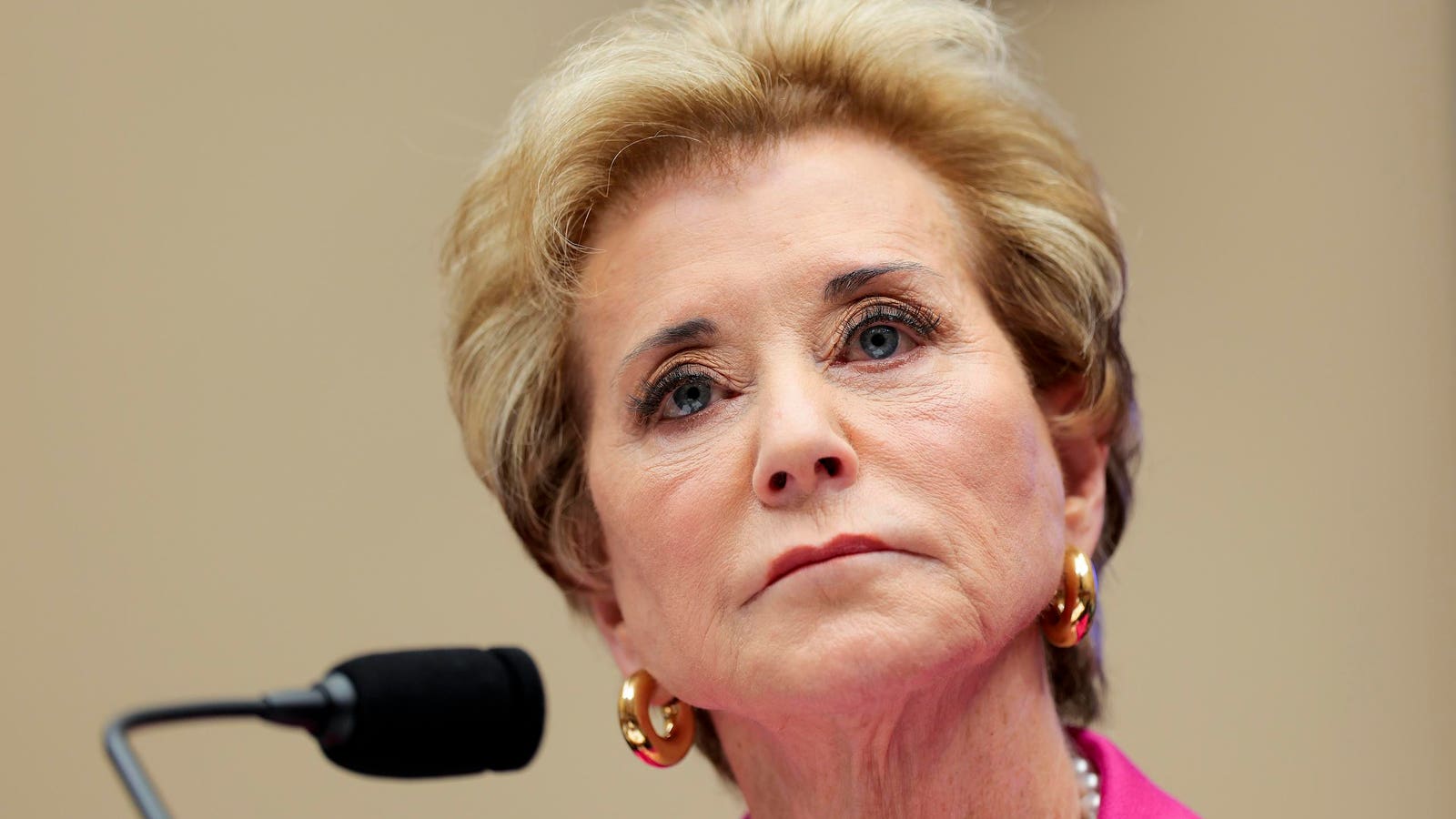
The Education Department is taking emergency steps to update a critical application form for Public Service Loan Forgiveness, a popular student loan forgiveness program that allows borrowers working in the nonprofit or government sectors to discharge their federal student loans. The move comes as the department prepares to implement controversial changes to the PSLF program that would give Secretary of Education Linda McMahon sweeping authority to cut off borrowers from loan forgiveness.
“The Department of Education (Department) is requesting an emergency clearance for this revision” to the PSLF application under the Paperwork Reduction Act, said the Education Department in a notice published in the Federal Register last Thursday.
The revision, which would update the PSLF form to require employers to certify, under penalties of perjury, that they aren’t engaged in activities that have a “substantial illegal purpose,” prompted a broad coalition of nonprofit organizations and state and municipal governments to file new court documents as part of their wider efforts to block the new PSLF rules before they go into effect this July. Here’s where things stand with the Education Department’s attempts to restrict student loan forgiveness under the program.
Proposed PSLF Rules Would Give Education Department Broad Authority Over Student Loan Forgiveness Eligibility
The Education Department’s new PSLF regulations would give Secretary McMahon the power to disqualify any organization (and, by extension, all of its employees) from being eligible for student loan forgiveness if their activities have a “substantial illegal purpose.” While organizations could potentially dispute any such determination, individual student loan borrowers would have no recourse and no right to appeal if their employer suddenly becomes ineligible for PSLF.
The new PSLF rules outline a number of activities that could constitute having a substantial illegal purpose, such as helping to violate federal immigration laws, engaging in certain forms of discrimination or illegal protest, or providing gender-affirming medical care to children. The department has argued that the regulations, which were enacted to implement an Executive Order signed by President Trump last year, are necessary to support the integrity of student loan forgiveness under the PSLF program.
“The proposed regulations would prevent taxpayer-funded PSLF benefits from being improperly provided to individuals who are employed by organizations that engage in activities that have a substantial illegal purpose,” summarized the department in the initial publication of the PSLF rules last year. “These proposed changes are intended to improve the administration of the PSLF program and provide protection for taxpayers.”
But a broad coalition of nonprofit organizations, labor unions, state governments, and municipalities sued the Education Department last fall to try to block the rules before they go into effect on July 1. The organizations argued that the rules would unlawfully allow the department to effectively punish nonprofits and Democratic-led state and local governments that aren’t doing anything illegal, but simply oppose the Trump administration’s policy priorities with respect to immigration, transgender healthcare, and DEI initiatives.
“In an attempt to target organizations and jurisdictions whose missions and policies do not align with its political positions on immigration, race, gender, free speech, and public protest, the Trump-Vance Administration has weaponized the PSLF program in a way that defies how Congress designed it,” said the National Council of Nonprofits in one complaint filed in federal court last November challenging the Trump administration’s PSLF rules. “Since inauguration, the Trump-Vance administration has baselessly accused law abiding people and organizations of being engaged in ‘illegal’ activities if those activities are at odds with the administration’s agenda—from accusing peaceful protesters of being engaged in terrorist activity to claiming that organizations that help provide food and basic services to immigrants are breaking the law.”
“The so-called ‘illegal’ purposes set forth in the rule are also plainly pretextual,” said the Commonwealth of Massachusetts in a second complaint filed at the same time. “The only forms of ‘illegality’ named are a cherry-picked list of this Administration’s most disfavored groups and activities, including support for immigrants, gender affirming care, diversity, equity and inclusion initiatives, and political protest. In seeking to crack down on specific activities disfavored by this Administration, the true intent behind the Rule is clear. The Department seeks to chill the activities of public service employers by discouraging their employees from what it deems objectionable forms of public service.”
Earlier this month, two federal courts heard oral arguments for the challengers’ motions for summary judgment. The nonprofit and public groups suing the Education Department are hoping for a final ruling blocking the new PSLF rules before they go into effect on July 1.
Revision Of Student Loan Forgiveness Application For PSLF Sparks Urgent Response
The Education Department’s “emergency” revision to the PSLF form would require employers to certify, under penalties of perjury, that they aren’t engaged in activities that have a “substantial illegal purpose.” The requirement would begin on July 1, when the new PSLF rules are set to go into effect.
“Final Regulations published on October 31, 2025 (90 FR 48966), 34 CFR 685.219(i) require an update to the currently approved Public Service Loan Forgiveness Certification and Application, to comply with E.O. 14325, by revising the certification language to include an attestation, under penalty of perjury, that the employer has not engaged in any activity that has a substantial illegal purpose on or after July 1, 2026,” reads the notice published in the Federal Register last Thursday.
The new requirement could lead to confusion by PSLF employers. The form doesn’t ask if the employer is engaged in patently illegal conduct; rather, it asks whether the employer’s activities have a “substantial illegal purpose,” a term that some employers may find to be concerningly vague. And the requirement that the new statement be signed under penalties of perjury, which could trigger criminal prosecutions in extreme cases, may make some employers hesitant to sign off on the revised form. Borrowers typically must have their employer sign the PSLF form in order for them to receive any PSLF credit and ultimately get their student loans forgiven.
The department’s announcement prompted a group of nonprofit and public organizations challenging the PSLF rules to file a supplemental notice on Monday, urging the court to issue a ruling before the July 1 implementation date.
“Through the notice, the Department ‘is requesting an emergency clearance’ under the Paperwork Reduction Act to update the relevant PSLF certification forms ‘to include an attestation, under penalty of perjury, that the employer has not engaged in any activity that has a substantial illegal purpose on or after July 1, 2026,’” wrote the groups in Monday’s new filing. “The notice underscores the imminence with which the Final Rule challenged in this case will take effect, and it reinforces Plaintiffs’ arguments that they have demonstrated Article III standing and that the dispute is ripe for adjudication. Plaintiffs respectfully renew their request that the Court grant their pending motions for summary judgment before July 1 to ensure that student-loan borrowers and PSLF-qualifying employers are not subjected to the unlawful certification requirement.”
Ruling On Student Loan Forgiveness Updates Could Come At Any Time
With briefing and oral arguments on the challengers’ summary judgment motions now concluded, the courts can rule at any moment on the legality of the Trump administration’s proposed restrictions on PSLF. While the challengers hope for favorable ruling prior to July 1, there are no guarantees that would happen.
If the rules do go into effect in July, borrowers would not lose any existing PSLF credit if their employer is disqualified from further participation in the program. But the Education Department concedes that borrowers would have to find new qualifying employment if their employer is no longer eligible for student loan forgiveness under the program. For now, borrowers will have to wait and see how the courts rule.
Read the full article here