




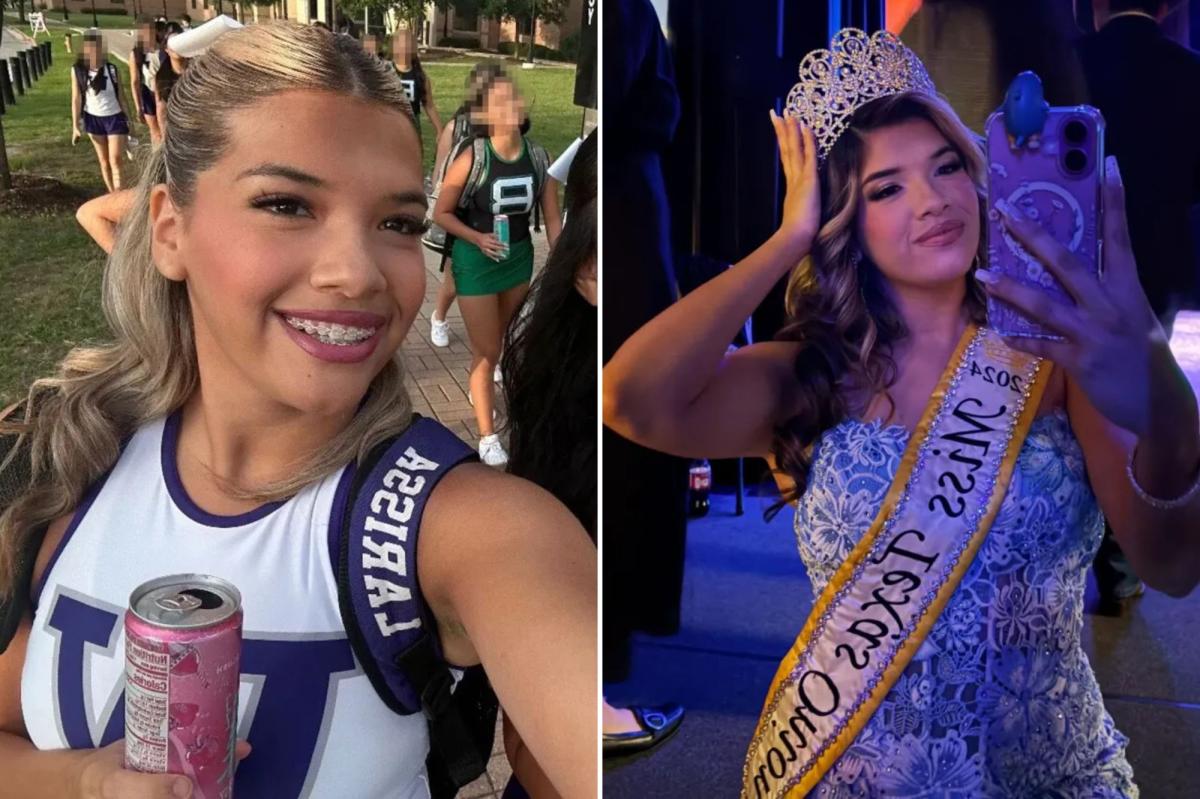
A rising Texas beauty queen’s death is being blamed on the “unreasonably dangerous” amount of caffeine in the energy drinks the teen had consumed in the days and hours before she died suddenly.
The family of Larissa Rodriguez is accusing Alani Nu Energy Drinks and the Texas retailer that sold her the beverages of not properly warning the 17-year-old of the dangers of consuming the drink, according to a wrongful death lawsuit viewed by The Post.
Rodriguez, a high school senior and co-captain of the varsity cheerleading squad, had suffered a “fatal cardiac event” on Oct. 20, 2025, after she consumed at least one 12-ounce can of Alani Nu.
Officials ruled she had died from cardiomyopathy — a serious disease of the heart muscles — caused by excessive caffeine consumption.
“The Alani Nu Energy Drink was designed and formulated such that it could cause cardiomyopathy, cardiac arrhythmia, cardiac arrest, and death in consumers, especially children, adolescents, and caffeine-sensitive individuals,” the family argued.
The lawsuit, filed in Hidalgo County District Court by Rodriguez’s parents – Jennifer and Roberto — noted that several health organizations unequivocally state that energy drinks have no place in the diets of children and adolescents, with the maximum daily intake for minors being no more than 100 milligrams.
Her parents claim the 200 milligrams inside a 12-ounce can of Alani is significantly higher than most soft drinks and other energy drinks on a per-ounce basis, while the can has several design flaws.
“Critically, it does not warn against excessive caffeine consumption,” the lawsuit states.
A can of Alani Nu has a brief warning on the label saying the beverage is “Not recommended for Children, People Sensitive to Caffeine, Pregnant Women or Women who are Nursing.”
“The only cautionary language on the can is printed in small, inconspicuous text that is easily overlooked and wholly inadequate to warn consumers of the serious risks of cardiac injury and death,” the lawsuit continues.
“It was defective in its design, unreasonably dangerous, and unsafe for its intended purpose because it did not provide adequate protection and/or warning against the foreseeable risk of cardiac-related injuries and death.
Rodriguez’s family also accused Alani Nu of having an undisclosed quantity of taurine, an amino acid, known to amplify the stimulatory effects of caffeine and linked to several health effects, including altered neural functioning, lowered serotonin and dopamine levels, and cardiovascular effects.
The effects of the additional combined stimulants and the health risks consumers face, including cardiomyopathy, cardiac arrhythmia, cardiac arrest, or death, are not noted on the can.
The several ingredients are allegedly “hidden within a vaguely described ‘Energy Blend’ that does not specify individual amounts, preventing consumers from making informed decisions about their intake,” the suit claimed.
Alani Nu, founded by fitness influencer Katy Hearn, is marketed as a “better-for-you” wellness and lifestyle beverage, the suit claims, with young women and minors as its target audience through advertisements on social media.
“Alani Nu’s marketing is particularly deceptive because it positions the product as part of a healthy, active lifestyle while concealing the substantial cardiac and neurological risks associated with its concentrated caffeine and stimulant ingredients,” the suit states.
The lawsuit compared Rodriguez’s death to lawsuits against Panera Bread after its “Charged Lemonade” was blamed for at least two deaths.
“Those lawsuits alleged that the beverages were not adequately labeled as energy drinks, were placed alongside non-caffeinated beverages without adequate warnings, and caused fatal cardiac events in consumers with and without pre-existing conditions,” Rodriguez family lawyer, Benny Agosto Jr., argued.
Rodriguez was described as an active, high-achieving teenager — a cheerleader, tennis player and honor student who had been accepted to nearly 20 colleges, according to the San Antonio Express-News. She planned to study law at the University of Texas at Austin, according to her obituary.
She had no previous known health issues and did not use drugs or alcohol.
In 2022, the teen was crowned the inaugural Junior Miss Weslaco, and won the Miss Texas Onion Fest 2024.
Rodriguez’s family is seeking recovery of damages from their daughter’s death.
“As a result of the wrongful conduct, Larissa Rodriguez suffered physical pain and mental anguish, pain, and torment prior to her death,” the lawsuit states.
Read the full article here