




Published on
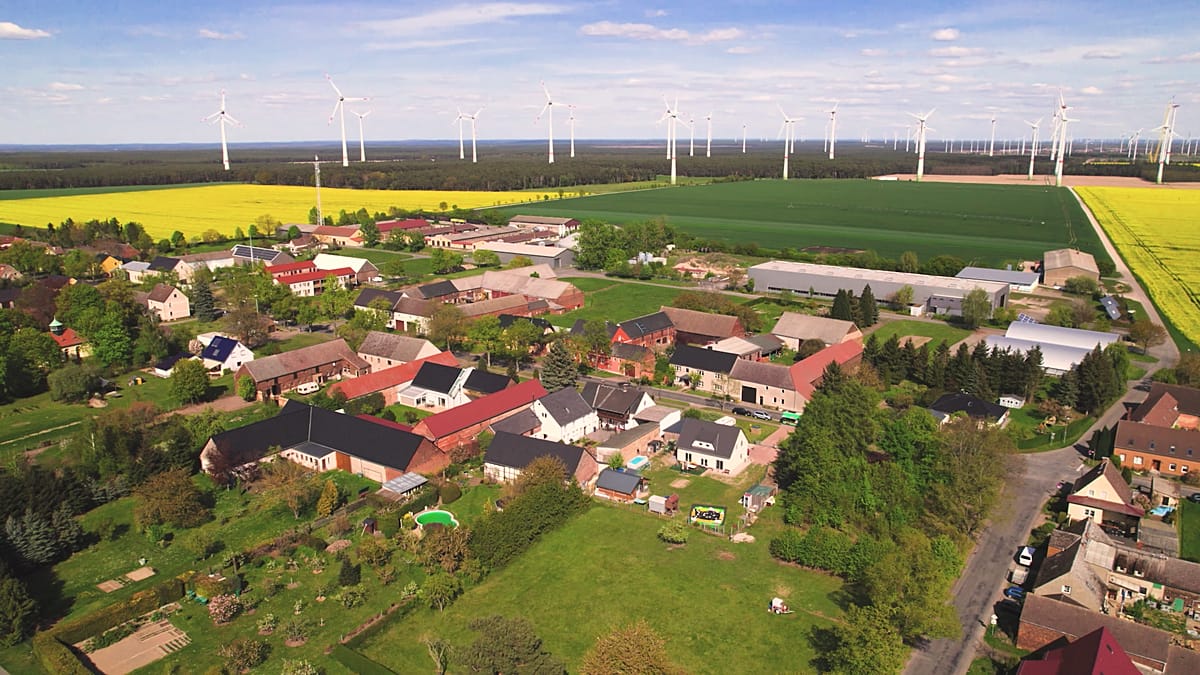
Feldheim’s 130 residents draw their electricity and heating from a cluster of wind turbines on the village outskirts, a biogas plant fed by local corn silage and manure, a solar park on a former Soviet military site and a wood chip boiler as backup. Together, the installations produce way more energy than the village actually needs; the surplus current is sold to the national grid.
ADVERTISEMENT

ADVERTISEMENT
A ten-megawatt battery storage facility, part-funded by the European Regional Development Fund, keeps the local grid stable when conditions change.
Making it all work took some creative thinking — including building an entirely new electricity grid when the big utility companies refused to play ball. But for Michael Raschemann, the head of Energiequelle — the energy company behind the project — it proves that at this scale, energy self-sufficiency is not just possible — it’s essential.
“Small villages like Feldheim truly come alive — in the best sense — when they can directly benefit from the energy they produce. Unlike big cities, which simply don’t have the option of supplying themselves entirely,” says Raschemann. “It was important to us to send a clear signal: that it works, and that it makes economic sense. That you can take energy straight from the fields to people’s homes — quickly and directly — and that it can be genuinely affordable.”
Feldheim’s success was built on many factors: a good location, a small and close-knit community willing to think differently, visionary investors and support from national and European policy. It may not be a model that works everywhere. But as an example of what locally-owned renewable energy can achieve, it’s hard to argue with the electricity bill.
Read the full article here