




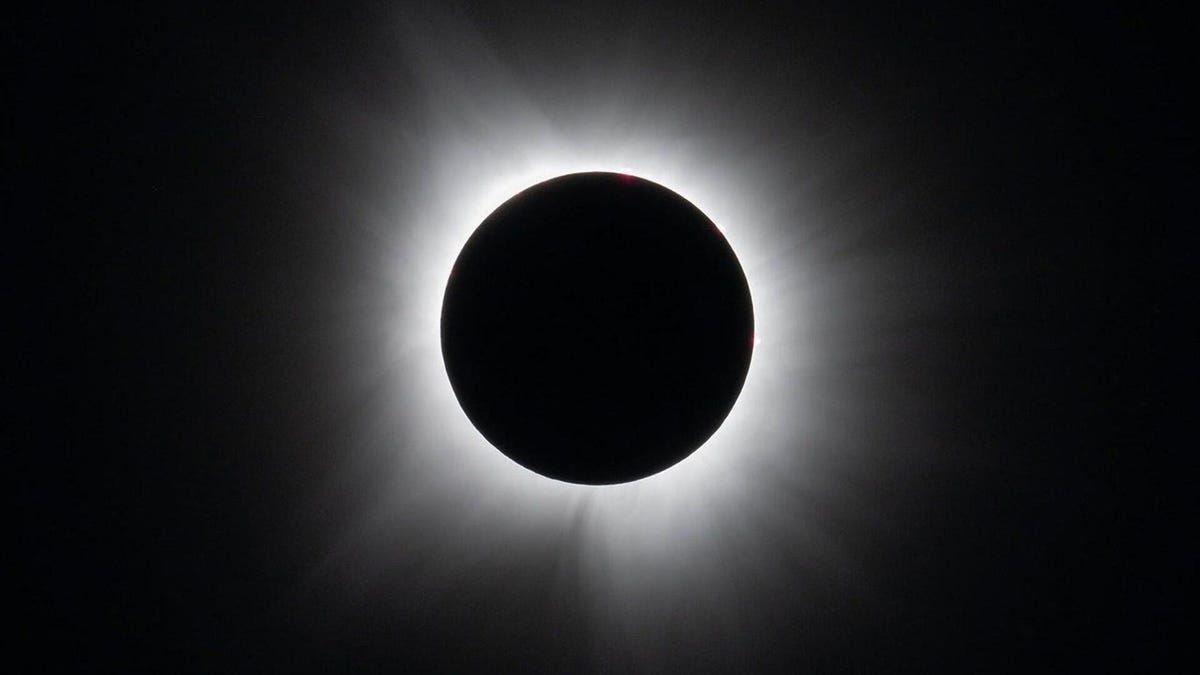
It’s been two years since the last total solar eclipse, but another one is coming next month — and with it, a special addition that doesn’t happen very often. Some people will get to see the solar eclipse during sunset, giving them an extraordinary view. The only problem is, you may have to jet off on a summer vacation to see it.
The total eclipse will only grace the shores of a few countries. According to NASA, the total eclipse on Aug. 12 will hit Greenland, Iceland, the northern half of Spain and one corner of Portugal. Spain is at the tail end of the eclipse, and as such, it will occur later in the day at around sunset, giving viewers in Spain a spectacular sight.
Other countries in Europe and Africa will also get quite a show. Most of Europe and a sizable portion of northern Africa are still getting a partial solar eclipse, which will happen around sunset. That means tens of millions of people will be in the right place to see a partial or total solar eclipse at sunset.
Russia is the luckiest country this time around. The eclipse starts at sunrise near the uninhabited Taymyr Peninsula, streaks across the world all day, and then Russians on the other side of the country are in the path for the partial solar eclipse at sunset, making Russia the only country that will see the eclipse at both sunrise and sunset.
How often do sunset eclipses happen?
Sunset eclipses don’t occur very often, at least where people can see them. There are two reasons for this.
The first is that solar eclipses usually only last for a few hours, and the timing for that being right at sunset isn’t terribly common.
The other reason is that solar eclipses have long paths, and sometimes those paths cut through the ocean or places where people don’t live. In the last 15 years, only a handful of total eclipses sit in that Venn diagram of occurring late enough in the day to happen at sunset, while also taking place where humans can see it.
The most recent sunset eclipse in North America was in 2014, but it was only a partial eclipse. South America’s most recent one was in July 2019, where people in Chile and Argentina had the best view of a total solar eclipse happening at sunset, while most of the rest of the country had a partial view. Asia’s most recent was in December 2019.
In short, this is a once-in-a-decade event for most of the world.
The path of this year’s solar eclipse takes it across the northern portions of Earth before ending in Europe. North Americans won’t see much.
Will this eclipse be visible in North America?
North America is pretty far from the main action, but a few states are in the path. The math is a little complicated, but if you look at a map of the US and draw a line from Alaska to North Carolina, all the states north of that line will get a little bit of an eclipse (less than 20% coverage), and all the states south of that line are sitting this one out.
If you live in the path and want to check it out, be sure to adhere to proper solar eclipse viewing safety protocols so that you don’t harm your eyes.
Read the full article here