




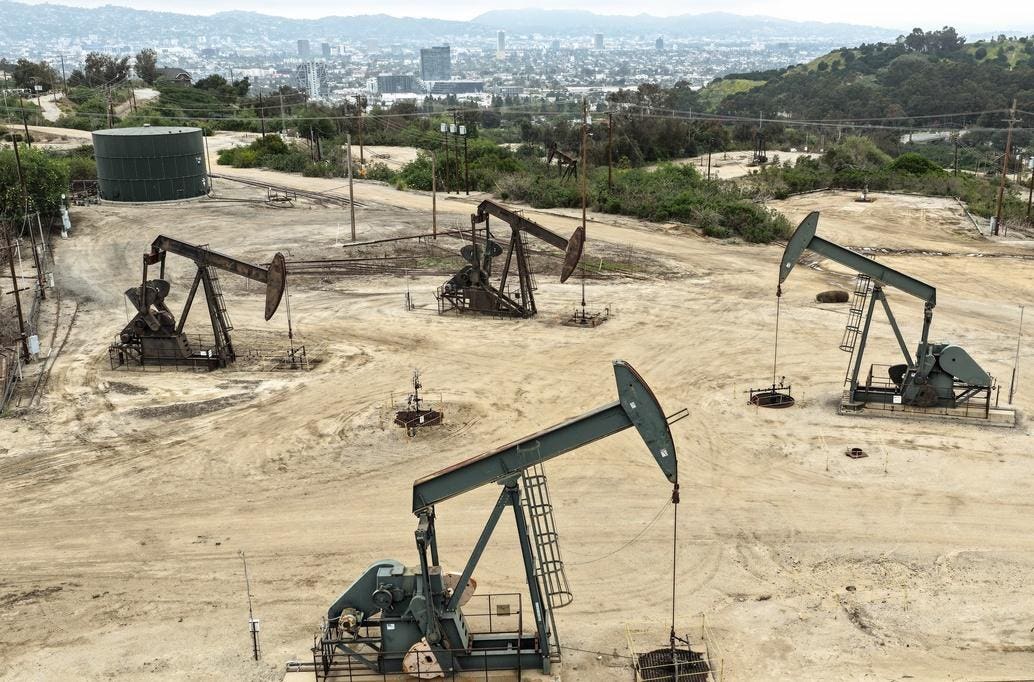
Structural underinvestment left global oil supply one shock away from a crisis, and the Hormuz blockage is that shock. With no quick fix to supply constraints, high and volatile oil prices aren’t going away, and neither is the incentive to invest in oil and gas.
Tenaris S.A. (TS), the world’s largest oil country tubular goods (OCTG) manufacturer, supplies the “picks-and-shovels” (steel pipes) that oil and gas drilling programs require. With a differentiated service model, high profitability, and strong shareholder return, Tenaris offers Attractive risk/reward in an industry with long-term growth prospects.
Tenaris offers favorable Risk/Reward based on the company’s:
- global manufacturing footprint positions it as the dominant OCTG supplier in a growing market,
- differentiated service model that creates high switching costs,
- high profitability, including an ROIC nearly double peer averages,
- attractive capital return and shareholder yield, and
- cheap valuation that implies just 10% profit growth despite structural tailwinds.
Higher Oil Prices Are Back
The February 28, 2026 U.S.-Israeli strikes on Iran and the subsequent closure/blockage of the Strait of Hormuz have created what the International Energy Agency (IEA) has called, “the largest supply disruption in the history of the global oil market”.
Approximately 20 million barrels per day (mb/d) of crude oil and petroleum products normally transit The Strait. The IEA estimates global oil supply is down ~8 mb/d in March. Chevron CEO Mike Wirth recently noted that the oil futures market has not fully priced in the scale of the supply disruption.
Brent crude has surged from $72 per barrel (bbl) the day before the war to ~$100/bbl, with some analysts projecting spikes to as much as $200/bbl if the disruption persists.
Figure 1: Brent Crude Oil Price: Feb-Mar 2026
No Easy Solutions to Supply Constraints
Even if the Strait reopens tomorrow, there is no quick and easy resolution to replace the ~8 mb/d lost by the closure of the Strait.
Firstly, the IEA’s 400-million-barrel emergency release, touted as the largest in history, falls far short of closing the supply gap. JPMorgan estimates that the entire IEA release (U.S. plus IEA member countries) will deliver ~1.2 mb/d, or just 15% of the 8+ mb/d shortfall.
Secondly, after a presidential authorization, oil takes ~13 days to first reach consumers and it will take a total of 120 days to release the entirety of the 172 million barrels contributed by the U.S.
Thirdly, alternative bypass routes offer limited relief. Saudi Arabia’s East-West pipeline to Yanbu has a design capacity of 7 mb/d, but much of this capacity was already in use before the crisis. The U.S. Energy Information Administration (EIA) estimates only 2.6 mb/d of combined Saudi and UAE pipeline capacity is available to bypass the Strait.
In other words, too little, too late. Without a significant drop in global oil demand (akin to COVID-19), prices will continue to rise against limited supply. Accordingly, asian refiners, reliant on crude oil from the Strait, have pre-emptively started to reduce their run rate in anticipation of declining supplies of oil.
Volatility is Here to Stay
The Hormuz crisis is acute, but it is not an aberration. It is the latest in a series of shocks that have exposed structural fragility in global oil markets.
Since 2020, crude oil prices have fluctuated but remain at elevated levels in large part due to market vulnerability to price shocks. The Covid-19 pandemic, Russia’s invasion of Ukraine, and the current Iran War have all tested the system. Meanwhile, the market’s ability to react to supply shocks has deteriorated.
Structural Declines in Spare Capacity Puts a Floor Under Oil Prices
As an example, I can analyze OPEC+’s effective spare capacity, which the EIA describes as “an indicator of the global oil market’s ability to respond to potential crises that reduce oil supplies that could lead to price spikes.” Official IEA estimates put OPEC+ effective spare capacity at 4-5 mb/d, down from nearly 6 mb/d in late 2024 and upwards of 7 mb/d in late 2020.
Figure 2: OPEC+ Effective Spare Capacity Declining
Effective spare capacity is important because oil prices rise when spare capacity falls. Specifically, the EIA notes “oil prices tend to incorporate a rising risk premium when OPEC spare capacity reaches low levels.” As effective spare capacity has fallen from 2001 levels, crude prices have steadily risen. See Figure 3.
Figure 3: OPEC Spare Capacity Decline Drives Global Crude Oil Prices Up
Stated spare capacity may also overstate actual capacity. Standard Chartered Research warned of a significant disconnect: Wall Street analysts frequently cite 5 to 6 mb/d of spare capacity, but industry producers indicate the true figure is both lower and geographically concentrated. Reuters energy columnist Ron Bousso noted that Saudi Arabia’s realistic spare capacity, i.e. production that can be brought online quickly and sustained, is just 600,000 to 1 mb/d, far below the IEA’s 2.4 mb/d headline figure.
These estimates echo the sentiment offered by Chevron’s CEO, when he stated, “the physical supply of oil is tighter than the futures contracts suggest…” and “there really is a difference in terms of physical supply this time versus prior incidents.”
Elevated Prices Drive Investment
Higher and more volatile oil prices drive drilling activity and accelerate OCTG inventory restocking. At $100+ oil, virtually every shale play in the U.S. is economically profitable, offshore deepwater projects attract fresh capital, and national oil companies in the Middle East and Latin America accelerate capacity expansion.
These actions drive orders straight to Tenaris, the leading OCTG manufacturer in the world.
Even prior to the Iran War, Goldman Sachs estimated that the average Brent/WTI crude prices would recover to $80/$76/bbl by late 2028 and spark investment to:
- bring supply in line with demand by the early 2030s,
- make up for natural declines of old fields, and
- meet demand expected to grow through 2040.
A multi-year period of elevated prices, even if below the current $100+ spike, would drive sustained drilling activity and OCTG demand at levels well above the cyclical trough.
The Growing OCTG Market
The global OCTG market is projected to grow by 7% a year from 2025 to 2032 due to rising global energy demand, the shift toward offshore and deepwater drilling, and the need to offset natural field declines.
Unlike drilling rigs or pressure pumping equipment, OCTG is consumed and not reused for primary drilling operations. Casing is cemented into the wellbore and tubing remains in place for the life of the well. Every new well, whether in the Permian, offshore Brazil, or Saudi Arabia, requires fresh OCTG, which creates a direct link between drilling activity and Tenaris’ business.
Within the OCTG market, offshore drilling is projected to grow faster than onshore as exploration shifts to deepwater fields in the Gulf of Mexico, Brazil, Guyana, and Southeast Asia. Offshore projects require premium OCTG products, such as corrosion-resistant alloys, high-collapse grades, and proprietary connections that command higher margins. Tenaris’s TenarisHydril premium connections and its integrated One Line service for offshore line pipe position it to capture this growth.
Despite the current Hormuz disruption, the long-term trajectory of Middle East drilling is positive, too.
- ADNOC has announced plans to increase its rig count from 142 in 2024 to over 151 by 2028 to meet its production targets.
- Saudi Aramco continues to develop the Jafurah unconventional gas field, the largest in Saudi Arabia.
Tenaris operates manufacturing facilities in both Saudi Arabia and the UAE and is well-positioned to serve this demand locally.
The Strait closure also exposed the risks of concentrated Gulf supply, which creates incentives to develop production in “safe” jurisdictions, such as South America, away from these regions. Brazil’s pre-salt fields, Guyana’s Stabroek block, and Argentina’s Vaca Muerta shale are all beneficiaries.
Tenaris is already positioned in these markets, as it holds offshore contracts in Suriname (first oil in 2028) and has completed more than 7,700 hydraulic fracturing jobs in Argentina.
Rig Direct Creates High Switching Costs
Tenaris’s most durable competitive advantage is Rig Direct, a service model that transforms Tenaris from a commodity pipe supplier into an integrated supply chain partner.
Traditional OCTG procurement works through distributors. The operator buys pipe, stores it in a yard, arranges inspections, and manages logistics to the rig site.
Rig Direct removes both the middleman and the complexity of procurement. Tenaris manages the entire supply chain from mill to well. It plans pipe production around the customer’s drilling schedule, delivers materials ready to run, synchronizes demand and usage, and provides real-time digital integration through the Rig Direct Portal. There are no third-party distributors.
Instead, Tenaris manages its own yards and service centers to deliver pipes directly to the rig site.
Figure 4: Rig Direct Service Model Differentiates Tenaris
Customers pay for the pipes they use. Tenaris technicians manage material preparation which eliminates the need for clients to have a clean, visual, and drift crew at the rig site.
Rig Direct creates substantial switching costs. Once an operator integrates Tenaris’s digital tools, switching to another supplier requires rebuilding the entire workflow.
In fact, ExxonMobil (XOM) named Tenaris its 2024 Supplier of the Year, specifically citing the Rig Direct mill-to-well model and Tenaris’s “superior performance globally across ExxonMobil including Guyana and Permian region.”
Rig Direct provides strong competitive advantages and is difficult to replicate because Tenaris’ global footprint enables it to serve clients across the globe cost effectively. For example:
- Tenaris operates mills in the U.S., Mexico, Argentina, Italy, Romania, Saudi Arabia, and the UAE, plus a welded facility in Canada. This footprint allows the company to flex production across regions based on demand.
- Tenaris operates yards in Texas, Oklahoma, Canada, and other key regions. These yards perform finishing, threading, inspection, and accessory assembly that enables “ready to run” delivery.
- Tenaris’s digital platform provides pipe-by-pipe traceability from mill to well, integrates ordering, tracking, and invoicing into a single system, and delivers real-time torque-turn monitoring during casing installation.
In other words, Tenaris has wrapped a commodity product with a service layer that creates high switching costs. The service is not about selling pipes at a premium, it is about becoming the path of least resistance for the customer’s drilling operations. Once integrated, operators have little incentive to switch and would face substantial cost to do so.
Persistent Profits Throughout Cycles
Through three major oil price shocks, the 2014-2016 OPEC price war, the 2020 COVID collapse, and the 2022 Ukraine war spike, Tenaris remained profitable when prices fell and its profits soared when prices rose.
At the 2016 trough, when WTI averaged $43/bbl, the company’s net operating profit after-tax (NOPAT) fell to $47 million but never turned negative. The company’s NOPAT surged from $122 million in 2020 to $3.6 billion in 2023. Most impressively, Tenaris has generated positive NOPAT in every year back to 2004, the first year I have data.
Over the past decade, Tenaris has grown revenue and NOPAT by 5% and 13% compounded annually, respectively. The company’s NOPAT margin improved from 7% in 2015 to 16% over the TTM while invested capital turns improved from 0.5 to 0.7 over the same time. Rising margins and IC turns drive return on invested capital (ROIC) from 4% in 2015 to 11% over the TTM.
Figure 5: Tenaris’ Revenue and NOPAT: 2015-TTM
Integrated Service Model Drives Superior Profitability
Tenaris’ Rig Direct service model drives superior profitability and is a moat that competitors cannot easily replicate. Figure 6 compares Tenaris’ profitability to oilfield equipment manufacturers in my firm’s coverage universe with similar end-market exposure, which include Cactus (WHD), Flowco Holdings (FLOC), Haliburton Company (HAL), Schlumberger N.V. (SLB), Innovex International (INVX), and more.
Over the TTM, Tenaris’s NOPAT margin of 16% is double the peer average of 8%, and its ROIC of 11% nearly doubles the peer average of 6%.
Overall, Tenaris generates the third highest NOPAT margin and ROIC amongst its peers. One of the two companies that generate a higher ROIC is fellow Long Idea Weatherford International (WFRD).
Figure 6: Tenaris’ Profitability Vs. Peers: TTM
Shareholder Yield Could Reach 8%+
Tenaris has paid a dividend for 22 consecutive years, throughout every oil cycle and every crisis.
The company increased its semi-annual dividend from $0.28/share in 1H21 to $1.12/share in 1H25. At current prices, the annual dividend of $1.78/share provides investors with a 4.0% dividend yield.
Tenaris also returns capital to shareholders through a share buyback program initiated in 2022. Since then, the company has repurchased $2.5 billion worth of shares through 3Q25.
In May 2025, the Board authorized a new $1.2 billion share buyback program, which is to be executed within one year. At current prices, the new authorization represents 4.1% of the market cap.
If Tenaris executes the full authorization, the combined dividend and repurchase yield would reach 8.1%.
A Cash Flow Machine
Over the past decade, Tenaris has generated $10.6 billion (40% of enterprise value) in cumulative free cash flow (FCF).
Over the TTM, Tenaris generated $1.6 billion in FCF.
Figure 7: Tenaris’ Cumulative FCF: 2015-3Q25
Reducing Shares Outstanding
Tenaris’ share buyback program has led to a reduction in its shares outstanding from 590 million in 2020 to 538 million shares in the TTM.
I like companies that choose to return capital to shareholders instead of spending it on costly acquisitions or executive bonuses that rarely drive shareholder value creation.
Figure 8: Tenaris’ Shares Outstanding: 2020 – 3Q25
Fortress Balance Sheet and Credit Rating
Poor capital allocation can undermine even high-quality businesses, particularly in the oil industry. However, Tenaris demonstrates disciplined capital management and earns a very attractive Overall Credit Rating.
The company earns a very attractive rating across all five metrics I use to generate my Credit Ratings.
At a time of rising inflation, and declining economic growth, Tenaris’ strong financial standing positions it not just to survive but to thrive.
Figure 9: Tenaris’ Credit Rating
Tenaris Can Thrive Even If Oil Prices Fall
The bear case for Tenaris, or any oilfield equipment manufacturer, rests on oil price sensitivity. If Brent crude falls back to $60–70/bbl, drilling activity declines, and OCTG demand contracts. This argument overlooks both the dynamics of the oil market and the strength of Tenaris’s competitive position.
An immediate reopening of the Strait will not restore pre-crisis conditions. Even if the conflict ended and the Strait reopened tomorrow, IEA Executive Director Fatih Birol warned that “it will take a long time” to restore output: “It will be six months for some [sites] to be operational, others much longer.”
In other words, oil at $60/bbl and falling rig counts are unlikely to return. With unresolved chokepoint risks, spare capacity depleted, and strategic reserve drawdowns needing to be replenished, drilling isn’t ending.
Goldman Sachs projected $80/bbl as the long run price needed to balance the market by the early 2030s, offset natural field declines, and meet demand through 2040. This estimate was true before the war and even more so after. At $70–80 oil, virtually every major shale play remains economically profitable, and drilling activity stays well above trough levels.
More importantly, natural decline rates at existing fields are estimated at 5.5 mb/d per year, which means the industry must drill aggressively just to maintain current production. OCTG demand is tied to drilling activity, not oil consumption, and decline-offsetting investment provides a structural floor.
Tenaris’ cost structure, geographic diversification, and service model allow it to generate strong profits throughout these cycles.
Priced as If the Drilling Recovery Never Happens
At the current price, Tenaris has a price-to-economic book value (PEBV) ratio of 1.1. This ratio means the market expects the company’s NOPAT to grow just 10% from TTM levels over the remaining life of the company.
This expectation seems overly pessimistic given constrained supply, strong demand, and Tenaris’ history of growing NOPAT by 13% and 5% compounded annually since 2015 and 2004, respectively.
Below, I use my reverse discounted cash flow (DCF) model to analyze expectations for different stock price scenarios for Tenaris.
In the first scenario, I quantify the expectations baked into the current price. If I assume:
- NOPAT margin immediately falls to 14% (compared to 16% in the TTM) from 2025 through 2034, and
- revenue grows 2% compounded annually (below consensus estimates of 2.9% in 2027 and 2.8% in 2028) through 2034, then
the stock would be worth $56/share today — equal to the current price. In this scenario, Tenaris’ NOPAT would grow by less than 1% compounded annually through 2034. Tenaris’ implied NOPAT in 2034 would be just 5% higher than the company’s 2024 NOPAT.
Shares Could Go 25%+ Higher Even If Growth is Lower Than Industry Forecasts
If I assume that:
- NOPAT margin remains at 16% (equal to TTM margin) through 2034,
- revenue grows at consensus rates in 2026 (0.3%), 2027 (2.9%), and 2028 (2.8%), and
- revenue grows 3.6% (half the projected OCTG market growth through 2032) each year thereafter through 2034, then
the stock would be worth $69/share today – a 25% upside to the current price. In this scenario, Tenaris’ NOPAT would grow 3% compounded annually through 2034.
If Tenaris’ profitability improves, driven by the shift toward offshore drilling with higher margin products, or growth is greater than consensus estimates, or both, then the stock has even more upside.
Figure 10 compares Tenaris’ historical NOPAT to the NOPAT implied in each of the above scenarios.
Figure 10: Tenaris’ Historical and Implied NOPAT: DCF Valuation Scenarios
Sustainable Competitive Advantages That Will Drive Shareholder Value
Here’s a summary of why I believe the moat around Tenaris’s business will allow it to continue generating NOPAT above what the current market valuation implies:
- Rig Direct service model creates high switching costs.
- Global manufacturing footprint cannot be easily or quickly replicated.
- Strong presence in fast-growing markets – namely UAE and Argentina.
- Premium product portfolio commands higher margins.
- Every new well requires fresh OCTG, which creates a direct, non-discretionary link between drilling activity and Tenaris’ sales.
- Fortress balance sheet.
What Noise Traders Miss with Tenaris
These days, fewer investors focus on finding quality capital allocators with shareholder-aligned corporate governance. Due to the proliferation of noise traders, the focus is on short-term technical trading trends while more reliable fundamental research is overlooked. Here’s a quick summary of what noise traders are missing:
- Structural supply constraints support elevated oil prices.
- The Hormuz crisis has reset investment incentives and regardless of how the immediate conflict resolves, operators will accelerate drilling in relatively safer jurisdictions such as the Permian, Brazil, Guyana, and Vaca Muerta, all markets where Tenaris operates.
- The global OCTG market is projected to grow 7% annually through 2032.
- Tenaris’ ROIC and NOPAT margin rank third among peers.
- Tenaris’ valuation implies little profit growth.
Accelerated Drilling Activity Could Send Shares Higher
Even if the Strait reopens quickly, the crisis has exposed global risks. Operators will accelerate drilling in relatively safer jurisdictions such as the Permian, Brazil, Guyana, and Vaca Muerta, all of which Tenaris operates in.
The overall change in oil prices brought on by the conflict could spur additional drilling activity as well. Before the conflict, analysts projected Brent crude falling below $70 in 2026 and approaching $60 by 2027. Instead, Brent has traded above $90 since the crisis began.
If prices remain elevated through 2H26, exploration & production (E&P) operators will likely revise 2027 capital budgets. Higher budgets translate directly to more drilling activity and increased OCTG demand, which flows directly to Tenaris.
Around the globe, investments in rig count will drive additional demand as well.
- Even before the recent crisis, global rig demand was projected to average 4,291 rigs between 2026 and 2030, or a 4% increase from the 2021-2025 period.
- ADNOC is targeting 5 million barrels per day of production capacity by 2027, up from approximately 4 million today, and projects its rig count will exceed 150 by 2028.
- Saudi Aramco continues to invest in major field expansions including Marjan, Berri, and Zuluf, with the Jafurah gas development (the largest in Saudi Arabia) alone expected to exceed $100 billion in total investment.
- In Argentia, takeaway capacity is easing, which will enable additional drilling. The Vaca Muerta Sur pipeline, which connects the basin to an export terminal on the Atlantic coast, is under construction with first flows expected in 2027. When Argentine production ramps up for export, Tenaris is well-positioned to take incremental OCTG demand as the incumbent supplier. Vaca Muerta represents both a volume catalyst and a margin opportunity as Tenaris supplies from its nearby Campana facility, which minimizes logistics costs and maximizes profitability.
Exec Comp Could Be Improved
As a foreign filer, Tenaris is not subject to the same executive compensation disclosure requirements as U.S. domestic companies. From the limited disclosure, I know that the company’s CEO receives cash compensation linked to strategic priorities, which can be both financial and non-financial performance.
Directors and senior managers also receive shares as part of a long-term incentive program. Under the program, bonuses are determined relative to the company’s financial performance and the achievement of targets and objectives established for each senior manager. These targets are set by the CEO.
Tenaris’ ownership structure does incentivize executives to increase shareholder value, though I would prefer a much more direct performance measurement be in place. For example, San Faustin S.A., a firm controlled by the Rocca family, owns 69% of the company’s outstanding shares and 67% of the voting rights.
Paolo Rocca, CEO of Tenaris also serves as Director and Vice President of San Faustin. As a third-generation owner-operator whose family wealth rises and falls with Tenaris’s long-term value creation, Rocca’s interests are aligned with improving the value of the company.
I would prefer that Tenaris explicitly tie executive compensation to ROIC though, as there is a strong correlation between improving ROIC and increasing shareholder value. As a study by EY-Parthenon found, “companies get what they pay for. Those that included these measures in executive incentives outperformed those that did not.”
Insider Trading and Short Interest Trends
There is no available data on insider activity in the last twelve months.
There are currently 5.9 million shares sold short, which equals 1% of shares outstanding and less than 4 days to cover.
Attractive Funds That Hold TS
There are no funds in my firm’s coverage universe that receive an Attractive-or-better rating and allocate significantly to TS.
Read the full article here