




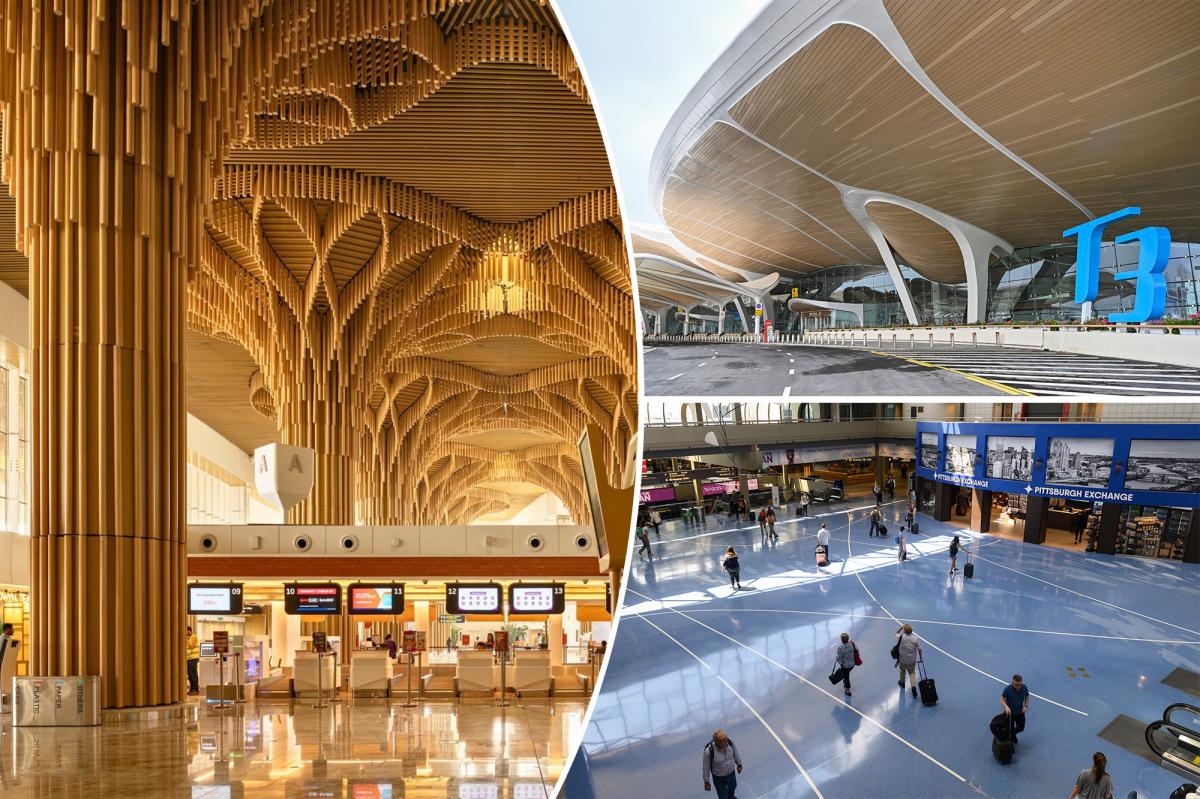
These passengers are flying high-falutin’.
Prix Versailles has unveiled its list of seven of the world’s most beautiful airports of 2026.
The list was put together by Prix Versailles, a series of architectural competitions for airports, campuses, museums and other accomplishments, based on airports that exhibit extraordinary, distinctive architecture.
The awards were given with sustainability and the “need for speed” in mind, looking at airports with efficient boarding processes.
The two US hubs are San Diego International Airport (SAN) Terminal 1 and Pittsburgh International Airport. Even with long TSA waitlines, SAN was awarded for its Terminal 1 innovations that have reduced carbon emissions and made transportation and parking more efficient. The PA Airport was also awarded for its nature-esque design.
San Diego International Airport Terminal 1, San Diego, United States
Gensler redesigned America’s busiest single-runway airport, adding new roadways, parking, and a gateway optimized for efficient boarding processes. A 244-meter curved glass structure floods the space with natural light, emulating the city’s climate and regional identity. The removal of structural columns decreased the airport’s carbon footprint by 30%, and new outdoor terraces overlooking the bay now feature lounges and concessions.
Pittsburgh International Airport, Pittsburgh, United States
This Pennsylvania airport honors the nearby Allegheny Mountains with an indoor-outdoor canopy-style design. Tree-shaped columns and warm tones, created by natural light filtering through glass walls, define the space. Travelers can enjoy four outdoor terraces and a “Petal Tunnel” inspired by the Fort Pitt Tunnel, a well-known vehicular route under Mount Washington.
Guangzhou Baiyun International Airport Terminal 3, Guangzhou, China
Guangzhou Baiyun International Airport Terminal 3 was recognized for its innovation, drawing from multi-millennial roots and history through rhythmic sequences of terraces, atriums, and gardens. Notably, it features the highest open-air public observation deck at any Chinese airport. The terminal pays tribute to Lingnan culture with open-air courtyards and intricate woodwork.
Frankfurt Airport Terminal 3, Frankfurt, Germany
Christoph Mäckler designed this terminal to emulate a lively urban environment, with boarding gates and lounges that imitate city streets and squares. The novel architecture features three hanging, rotating ring-shaped sculptures, reflecting a visionary and evolutionary aesthetic.
Lokapriya Gopinath Bardoloi International Airport Terminal 2, Guwahati, India
As one of the two Indian airports on the list, this terminal is noted for its exceptional passenger arrival experience. Architect Nuru Karim, inspired by bamboo, created vaulted ceilings supported by bamboo-styled structures. Tribal narratives, indigenous art, and local craftsmanship are integrated into waiting areas to infuse the passenger experience with culture and emotion.
Navi Mumbai International Airport Terminal 1, Navi Mumbai, India
India’s second airport on the list opened in 2025, blending futuristic architecture with functional design. Zaha Hadid Architects envisioned a lotus design, with ceilings inspired by petals opening in the sunlight. Throughout the terminal, pause points feature digital and interactive art projects.
Techo International Airport, Phnom Penh, Cambodia
The overarching roof canopy pays homage to Cambodia’s palaces and temples, leading to a ceiling inspired by traditional bamboo and rattan basket weaving. The interior design prioritizes efficiency, ensuring short walking distances from the drop-off zone to the boarding areas.
Read the full article here