




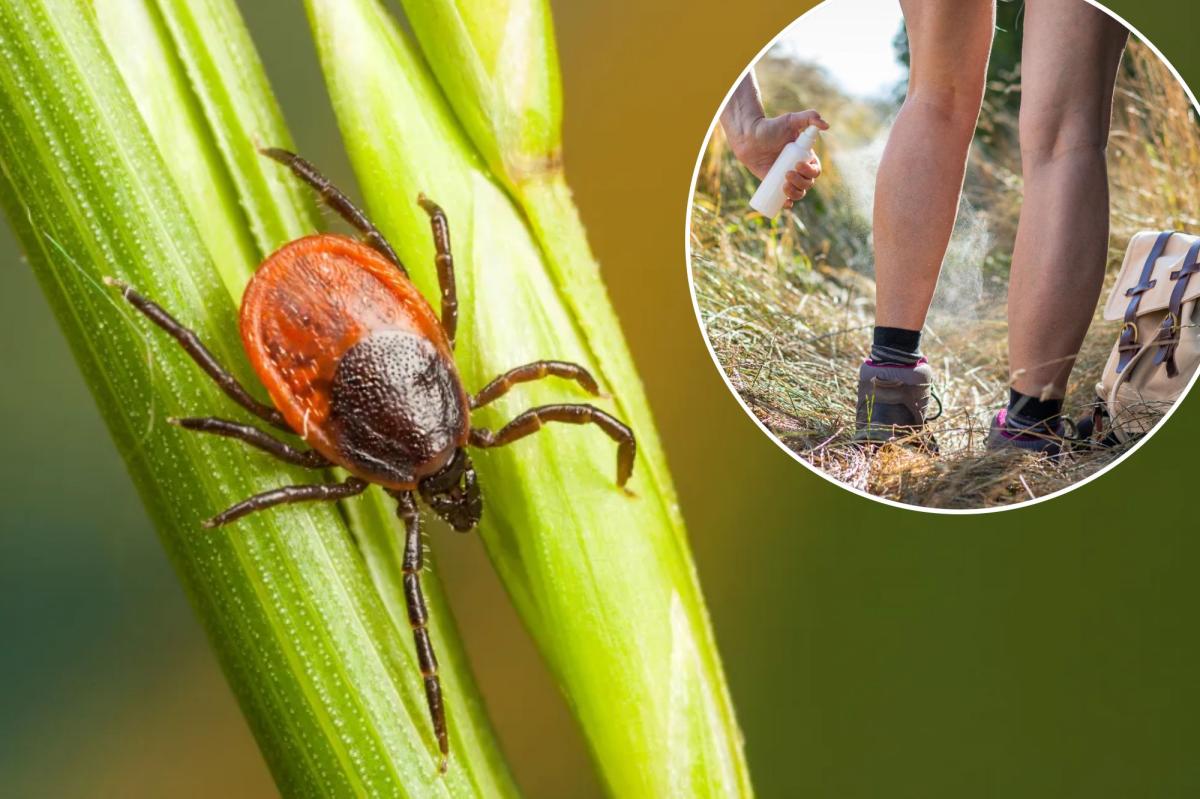
It’s tick season, and if you’re a homeowner in the Northeast, Upper Midwest, Middle Atlantic, Ohio River Valley, and even the South, don’t be surprised if they’re particularly active in your area.
Not only are ticks a nuisance, but they’ve also led to a growing number of emergency room visits. In fact, the Centers for Disease Control and Prevention Bite Tracker found that 71 per 100,000 emergency room visits in April 2026 were tick-related — more than double the historical average.
You can’t control weather conditions, human behavior, and wildlife movement — all of which contribute to the increased presence of ticks and the health risks they cause. However, you can take proactive steps and create a “tick-free” zone to protect your family and pets.
“For the ideal tick-free zone, use year-round tick-preventative medications, remove leaf litter around the home, install wood chips and mulch near the transition zone between your yard and the forest, and, lastly, mow your yard,” explains Hamilton Allen, entomologist and vice president of technical and safety at Fox Pest Control in Tampa, FL.
Why these locations are seeing an uptick
According to the MyWild 2026 Tick Forecast, tick populations are surging in states such as Ohio, Maryland, Virginia, and West Virginia, as well as Kentucky and Tennessee, highlighting the spread of ticks beyond the traditional endemic zone of the Northeast and Upper Midwest into the South.
The main culprit? The weather conditions this past winter.
Theresa Smith, senior vice president of NaturaLawn of America in Frederick, MD, explains that in areas that were a bit colder than usual, snow that took months to melt helped insulate ticks from the extremely cold air.
“Snow keeps the temperature of the ground beneath it more stable, so even while air temperatures continue to drop, the ground underneath it stays warmer. Since much of the Northeast and mid-Atlantic experienced that long-lasting snowpack or ‘snowcrete’ coverage, this effect was especially pronounced,” Smith explains.
In the South, where the winter months brought above-average temperatures, more ticks were able to survive and reproduce.
“The warmth gave ticks the ideal conditions for breeding,” Smith explains.
The warmer winter weather also allowed ticks to expand their habitats, meaning areas where ticks have not historically been an issue will begin seeing more of these disease-carrying pests.
Nicole Carpenter, pest control professional and president at Black Pest Prevention in Charlotte, NC, points out that the ticks don’t need to travel far to grow.
“The increase in tick populations is also about people spending more time and building homes in places where ticks are already active. Wildlife like deer and other animals that move through neighborhoods more often now can bring new ticks,” Carpenter explains.
How to mitigate ticks around your home
Ticks are harmful to humans and animals alike.
“Deer ticks can transmit Lyme disease by climbing on a blade of grass and waiting for an animal or human to brush by. Other ticks, like the lone star ticks, can transmit ehrlichiosis and other serious infections,” says Dr. Linden Hu, infectious disease specialist and professor of immunology at Tufts University in Boston.
They can lead to fever, rashes, fatigue, and other flu-like systems that often warrant a trip to an emergency room. The good news is you can reduce their presence to keep your family and pets safe. Here are several expert tips:
Maintain your yard
Ticks love poorly maintained yards.
“Tall grass, poorly ventilated yards, and yards with a lot of shaded spots are most attractive to ticks,” says Carpenter.
If you want to keep them away, keep your yard in optimal shape. Mow your lawn, and trim trees and shrubs that may create a lot of shade.
Choose the right ground cover
Avoid mulch, leaf piles, or dense ground cover.
“Choose gravel, wood chips, or stone barriers instead, because dry, open materials make it harder for ticks to stay sheltered and humid,” Carpenter explains.
Use a cedar spray
If your goal is to prevent ticks from sticking around, then a cedar oil spray can do wonders. It has a strong scent that ticks don’t like.
Carpenter recommends you spray shaded corners, yard edges, fence lines, and areas where neighboring pets or wildlife can pass through.
Plant tick-repellant plants
“Lavender, rosemary, and marigolds can be planted near where your family or pets spend the most time,” says Smith.
It’s also a good idea to plant these around the edge of your home.
Add fencing
Properties without fences are more prone to ticks because deer, rodents, or stray cats and dogs can move through the yard and bring ticks with them.
If you don’t have a fence, installing one might be worthwhile.
“Fencing solves part of the problem because it simply limits the amount of host animals that can pass through and drop ticks around the yard,” adds Carpenter.
Read the full article here