




Listen to this article
Estimated 4 minutes
The audio version of this article is generated by AI-based technology. Mispronunciations can occur. We are working with our partners to continually review and improve the results.
As we come out of one of the coldest, most persistent winters in recent memory, some local farmers are starting to come to terms with the potential loss of crops.
When it comes to Ontario wine grapes, industry experts say it’s still too early to assess the full scale of damage, but there appears to be at least some loss in Niagara-on-the-Lake, and a higher level of damage in Lake Erie North Shore, minutes from Windsor and the U.S. border.
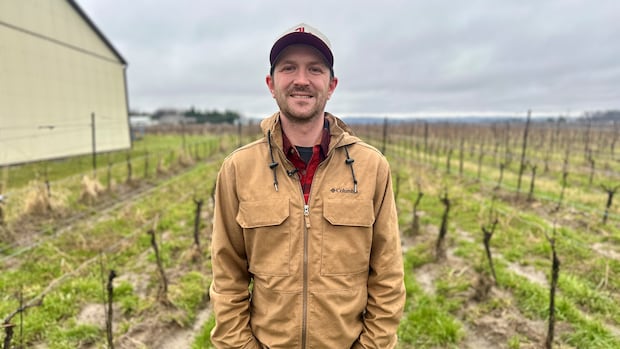
“The coldest we got was about –19, and sometimes when you’re certified organic the bud tolerance for frost is a little bit less,” explains Quinton Jenkins, owner of Jenkins Vineyards Niagara Inc.
“We can start to see bud death at –17 or –18, and that’s why we have wind machines, to help protect the vines from colder temperatures,” he said, referring to the tall, engine-driven fans that pull warm air down, raising the air temperatures around cold-sensitive perennial crops, including grapes.
At his vineyard, Jenkins said he’s only noted damage on the merlot grapes.
“And that’s between 30 and 50 per cent bud damage,” he said, adding the 2022 winter impact on many vineyards in the area was far worse.
Farmers like Jenkins are used to addressing the challenges of the region’s cold, snowy winters, but the longer lasting deep freezes the last few months pose a risk for the vines. This comes at a time when Ontario wine sales are skyrocketing amid the U.S. trade war.
But wine experts say the industry is resilient, and they plan to do whatever it takes to ensure Ontario wine remains in the spotlight.
Damage varies region to region
Stephen Mitchell, vice-chair of Ontario Craft Wineries and owner of Sprucewood Shores Estate Winery in Essex County, says the damage varies region to region and even between vineyards.
“Unfortunately the worst of the damage will be in Lake Erie North Shore and it sounds like there’s a fair amount of damage in that area,” he said.
“Places like Prince Edward County where winemakers were burying the vines already, they’re going to come out OK because that offers protection.”
Mitchell says many in the industry work together and when there’s damage, often winemakers will support each other’s businesses by sharing grapes.
“We’re starting the conversations about how to work with growers in Niagara who didn’t have issues and are able to source grapes so that everyone in the industry has wine,” Mitchell says, adding one tough winter is manageable, but multiple years in a row poses bigger problems.
Later in the spring, growers will have a better sense of what they lost.
Ontario winemakers hope to remain in the spotlight
The industry is also dealing with increased pressure, but for a good reason. Home-grown wine sales skyrocketed last year amid the trade war with the United States. The Doug Ford government directed the LCBO to pull U.S. booze from store shelves just over a year ago, shifting the focus to many smaller, natural winemakers in the province.

“It’s been amazing. It’s been such a turnaround,” said David Eiberg, Founder of Therianthropy, a small natural wine company.
“For the first seven years of our business, it was a difficult sell with Ontario wine, and that’s just shifted overnight,” he said. “But also Ontario wines are winning awards on an international stage.”
Eiberg has noticed a rise in customers taking the time to learn about and support local producers, a trend many hope will stay.
This includes Jenkins, who says he’s already sold all of his grapes.
“I don’t have to worry about sales for harvest this year. It would be nice if it continues going this way.”
Read the full article here