




NEWYou can now listen to Fox News articles!
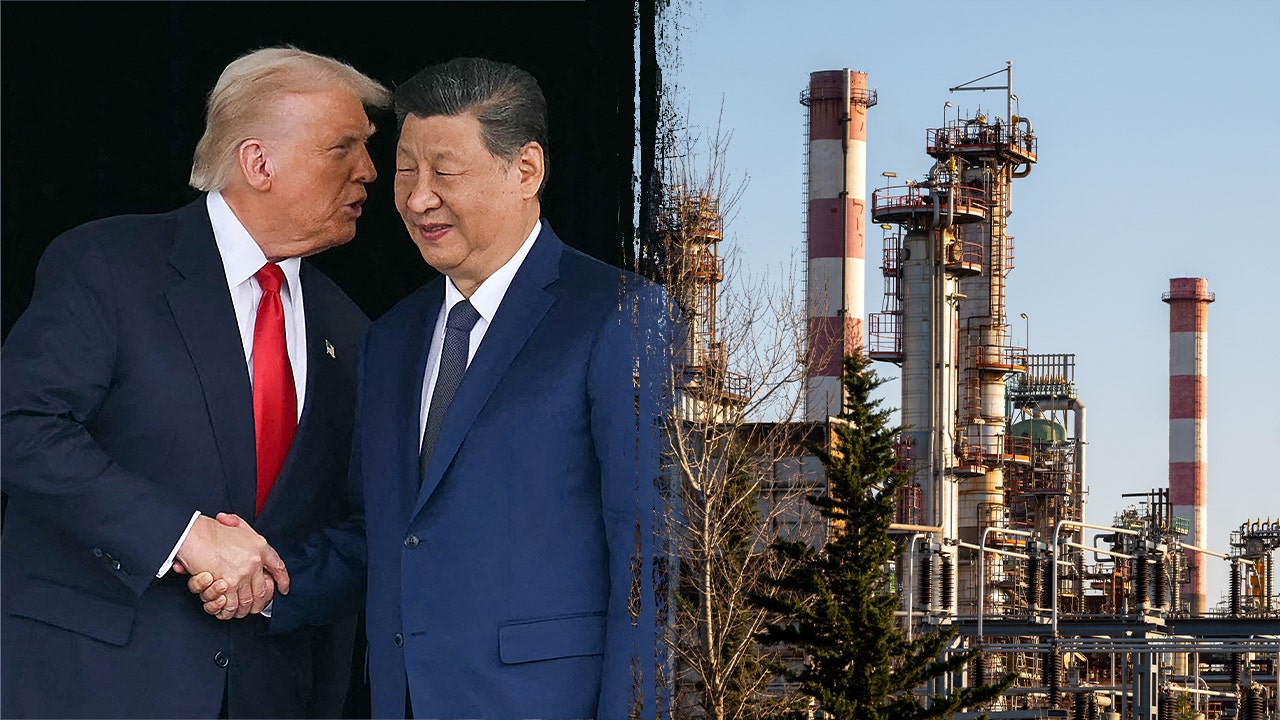
President Donald Trump’s decision to delay a planned meeting with Chinese President Xi Jinping as the U.S.’ conflict with Iran unfolds is raising a new question in Washington: whether pressure on global oil flows is factoring into U.S. leverage with Beijing.
The summit originally had been planned for March 31 to April 2, but Trump said March 16 that he had asked China to delay it by “a month or so,” explaining, “We got a war going on. I think it’s important that I be here.”
The following day, Trump said the meeting would instead take place in “about five or six weeks,” adding, “We’re working with China — they were fine with it.”
“The president has some things here at home in May that he has to attend to,” White House press secretary Karoline Leavitt told reporters March 16, adding that the two sides would set a date “as soon as we can.”
US INTEL SOFTENS ON CHINA THREAT, SAYS NO TAIWAN INVASION PLANNED BY 2027 DESPITE MILITARY BUILDUP
At the same time, U.S. strikes on Iran — and earlier pressure on Venezuela — have been affecting countries central to China’s energy supply, disrupting shipping and raising costs without fully cutting off flows.
China remains the largest buyer of Iranian oil, and shipments are still moving despite the conflict. But increased risk, higher prices and logistical disruptions are squeezing one of Beijing’s most important energy lifelines — raising the prospect of Washington gaining leverage by driving up the cost and risk of the oil China depends on.
Pressure on China’s energy and influence
In recent months, U.S. actions have hit two countries where China has built deep economic ties — Venezuela and Iran, both tied to Beijing through oil and investment.
In 2023, China helped broker a deal restoring relations between Saudi Arabia and Iran, a move widely seen as a sign of Beijing’s growing influence in the Middle East. That détente is now under strain as the conflict escalates, exposing the limits of China’s ability to sustain stability once fighting begins.
Those developments point to China’s position more clearly: a global power with significant economic reach, but limited willingness — and potentially limited ability — to shield its partners when conflict escalates.
“It is very much connected,” said Brent Sadler of the conservative Heritage Foundation Washington think tank. “It’s all connected to China at the end of it.”
For Beijing, the stakes are primarily economic. China is the world’s largest oil importer, and disruptions to Iranian supply can raise costs, complicate logistics and reduce access to discounted crude that has helped fuel its economy.
At the same time, the conflict itself is rooted in long-running tensions with Iran, including its nuclear program, missile capabilities and support for regional proxy groups.
“It’s not all about China,” said Piero Tozzi of the America First Policy Institute. “It’s primarily about Iran.”
That distinction — between what is driving the conflict and what it affects — has shaped the debate in Washington over how much the fallout could influence broader U.S.-China dynamics.
The delay adds another layer to that dynamic, coming as energy markets tighten and U.S.-China discussions continue.
Oil flows disrupted — but still moving
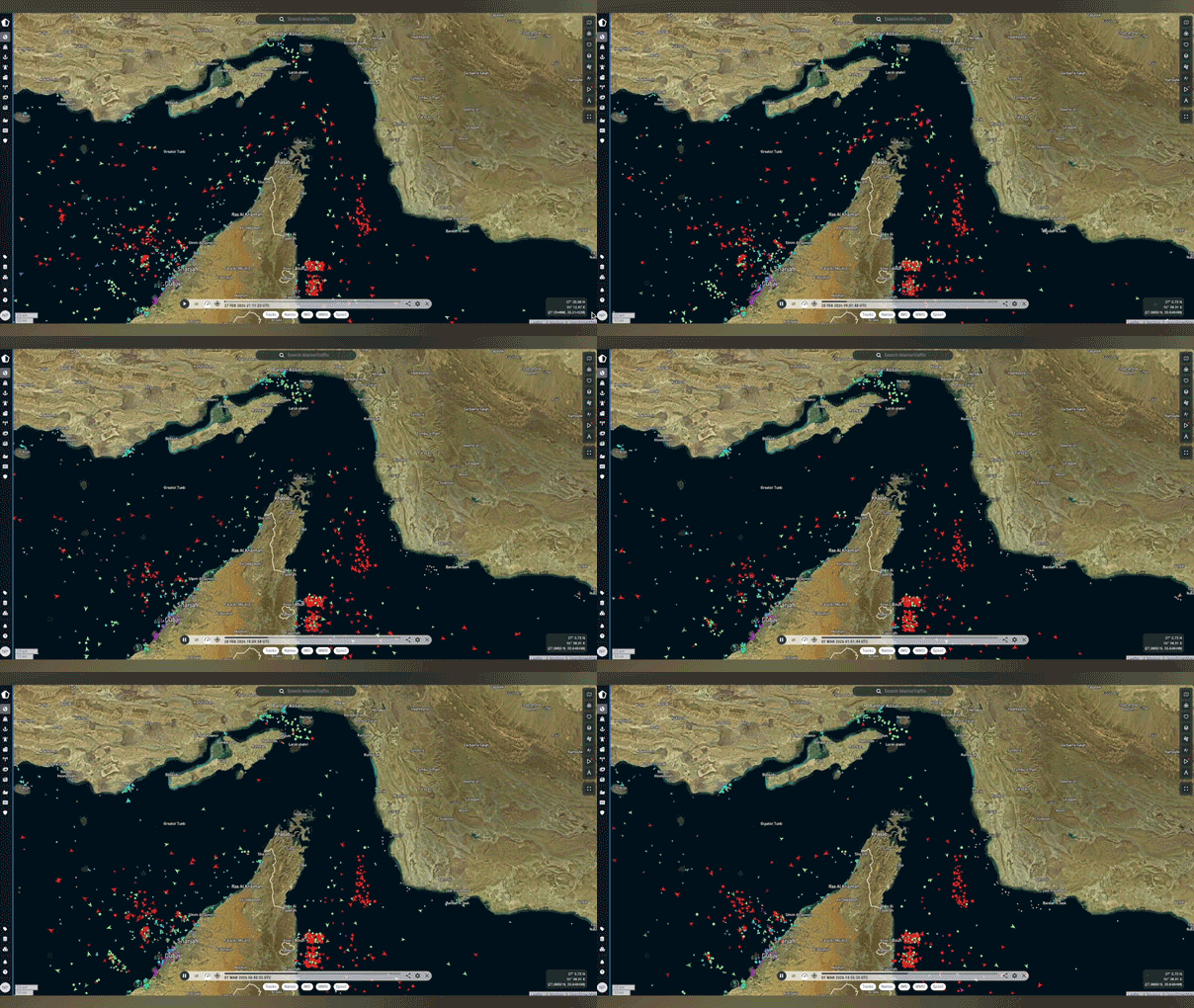
China’s dependence on Iranian oil remains a central vulnerability, even as the conflict disrupts shipping lanes and raises risks in the Strait of Hormuz, through which roughly half of China’s seaborne oil imports pass.
Shipping through the Strait of Hormuz has dropped sharply and become far more volatile, with only limited oil shipments still getting through under heightened risk.
Iran accounts for roughly 13% of China’s crude imports, while China remains Tehran’s largest customer, purchasing an estimated 80%–90% of its exports.
Much of that oil is sold at a discount — often $8 per barrel to $10 per barrel — giving Chinese refiners access to cheaper crude that is difficult to replace elsewhere.
US DESTROYS 16 IRANIAN MINE BOATS AS STRAIT OF HORMUZ OIL SHOWDOWN ESCALATES
Much of the trade is handled by smaller independent “teapot” refineries, allowing Beijing to maintain imports while limiting exposure of its state-owned energy companies to U.S. sanctions.
In many cases, those transactions are conducted in yuan rather than dollars, with proceeds often recycled into Chinese goods and infrastructure projects.
“One of China’s long-term objectives is challenging the supremacy of the dollar,” Tozzi said.
TRUMP ORDERS WAR DEPT TO POSTPONE STRIKES ON IRANIAN ENERGY SITES, CITING ‘PRODUCTIVE’ TALKS TO END WAR
“It’s going to be hard to turn off the supplier side of this,” Sadler said, pointing to the entrenched networks that keep crude moving despite sanctions and conflict.
Those networks — built over years of sanctions — allow Iranian oil to be rerouted through indirect channels, often using tankers that operate outside traditional tracking systems.
For China, that means continued access to supply, but at higher cost and greater risk, as shipments become more difficult to move and insure.
The result is sustained pressure rather than a cutoff: fewer shipments, higher prices and increased uncertainty around a supply line Beijing has come to rely on.
The Trump administration also has taken an unusual step to stabilize energy markets, temporarily easing sanctions on Iranian oil already loaded on tankers to allow those barrels to be sold. The short-term waiver, covering an estimated 140 million barrels, is aimed at easing supply disruptions caused by the conflict.
But it also widens access to oil that had largely been flowing to China, increasing competition for those barrels rather than allowing Beijing to remain the dominant buyer.
The U.S. also has eased some restrictions on Russian oil in recent weeks, allowing additional supply to flow to Asia. Taken together, the moves are reshaping global oil flows — forcing China to compete more directly for supply rather than relying as heavily on discounted crude.
U.S. intelligence assessments reflect similar limits, describing the China-Iran relationship as economically significant but largely transactional rather than a coordinated strategic bloc.
Combat experience — and a strain on stockpiles
The Iran conflict is giving U.S. forces real-world experience that cannot be replicated in training environments, allowing different branches of the military to operate together under live conditions and test how their systems perform.
“There’s a lot of real-world experience getting gained,” Sadler said. “We are refining our capabilities in a massive way.”
But those gains come with costs.
“We’re also wearing down our sailors, as well as the material, the aircraft and the ships.”
The same stockpiles being used in the Middle East would be needed to deter any conflict in the Indo-Pacific.
“We don’t produce munitions at the speed and capacity that we should be. It’s not a new problem,” Sadler said. “We’re going to go through a lot of our interceptor missiles very quickly.”
He warned that at current production rates, inventories could last only “maybe a week or two,” assuming they are used judiciously.
As of late 2025, the U.S. had roughly 414 SM-3 interceptors and 534 Terminal High Altitude Area Defense, or THADD, interceptors, according to the Center for Strategic and International Studies. THAAD is one of the U.S. military’s primary systems for intercepting ballistic missiles in their final phase of flight.
Those systems have been used heavily in recent Middle East operations, and they also would be central in any potential conflict with China, particularly in defending U.S. forces and allies in the Indo-Pacific from missile attacks.
Drawing down those stockpiles now raises a practical concern: the more the U.S. uses these interceptors in the Middle East, the fewer are immediately available for a high-end conflict with Beijing.
China keeps its distance
Beijing has avoided direct involvement in the U.S.–Israel conflict in Iran, focusing on diplomacy, with its deep oil reserves as a fallback.
“They’re all very opportunistic,” Sadler said. “They don’t want to take any undue risk.”
CLICK HERE TO DOWNLOAD THE FOX NEWS APP
“The more diplomatic noise they make, the more it draws attention from their incapacity to stand up for their partners,” he said.
The conflict’s effects extend beyond the region, testing China’s role as a global power while forcing the United States to weigh immediate military demands against its longer-term competition with Beijing.
Chinese officials said they were “highly concerned” by the escalation and urged an immediate halt to military operations, while Foreign Minister Wang Yi described the strikes as “unacceptable.”
The Chinese embassy could not immediately be reached for comment.
Read the full article here