




Topline
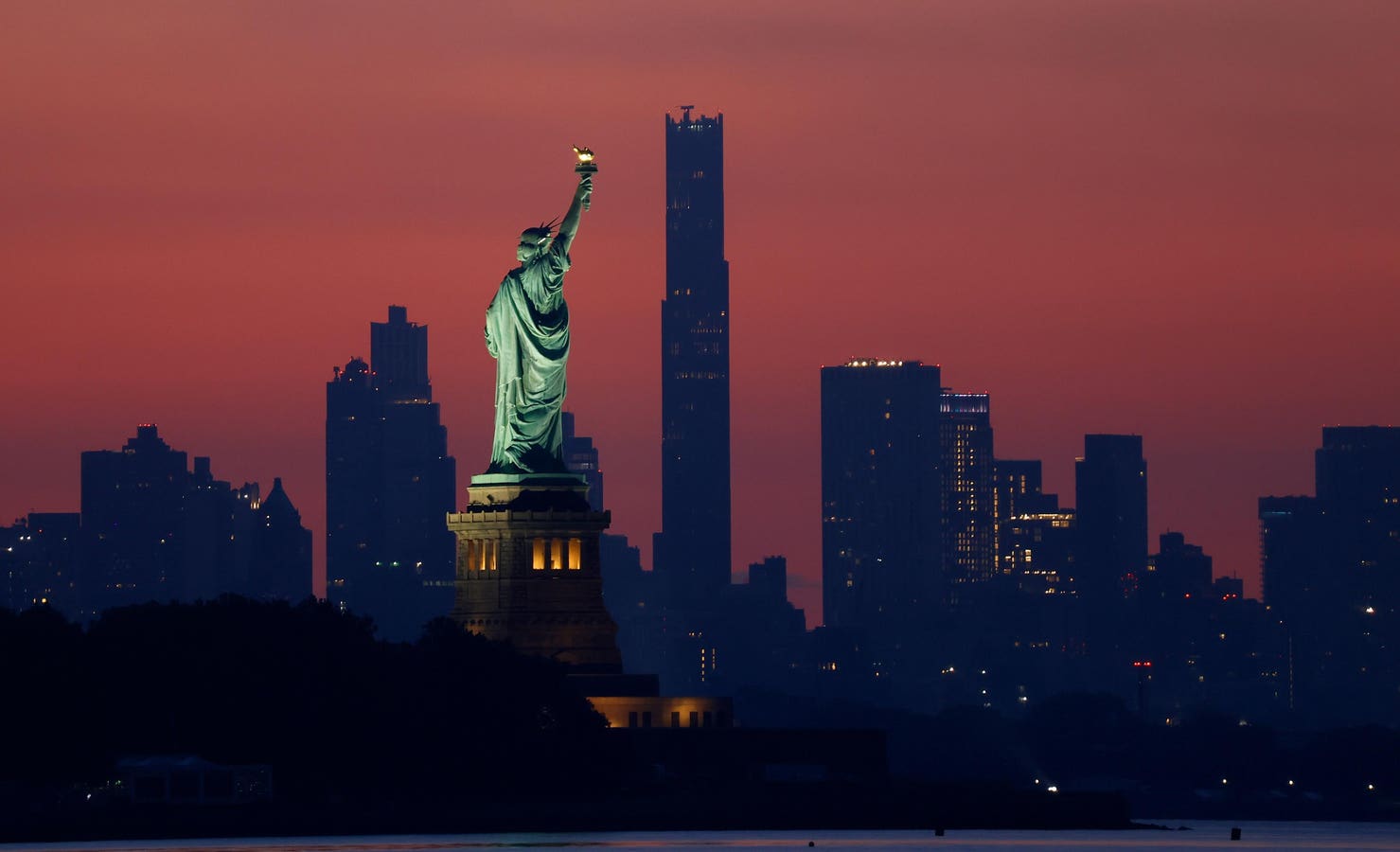
A Justice Department attorney argued to a federal appeals court Friday that the Trump administration could hypothetically bulldoze the Statue of Liberty and Americans with cultural ties to the landmark couldn’t sue them for it, as the Trump administration fights to defend the construction of President Donald Trump’s planned White House ballroom.
Key Facts
The Trump administration argued before a federal appeals court in Washington, D.C., on Friday over the fate of Trump’s planned 90,000-square-foot ballroom, after a lower court judge ruled the construction couldn’t move forward without Congress’ approval.
As part of those arguments, the attorney representing the DOJ in court, Yaakov Roth, argued to the court that people who felt aggrieved by visual changes to the White House didn’t have standing to sue over it once demolition to the East Wing, which was bulldozed to make way for the ballroom, had already begun.
Judge Patricia Millett raised several hypothetical questions to Roth about whether people with some kind of tie to landmarks could sue over their demolition, such as whether an ancestor of slaves who built the White House could sue if the main mansion were ever demolished—which Roth argued they could not, at least after demolition had already begun.
Millett criticized the government’s position that it could not be sued as long as it “goes too fast” in demolishing a landmark, before questioning whether the same line of thinking would apply to the Statue of Liberty.
The judge asked if people whose ancestors saw the Statue of Liberty as their first view when they immigrated to America could sue “if the government decides very quickly and bulldozes the Statue of Liberty.”
Roth argued those ancestors could not sue, agreeing with Millett when she asked if “nothing can be done” in that case.
What to Watch for
The federal appeals court will now deliberate on whether to allow the construction of Trump’s ballroom to move forward, after previously allowing construction to continue in the meantime. The Trump administration has argued construction is already too far along to reasonably be stopped by the courts, and has instead said any directive to halt the ballroom project must instead come from Congress—where a proposal to halt construction has already failed to pass. It’s unclear how long it could take the appeals court to rule.
Chief Critic
Critics of the Trump administration expressed outrage on social media after Politico first reported the DOJ’s exchange with Millett over the Statue of Liberty. “There is nothing left of the Justice Department I worked at,” former federal prosecutor Joyce Vance, a prominent Trump critic, said on X on Friday.
Key Background
The litigation at issue Friday was brought against the Trump administration by the nonprofit National Trust for Historic Preservation, which argues the executive branch does not have authority to construct the new ballroom without congressional approval. The lawsuit also brings claims from Patricia Hoagland, a National Trust member and scholar on historical preservation who regularly gives walking tours around the White House. She argued the visual changes to the White House cause “permanent and irreparable harm to the White House and President’s Park” and hurt her own “aesthetic, cultural, and historical interests.” Judge Richard Leon ruled in March that Hoagland likely had standing to sue on those grounds, writing the plaintiff had “adequately described the “specific ways in which” her “interests in … [the] aesthetic … use and enjoyment” of the White House’s grounds would “be irreparably injured” without construction being stopped. The judge also ruled against the ballroom’s construction more broadly and ordered the administration to stop construction while litigation moved forward, writing the National Trust was likely to succeed in the case because “no statute comes close to giving the President the authority he claims to have.”
Read the full article here