




Vertiv stock is up 86% since the beginning of 2026 in the wake of huge growth in order backlog reported in February and a first-quarter 2026 financial report that exceeded consensus estimates and raised full-year guidance.
What is behind the surge in shares of this provider of power supplies, liquid cooling and services for data centers?
Vertiv makes the plumbing for AI data centers, which are being built at a frantic pace — with 2026 hyperscaler capital expenditures forecast to grow 71% to about $650 billion — to keep up with surging demand for AI.
The root cause of this surge is fear of missing out on artificial general intelligence. “If we end up misspending a couple of hundred billion dollars, I think that that is going to be very unfortunate, obviously… But the risk is higher on the other side,” Meta CEO Mark Zuckerberg said during Meta’s thid-quarter 2025 earnings call.
“If superintelligence is possible in three years but you built it out assuming it would be there in five years, then you’re out of position,” he added.
Is there anything that could stop Vertiv’s stock from rising faster? All it would take is an earnings report featuring revenue growth, margins, or earnings per share — or forecasts of the same – that fall short of investors’ rising expectations.
Investors ought to consider risks to the company’s ability to continue growing profitably. These include Vertiv’s decision to stop disclosing backlog, possible high customer concentration, risk of customer backwards integration and the sustainability of the company’s high margins.
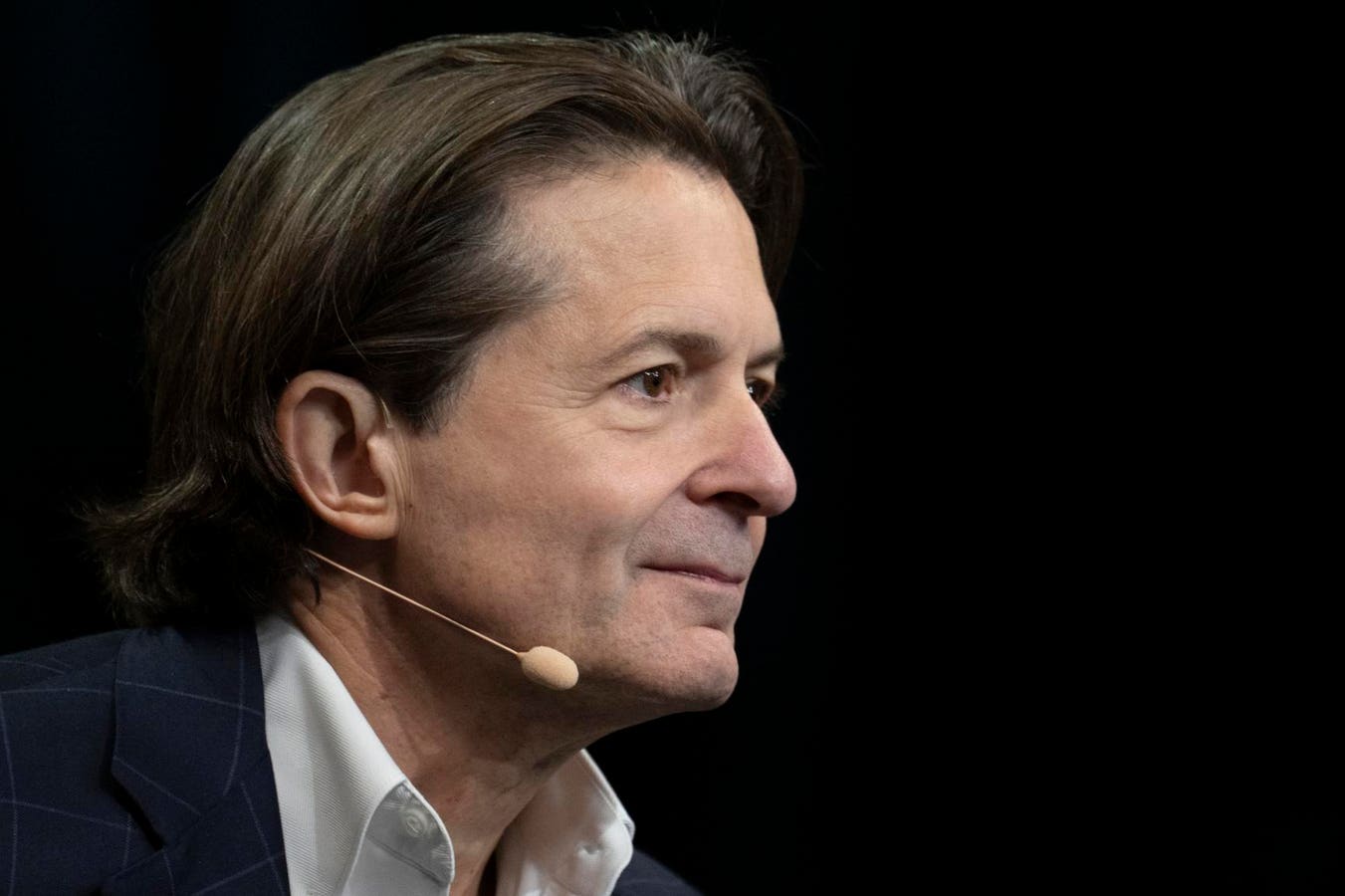
Vertiv does not see a slowdown ahead. “Use of artificial intelligence is just scratching the surface,” Vertiv CEO Giordano Albertazzi told me in an April 23 interview. “We are in the early stages of the data center buildout.”
Vertiv’s partnership with Nvidia give the company an early look at the next generation of graphics processing units. “We are looking at the evolution across GPUs and efficiency of tokens keeps going up. There is still more demand than efficiency gain and demand for our products and services will continue to increase,” he added.
Read on for the bull and bear cases for Vertiv stock and what Albertazzi told me about these risk concerns.
Vertiv Stock: The Bull And Bear Cases
The bull case for Vertiv assumes the company can continue to beat expectations and raise guidance for the foreseeable future. The bear case hinges on Vertiv’s high valuation and rising expectations combined with the increasing strength of growth headwinds.
Bull Case: Why Optimists See More Upside
Vertiv’s first quarter financial report beat expectations and raised guidance. The company’s revenue rose 30% to $2.65 billion; adjusted earnings per share of $1.17 beat consensus by 17 cents; adjusted operating margin increased 430 basis points to 20.8% and revenue guidance for the current fiscal year increased to a range — the midpoint of which is $13.75 billion.
Two significant tailwinds could sustain growth in demand:
- Hyperscalers’ inability to build sufficient capacity to meet AI demand. “We’ve been short now for many quarters,” Microsoft CFO Amy Hood said on the company’s first quarter 2026 earnings call, according to Computer Weekly. “I thought we were going to catch up — we are not. Demand is increasing. It is not increasing in just one place, it is increasing across many places,” she added. Google CEO Sundar Pichai, made a similar comment, per CIO Dive.
- Rising adoption of agentic AI is further straining computing resources. Training compute for frontier models is doubling every 5.2 months, noted Epoch AI, which added reasoning/agentic models like OpenAI’s o3 can demand “up to 100× more computational resources.” Moreover, Nvidia projects computing demand for AI inference compute will exceed training compute by 118-fold in 2026, with inference taking 75% of total AI compute by 2030, according to Introl.
This rising demand in AI computing drives growth in Vertiv’s core market of liquid cooling. The total liquid cooling market rose 156% in the second quarter of 2025, noted Dell’Oro Group, which anticipates 18.9% compound annual growth in the market from $3 billion in 2025 to $6 billion by 2029.
Bear Case: Why Skeptics See Trouble Ahead
The bear case hinges on Vertiv’s high valuation and questions about the company’s ability to achieve its future margin increases, and an expected slowdown in hyperscaler capital expenditure growth in 2027.
Such concerns caused one analyst to cut his price target on Vertiv last month. In lowering his 12 month price target 10% to $260, Jefferies analyst Brett Lindsay argued the company’s longer term operating margin forecast is “elevated,” reported Sherwood News.
Moreover, Lindsay sees the stock’s 41x forward price/earnings ratio depending on “sustained execution” which will be difficult to achieve as hyperscaler capex growth decelerates next year, per Investing.com.
What Vertiv Says About The Biggest Risks
Ultimately, the biggest risk to Vertiv could be the company’s dependence on a small number of large companies – the hyperscalers. If Lindsay is right about slowing capex, Vertiv’s growth and stock price could drop.
Here are four risk-related topics about which I spoke with Albertazzi and his Apr. 23 comments on each:
- The company’s decision to stop disclosing its backlog – which was $15 billion in the fourth quarter of 2025. Investors seek more information about the backlog – such as whether prices are subject to renegotiation. He did not respond directly to my question – but suggested Vertiv creates so much value that its prices are not under pressure. “We are gaining market share because of the value we create for customers,” he said, adding “Because of the complexity of the technology, our service organization is our superpower;”
- High customer concentration – with Meta, Microsoft, and Amazon accounting for an estimated 45% to 50% of total revenue. Since these companies are planning significant layoffs to offset the high cost of AI computing buildout they could reduce their capital expenditure growth rate – which would diminish Vertiv’s growth. A case on point is a reported 10% cut planned for Meta’s workforce, per the Wall Street Journal. He declined to comment specifically on such concentration. “We have a broad customer base,” Albertazzi said, adding “We are not specific about how much revenue we receive from hyperscalers;”
- The risk of customer backwards integration. Some hyperscalers – notably Microsoft and Google – are developing their own liquid cooling technology, per Geekwire. “We do not see a dramatic change in behavior in terms of vertical integration,” Albertazzi said;
- The sustainability of Vertiv’s high prices. Vertiv forecasts adjusted operating margins of 23.1% in 2026 – rising to 25% by 2029, compared to rival Schneider Electric’s mid-teen margins. If rivals can offer competitive hardware and services, Vertiv could be forced to lower prices. “We can’t compare to others but there are many drivers of the value we bring to customers,” he told me. “We are thought leaders in the data center business and we continue to invest in innovation. Our partnership with Nvidia enables us to be the installer before the launch of new GPU generations. And our service – including project management during construction and during the life cycle of critical infrastructure leads to a multidimensional relationship.”
What’s Next For Vertiv Stock?
Albertazzi’s responses to my questions do not reduce the uncertainty regarding these risks. More specifically, I find the company’s decision to stop reporting backlog and its vagueness regarding customer concentration to be less-than-bullish signals.
Nevertheless, based on an average price target of $309.75 from 17 Wall Street analysts, Vertiv stock has 2.6% upside.
This suggests Vertiv is about fully valued. One optimistic analyst suggested the company’s service business could warrant a higher valuation. “VRT just may transition from a capex story to a capex + annuitized aftermarket story within just 2–3 years,” Melius analyst Scott Davis said, according to TipRanks.
If you think Vertiv can do this, the stock may have much further to run. On the other hand, if hyperscalers slow their capex growth, Vertiv’s growth could slow in response, and the stock could fall from its peak.
Read the full article here