




It’s a homecoming to rock your world.
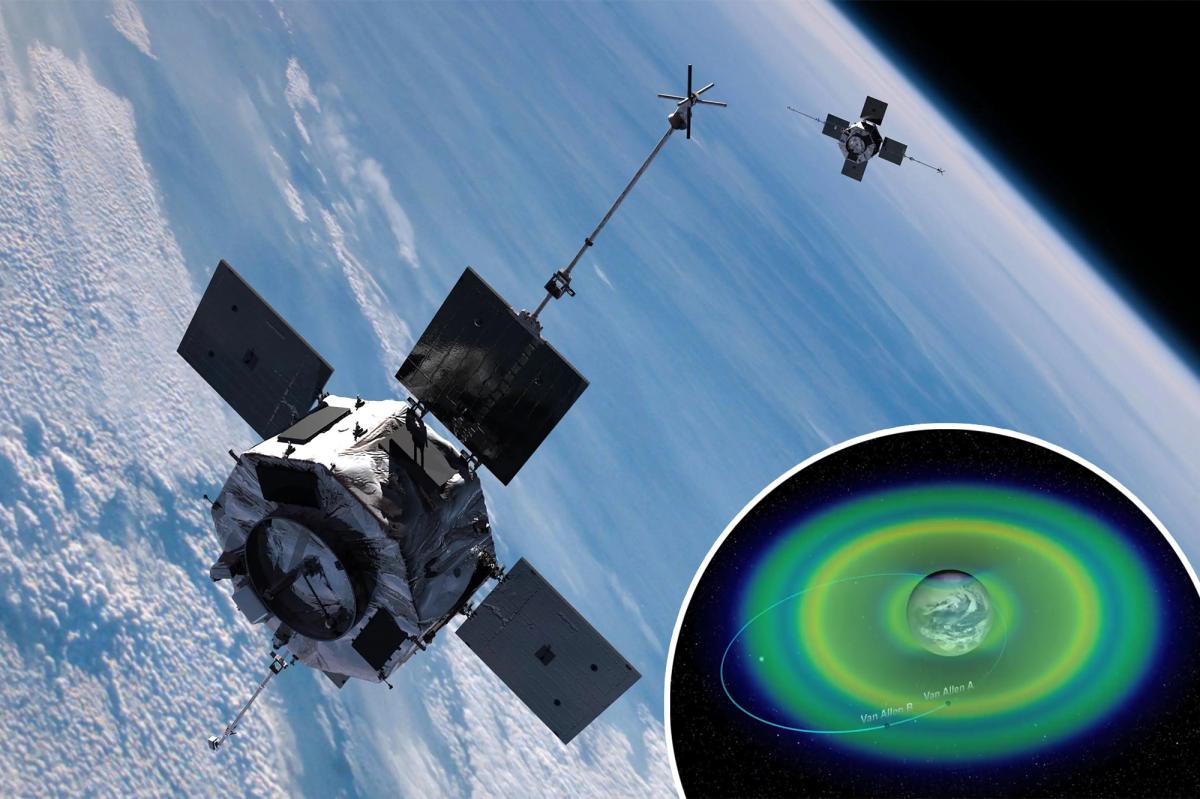
A 1,323-pound spacecraft is expected to rip through Earth’s atmosphere Tuesday night, warns NASA of the incoming juggernaut.
“The U.S. Space Force predicted that the [satellite] will re-enter the atmosphere at approximately 7:45 p.m. EDT on March 10, 2026,” announced the aeronautics administration in a statement Monday, noting a 24-hour window of uncertainty for its landing.
“NASA expects most of the spacecraft to burn up as it travels through the atmosphere,” continued the bulletin, “but some components are expected to survive re-entry.”
It’s a frightening return with potentially dangerous returns.
NASA, however, assures that the “risk of harm coming to anyone on Earth is low — approximately 1 in 4,200,” per the update.
The slim-to-none chance of injury takes into account that water covers roughly 70% of the Earth’s surface. So, any surviving fragments of the inbound machinery are likely to hurl into the ocean rather than atop some hapless chap’s head.
Phew!
Still, NASA finds that the approaching colossus bears watching.
From 2012 to 2019, the spacecraft, the Van Allen Probe A, alongside its twin, Van Allen Probe B, flew through the Van Allen belts — rings of charged particles trapped by Earth’s magnetic field — to determine how particles were gained and lost.
The belts shield Earth from cosmic radiation, solar storms, and the constantly streaming solar wind that are harmful to humans and can damage technology, “so understanding them is important,” said NASA.
Both Van Allen probes were designed for a two-year mission into the cosmos, but ultimately spent nearly seven years gathering unprecedented scientific data on permanent radiation belts.
NASA was eventually forced to nix the endeavor when the spacecraft ran out of fuel and were no longer able to orient themselves toward the sun.
The devices were originally forecast to reenter Earth’s atmosphere in 2034.
But those calculations were made before the current solar cycle, which has proven far more active than expected.
In 2024, scientists confirmed the sun had reached its solar maximum, triggering intense space weather events. These conditions increased atmospheric drag on the spacecraft beyond initial estimates, resulting in an earlier-than-expected reentry, NASA said.
The experts insist that the data collected from its Van Allen Probes mission, “still plays an important role in understanding space weather and its effects.”
“By reviewing archived data from the mission, scientists study the radiation belts surrounding Earth, which are key to predicting how solar activity impacts satellites, astronauts, and even systems on Earth such as communications, navigation, and power grids,” reads the missive.
“By observing these dynamic regions, the Van Allen Probes contributed to improving forecasts of space weather events and their potential consequences.”
Van Allen Probe B is not expected to reenter Earth’s atmosphere before 2030.
Read the full article here