



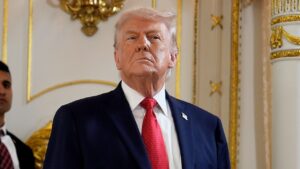
I recently wrote about how Donald Trump’s stance toward Greenland, and the actions he’s taking to push for its acquisition by the U.S., could significantly cost taxpayers. The past week first showed some negative implications and then some reversals.
Given recent history, don’t expect things to become clearer or more stable.
A Greenland Refresher
Trump had made it clear that he wanted Greenland on a personal psychological level for success, as a recent extensive New York Times report brought to light. As Reuters reported, Trump connected his stance toward Greenland to his not having received the Nobel Peace Prize.
Beyond personal psychology, the question involves geopolitics on a vast scale, including putting the U.S. at odds with all NATO nations. The “most fundamental principle” of the North Atlantic Treaty is Article 5, which states that “an armed attack against one NATO member shall be considered an attack against them all.”
There were three basic ways for Trump to “own” Greenland for his psychological comfort: an approved purchase, the use of military force, and persuasion of Denmark and NATO to allow Trump to have his way.
The Short-Term Downside
Trump’s persuasion came in the form of a threat: agree to his desires or he would impose additional 10% tariffs, starting Feb. 1, on goods from Denmark, Norway, Sweden, France, Germany, the Netherlands, Finland, and Great Britain. The new additional tariffs would grow to 25% on June 1, without a deal.
Markets took immediate hits over concern about the continued unpredictability that is a characteristic of the current administration. Between Friday, Jan. 16, and Tuesday, Jan. 20, the S&P 500 dropped almost 2.1%, and that is with the major tech companies as part of the mix. The Dow Jones Industrial Average dropped 1.7%. The Nasdaq? Down 2.4%.
The 10-year Treasury Note yield, which is the basis of many interest rates, including the 30-year home mortgage, jumped from about 4.17% to 4.29%, a difference of 0.12 percentage points, which is a big change in the context.
A Quick Reversal
Then came the news on Wednesday, Jan. 21, that Trump pulled back on additional tariffs after reaching the “framework of a future deal” on Greenland and the Arctic region with NATO Secretary-General Mark Rutte, according to various reports, including one from The Wall Street Journal. The Journal also quoted Trump earlier in the day as saying, “We probably won’t get anything unless I decide to use excessive strength and force, where we would be, frankly, unstoppable, but I won’t do that.” He added, “That’s probably the biggest statement I made, because people thought I would use force, but I don’t have to use force. I don’t want to use force. I won’t use force.”
Equity markets came back some, roughly halfway to where they were at the start of the year. The 10-year Treasury yield is around 4.25%.
But Now What?
For consumers and investors, what is important at the moment is trying to maintain some perspective. Last year showed how unpredictable the Trump administration’s strategies can be. Watching tariffs was like trying to track a yo-yo while someone was performing stunts with it.
The agreement between the U.S. and NATO was for a framework of a future deal. That says next to nothing. More important than changes in equities is how bonds are running. Markets and investors decide these and then tend to be more careful and predictive than stocks. Even if they have cooled a bit, investors are still considering what the deal framework might mean, what the impact of climbing national debt will be, and whether there is still a chance for higher inflation going forward. (That the 10-year yield is still elevated is a signal that the bond market is not convinced that Trump, like a throwback to the late President Gerald Ford, will Whip Inflation Now.)
Read the full article here