




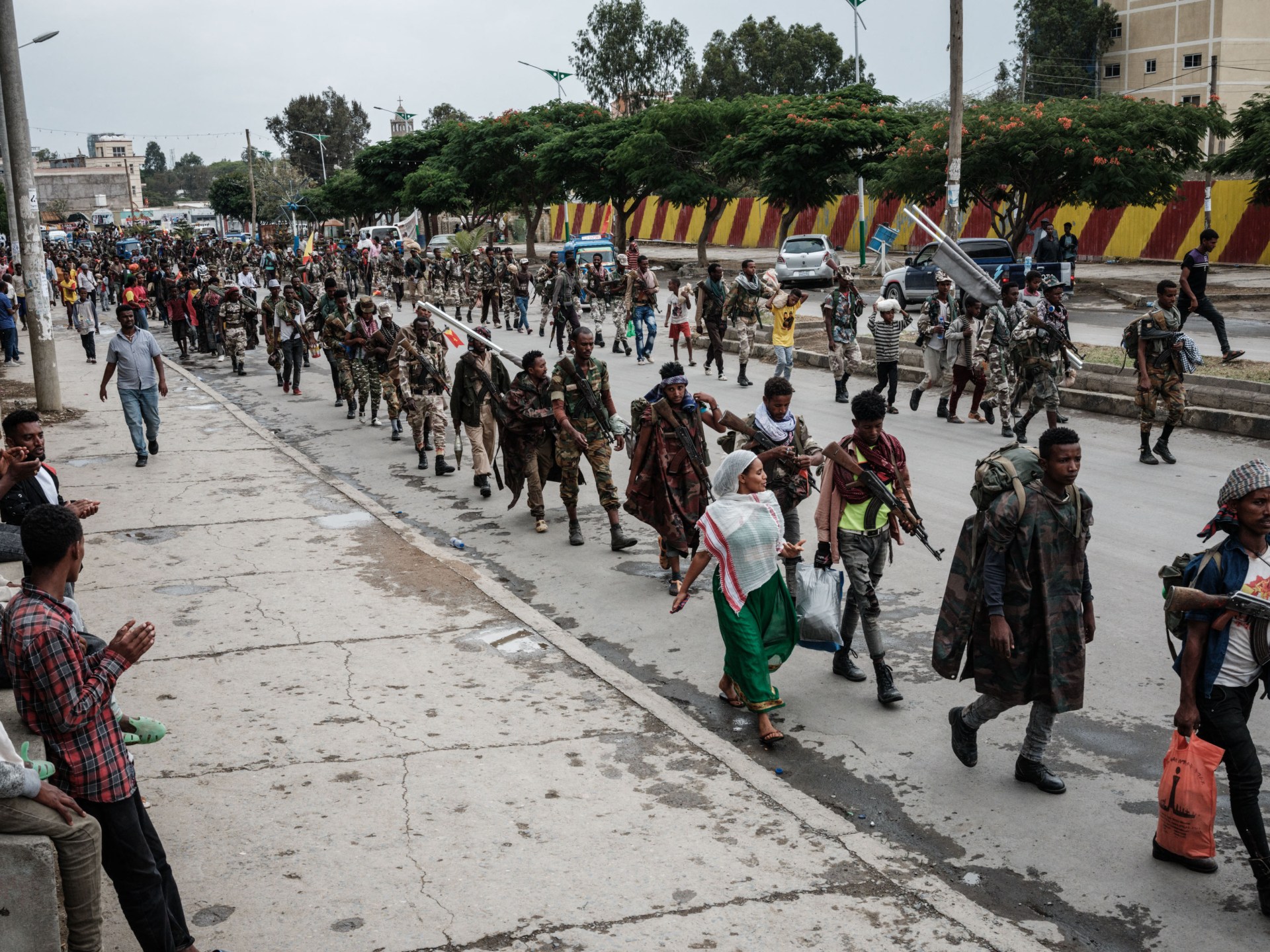
Amnesty International says impunity for past abuses has left civilians vulnerable as fighting returns to Tigray.
Published On 6 Aug 2026
When Ethiopia’s federal government and Tigrayan forces signed the Cessation of Hostilities Agreement in November 2022, it appeared that one of Africa’s deadliest conflicts had finally come to an end.
The guns fell silent, reconstruction began, and millions of Ethiopians hoped the postwar period would bring justice for atrocities committed during the conflict.
Amnesty International argues that those hopes were never realised.
Instead of investigating abuses documented by international and local human rights organisations, accountability efforts steadily unravelled. International investigative mandates were allowed to expire, the Ethiopian government abandoned its proposed transitional justice process, and allegations of war crimes and crimes against humanity remained largely uninvestigated and unpunished.
Today, less than four years after the agreement was signed, fighting has returned to Tigray.
Amnesty says the clashes that erupted in early August between Tigrayan forces and the Ethiopian National Defence Force are a stark reminder of the dangers of impunity. The organisation warns that civilians once again face the risk of serious human rights abuses, even though the region has yet to recover from the devastation of the previous war.
The renewed fighting comes amid ongoing conflicts in Ethiopia’s Amhara and Oromia regions, where Amnesty says grave human rights violations continue to be committed. Together, the organisation argues, these conflicts reflect the widening scope of Ethiopia’s security and human rights crisis.
A legacy of abuse
During the war in northern Ethiopia between November 2020 and November 2022, Amnesty International and other international organisations documented widespread abuses that they said could amount to war crimes and crimes against humanity.
The violations included extrajudicial killings, sexual violence, forced displacement, and the denial of humanitarian assistance.
According to Amnesty, the absence of independent investigations and credible prosecutions sent a dangerous message: that even the gravest crimes could be committed without consequence. The organisation argues that this failure of accountability helps explain the return of violence.
International oversight of Ethiopia’s human rights situation also weakened after the mandates of key investigative mechanisms established by the United Nations and the African Union expired. Amnesty says this diminished the international community’s ability to document violations and hold those responsible to account.
The organisation also points to a sharp deterioration in conditions inside Tigray in recent months. It cites increased restrictions on independent media, forced recruitment campaigns affecting thousands of people, and tighter limits on freedom of movement as evidence that the human rights situation was worsening even before the latest round of fighting began.
In response, Amnesty has called on Ethiopia’s federal authorities and the Tigrayan authorities to comply with international human rights law and international humanitarian law, protect civilians, and allow human rights monitors, humanitarian organisations, and independent media access to affected areas.
For Amnesty International, the danger facing Tigray today lies not only in the return of armed conflict, but also in the possibility that the same abuses documented during the previous war could be repeated if justice remains absent and impunity endures.
Read the full article here