




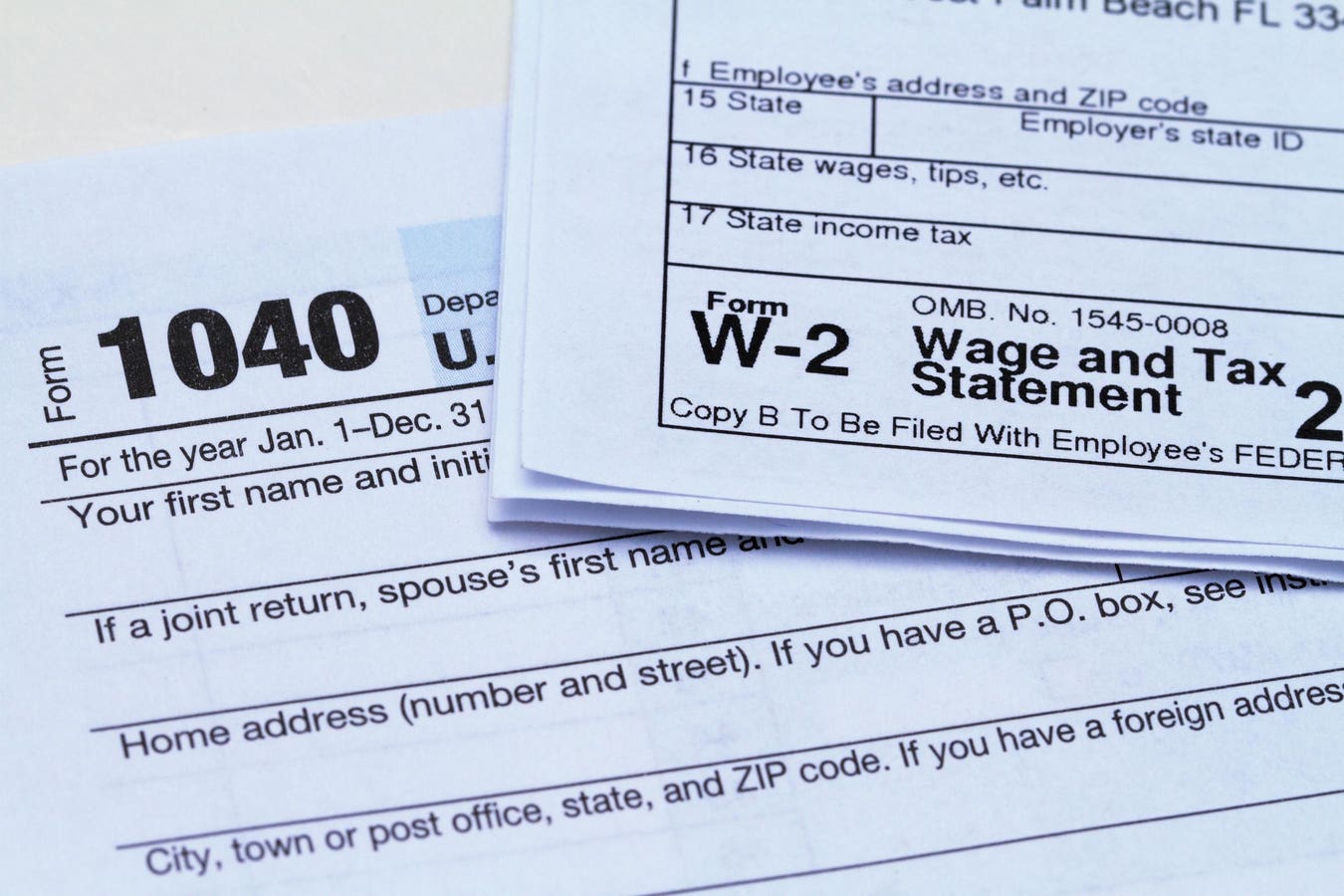
With tax season officially opening on January 26, 2026, you’ve likely received several tax reporting forms already, or they are on their way. This is the time of year when mailboxes, inboxes, and online portals start filling up with tax documents, and knowing what to expect (and when) can save you time and frustration. Here’s what you need to know about tax form due dates and what to do if you don’t receive yours on time.
Your Form W-2
Most taxpayers are on the lookout for Form W-2, which employers must furnish to employees by February 2, 2026. A form is considered on time if it is properly addressed and mailed on or before the due date. When a due date falls on a weekend or legal holiday, employers get until the next business day. In 2026, January 31 falls on a Saturday, so employers have until Monday, February 2, 2026, to get your Forms W-2 to you.
(There is no automatic extension for providing Forms W-2 to employees. Employers can request limited relief in very narrow circumstances, but as a practical matter, employees should expect W-2s by early February at the latest.)
One important thing to keep in mind for 2026 is that Forms W-2 may not always include all the details needed to support special tax treatment for certain types of income, particularly tips and overtime pay. Those amounts may be eligible for special tax breaks this year, which makes good recordkeeping more important than ever. Before you start your taxes—or turn your information over to a preparer—make sure you have detailed pay stubs, tip logs, time records, and any employer-provided statements that show how your pay was calculated. Don’t assume your Form W-2 tells the whole story.
(Remember that workers who receive overtime may be eligible for a deduction for qualified overtime pay of up to $12,500—or $25,000 for married taxpayers filing jointly—while the maximum annual deduction for tipped employees is $25,000. You can find more about claiming those deductions here.)
Forms 1099 And Other Tax Forms
In addition to Forms W-2, many other tax forms—most notably Forms 1099—are issued early in the year. Most Forms 1099, including Forms 1099-NEC, 1099-INT, and 1099-DIV, are due to recipients by February 2, 2026.
For example, Form 1099-NEC, used to report payments to independent contractors, must be furnished by February 2, 2026. As with Forms W-2, there is no automatic 30-day extension available for furnishing Form 1099-NEC. That’s intentional, since the IRS uses these forms early in the filing season to match contractor income.
Form 1099-INT (interest income) and Form 1099-DIV (dividends and distributions) are also due by February 2, 2026.
For many other Forms 1099, the furnishing deadlines are slightly later. Form 1099-MISC reporting rents, royalties, prizes, or other income is generally due to recipients by February 17, 2026, except when reporting certain payments—such as attorney fees—which remain subject to the earlier January 31 deadline (February 2 in 2026). The same later deadline applies to Form 1099-B (broker and barter exchange transactions) and Form 1099-S (proceeds from real estate transactions). These forms often involve more complex reporting, which is why they’re on a later schedule.
Form 5498, IRA Contribution Information, follows a different timeline. The due date is June 1, 2026, which is after Tax Day. Form 5498 reports IRA contributions, rollovers, Roth conversions, and fair market value information. Because IRA contributions can be made up until the tax filing deadline of April 15, 2026, the IRS allows custodians to wait until all contribution windows have closed before issuing the form. Importantly, you do not need Form 5498 to file your tax return.
You can find a list of the most common reporting deadlines here.
These deadlines apply to providing forms to taxpayers (the due dates for sending the same information to the IRS may be different). Some forms may arrive earlier than you expect, which is why it’s always a good idea to review your records carefully if you think something is missing. For example, if you redeemed U.S. savings bonds, Form 1099-INT may have been issued at the time of redemption rather than at year-end. If you donated a vehicle to charity, Form 1098-C is typically provided within 30 days of the sale or the contribution.
It’s also increasingly common for forms to be delivered electronically. While tax forms generally can’t be provided electronically without your consent unless a paper copy is also issued, you may have agreed to electronic delivery without realizing it. With e-statements, payroll portals, and online accounts, it’s easy to forget you checked a box somewhere along the way. Before assuming a form never arrived, check your email, your spam folder, and any online accounts you have with employers, banks, brokers, or payment processors.
Some Taxpayers Should Expect To Wait
If you’re waiting for information from a trust, estate, or pass-through entity—such as a partnership, S corporation, or LLC—you’ll want to be patient. Even though many of these entities now file a bit earlier with the IRS than they used to, they still tend to report later than individual filers would like. Because those entities must complete their own returns before issuing Schedules K-1, filing early often isn’t realistic. If you have concerns, your best bet is to reach out to the administrator or preparer handling the entity.
What To Do About Tax Forms That You Can’t Locate
If you believe a tax form hasn’t arrived by the due date, start by thoroughly checking your surroundings. Forms have a way of slipping into magazines, getting buried under mail on the kitchen counter, or ending up at the office instead of at home. It’s worth taking a few minutes to look before assuming there’s a problem.
Once you’re confident the form didn’t arrive, contact the issuer directly. In many cases, the issue is something simple, like an incorrect address or a piece of mail that went astray. If that’s the case, the issuer can usually send out a replacement without much hassle.
Tracking down a former employer can be more challenging, especially if the business has closed or moved. If that happens, try sending a note to the last known address in case there’s a forwarding order with the post office, or do a quick online search to see if the business relocated. I know it’s technically not your job to find your employer, but if you have time to click through to see what’s happening on The Traitors (OMG) or when the next episode of The Pitt will be released, you probably have time to search for a change of address.
Missing Tax Forms
The IRS generally advises taxpayers to wait until the end of February before escalating the issue. If you still haven’t received a required form by then, the IRS instructs you to contact them directly at 1.800.829.1040. When you call, have your identifying information ready, along with your employer’s or payer’s name, address, phone number, and—if possible—an estimate of your wages and withholding based on your final pay stub or account statement.
If the form still doesn’t arrive in time to file by the April deadline, the IRS allows taxpayers to file using Form 4852, a substitute for Forms W-2 or certain 1099s. The IRS emphasizes that this form should be used only when you’ve made a good-faith effort to obtain the original document. The estimates you report must be reasonable and based on the best information available to you.
If you later receive the actual tax form and it differs from what you reported using Form 4852, you’re required to amend your return using Form 1040-X. It’s not ideal, but it’s fixable—and required.
The IRS also warns against guessing or reconstructing income without documentation simply to file early. Because the IRS automatically matches Forms W-2 and 1099 to individual tax returns, discrepancies often result in notices, delayed refunds, or additional scrutiny. From the IRS’s perspective, waiting to file is almost always preferable to filing incomplete or inaccurate information.
Missing Social Security Forms
Missing Social Security forms follow a slightly different process. If you didn’t receive Form SSA-1099 or SSA-1042, the easiest solution is usually to print a copy online at www.ssa.gov/myaccount, with forms generally available beginning February 2, 2026. If online access isn’t an option, you’ll need to contact the Social Security Administration directly after that date by calling 1.800.772.1213 (TTY 1.800.325.0778) or by visiting a local Social Security office.
Taxpayers living outside the United States who can’t access their forms online should reach out to a Federal Benefits Unit for assistance.
If SSI is the only benefit you receive, don’t worry about a missing form—SSI payments aren’t taxable. Because SSI is a needs-based benefit and not considered income for tax purposes, you won’t receive a tax form (such as Form SSA-1099) for SSI payments.
(SSI is different from Social Security benefits. Social Security retirement, survivor, or disability benefits are funded by payroll taxes and may be taxable depending on your income.)
Bottom Line
I always recommend waiting to file your tax return until you have your tax forms in hand. You may think you know what’s on them, but guessing can create problems. Not only does it make life harder for your preparer, but it can also put them in a difficult position. The IRS prohibits tax preparers from e-filing returns without receiving certain forms, including Forms W-2, W-2G, and 1099-R.
The IRS’s position is simple: taxpayers should not file a tax return until they receive all required income documents, including Forms W-2 and 1099.
Filing before all forms are received can also increase your audit risk. The IRS matches Forms W-2 and 1099 against the information reported on your return, and mismatches trigger review.
My mom—who is right almost all of the time about everything—used to say it was okay to be different. That might be true in junior high, but it’s not true at tax time. You want your return to blend in with everyone else’s. Trust me: don’t give the IRS a reason to take a closer look.
Read the full article here