




Samsung’s Ballie Has Been Promised at Six Consecutive CES Shows. It Has Never Shipped. Here’s What That Tells Us About the Home Robot Market.
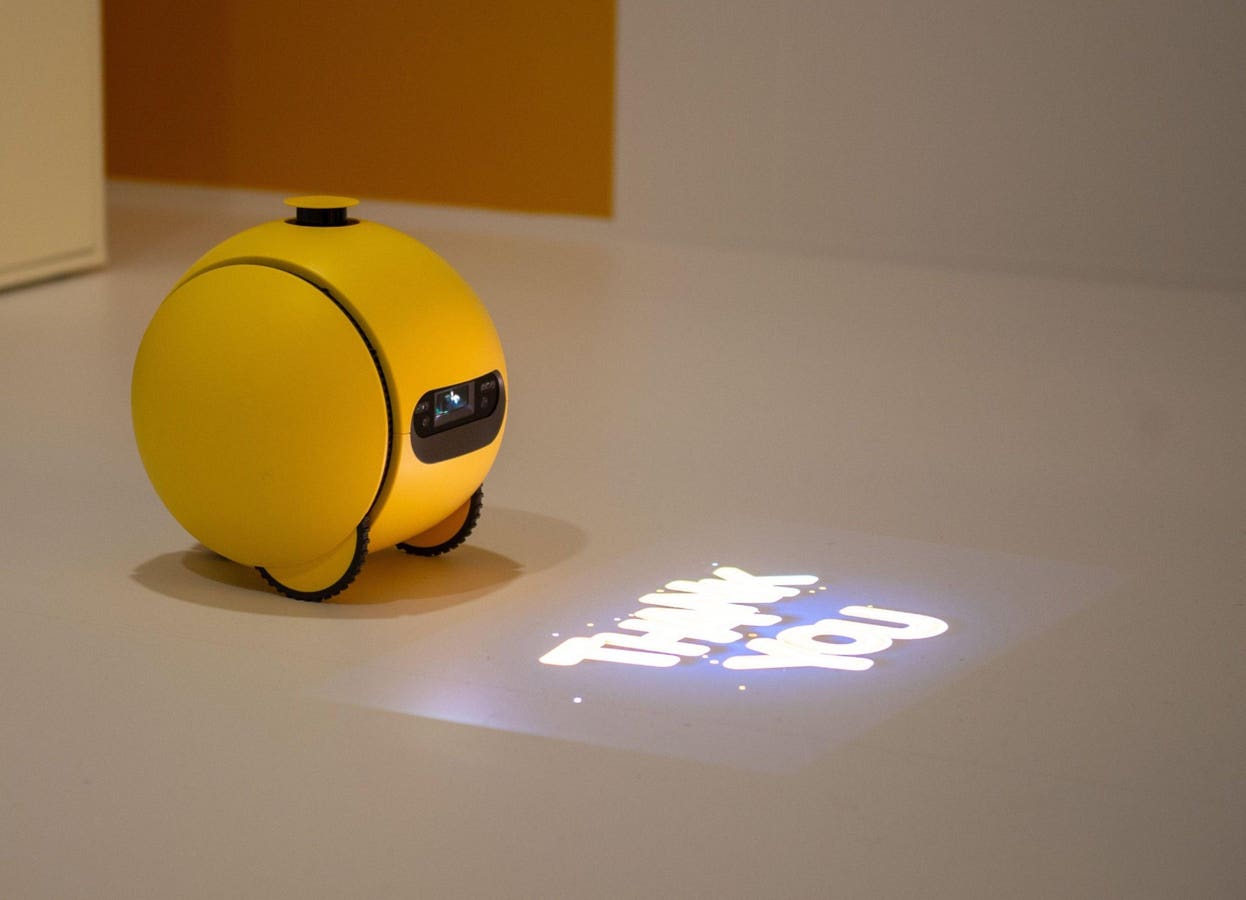
Samsung first showed Ballie, a ball-shaped rolling AI assistant, at CES 2020. It received upgrades at CES 2024. It was promised for the first half of 2025, then narrowed to summer 2025 for the U.S. and South Korea. That deadline passed. Samsung told TechRadar it was “continuing to refine and perfect the technology.” Then Ballie was absent from CES 2026 entirely.
In a statement to Bloomberg, Samsung described Ballie not as an upcoming consumer product but as an “internal innovation platform.” The company said the project has shaped how it approaches spatial awareness, contextual intelligence, and ambient AI across its product ecosystem. As of March 2026, the Ballie page on Samsung.com/us no longer exists. No price has ever been announced. No spec sheet has ever been published. No consumer has ever bought one.
OnOff.gr called it “the most famous piece of vaporware in robotics.”
The original article described Samsung as “leading this charge” with Ballie and presented the home robot market as if general-purpose AI companions are shipping at scale. They are not. This matters because the investment thesis, that specialized edge AI hardware will create sticky brand ecosystems through home robots, depends on those robots actually existing as consumer products. The hardware opportunity is real. The timeline is much longer than the original suggested.
What Actually Sells: Cleaning Robots
The household robot market was valued at roughly $11.7 billion in 2026, projected to reach $23.5 billion by 2031 at a 14.9% CAGR. That sounds impressive until you examine what’s being sold. Cleaning robots dominate with a 65% market share. The top five players (Roborock, Ecovacs, Dreame, iRobot, and Husqvarna) account for 52% of 2025 revenue. Chinese manufacturers lead through vertical integration, undercutting competitors by 20-30% while matching features.
The market research firms agree on one thing: the Roomba sells because it does one thing well. The successful consumer robots are specialized, not general-purpose. OnOff.gr’s analysis put the Ballie problem succinctly: “Is it a projector? A smart speaker? A companion robot? A baby monitor? A smart home hub? A fitness assistant? Samsung has never been able to give a clear answer, because the answer is ‘all of the above.’ And ‘all of the above’ isn’t a market.”
Amazon Astro, the closest competitor to what Ballie promised, remains in limited release with no major March 2026 updates on sales. A Chiang Rai Times analysis noted: “Home robotics remains hard. People don’t buy a mobile robot the way they buy a smart speaker. Astro looks less like a mass-market hit and more like a learning device.” Smart home assistant robots like Astro are expected to cost $1,000 to $5,000 when broadly available, a price point where they compete simultaneously against projectors, smart speakers, robot vacuums, tablets, and security cameras.
The Edge AI Thesis Is Real but Misapplied
The original article correctly identified edge AI, processing data on-device rather than in the cloud, as a significant technical trend. IDC does identify local inference as a critical development for 2026. Processing at the edge reduces latency and enhances privacy. These are genuine technical advantages.
But the article applied this thesis to a product category (general-purpose home companion robots) that doesn’t yet exist at consumer scale. The edge AI investment opportunity is more immediate in categories where products actually ship: robot vacuums with AI navigation and obstacle avoidance, smart home cameras with on-device person detection, and smartphones with local LLM inference. These are the products driving edge chip demand today, not rolling spheres that manage your entire home.
The Service Robot Opportunity in Japan and Elderly Care
The original article’s strongest claim: in Japan, robots addressing elderly care and home security provide value that justifies higher price points. This is documented. Japan widened its long-term care subsidy to cover 50% of eligible robot costs, directly catalyzing adoption in private residences. China earmarked CNY 10 billion ($1.4 billion) in 2025 for humanoid R&D with a household focus.
But these subsidized deployments are for specialized eldercare and monitoring robots, not general-purpose AI companions. The use case is specific: fall detection, medication reminders, remote monitoring for caregivers. The technology works because the problem is well-defined and the government provides economic incentive. This is a legitimate investment theme, but it’s a healthcare robotics story, not a consumer electronics story.
The Qualcomm Oryon Argument
The original article named Qualcomm as “the primary beneficiary” of the home robot shift, citing the Oryon CPU as strategic positioning for “battery-powered robotics.” Qualcomm’s Oryon is a custom CPU core that replaces licensed Arm Cortex designs while staying within the Arm instruction set architecture. The performance-per-watt optimization is real and relevant for mobile and embedded applications.
The problem: Qualcomm’s Oryon is currently shipping in laptops (Snapdragon X series) and flagships smartphones (Snapdragon 8 Elite), not in home robots. The home robot market is dominated by specialized motor controllers, LiDAR processors, and low-power SoCs from companies like Allwinner, Rockchip, and Qualcomm’s own lower-tier Snapdragon platforms. The premium Oryon architecture targets devices with $500+ price points and substantial compute requirements. The mass-market cleaning robots that actually sell use far cheaper silicon.
There is a long-term argument that as home robots become more capable and incorporate on-device AI inference (visual recognition, natural language processing, path planning), they will need more powerful edge processors. Qualcomm is positioned for that transition. But it’s a multi-year thesis, not a current revenue driver, and it depends on the general-purpose home robot category developing into a real market, which six years of Ballie delays suggest is harder than demos make it look.
What the Ballie Story Actually Teaches
Samsung is one of the world’s most capable hardware manufacturers. It makes the chips, the displays, the batteries, the sensors, and the smart home ecosystem that a product like Ballie would integrate with. If Samsung can’t ship a general-purpose home companion robot after six years of development, the engineering and market challenges are genuinely severe.
The successful home robot products share a pattern: they do one thing well (vacuum, mow, monitor), they’re priced for mass adoption, and they improve incrementally. The failed ones try to do everything (project, converse, monitor, control, entertain) and never ship. Ballie, Astro (limited release), and Jibo (shuttered) all followed the ambitious path. iRobot, Ecovacs, and Roborock followed the focused path and built real businesses.
The edge AI hardware opportunity in consumer robotics is real, growing at 15-20% annually, and concentrated in cleaning and lawn care. The general-purpose AI home companion market is aspirational, unproven, and littered with products that were demonstrated at CES but never reached a consumer’s home. Investors should build positions around the market that exists, not the demo that keeps getting one more year of refinement.
If you liked this, you’ll love the daily dose we send to our Substack crew. It’s chill, it’s sharp, and it actually helps. Hop on here.
Read the full article here