




Listen to this article
Estimated 5 minutes
The audio version of this article is generated by AI-based technology. Mispronunciations can occur. We are working with our partners to continually review and improve the results.
The fire that is burning out of control in Port Hope Simpson has more than tripled in size, as Day 2 of efforts to fight the blaze near the southeastern Labrador community comes to a close.
The fire that began at an estimated two hectares in size when it was mapped as a possible threat to the community on Wednesday reached five hectares by mid-Thursday morning. As of about 7 p.m., the latest update, it’s seven hectares, according to provincial forestry. However, any spread has not been into the town, thanks to activities through the day.
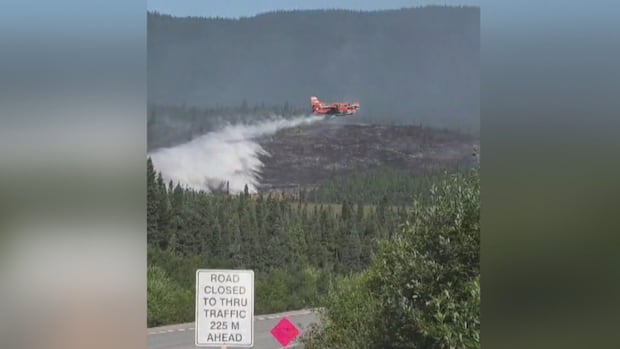
“Today, aerial suppression efforts were supported by three water bombers and two bucketing helicopters, which were effective in preventing the spread of the wildfire,” states the update.
“Ground crews were focused on structure protection and set up sprinklers near the Penny’s Pitstop gas station and Country Road.”
Residents on one street, Country Road, were evacuated by about 11:30 p.m. Wednesday, in an isolated decision. The fire came within 300 metres of one of the residences on the road in the pre-dawn hours. That was held off in part with the efforts overnight of local firefighters.
An evacuation order for the town has not been issued, however a state of emergency has been declared and residents remain under an evacuation alert. People are asked to be ready to leave.
Aerial equipment will be hitting the fire again tomorrow, while ground crews work with sprinkler hose lines, according to forestry. The firefighting effort has received a boost from the arrival of a structural protection trailer, sent in by the Nunatsiavut Government, plus additional firefighters.
“We are still not out of the woods. We have a lot of work ahead of us,” Port Hope Simpson Coun. Sarah Williams told CBC News Thursday afternoon.

Speaking at about 12:45 p.m. local time, she said there were no visible flames but the ground was still burning.
Water bombers, helicopters able to drop water and ground crews — about 30 firefighters as of midday, according to forestry — continued to work the scene.
“The winds that are coming now they’re afraid there’s going to be pop-up fires,” Williams said, explaining crews continued to race to douse the highest risk areas ahead of winds picking up.
Williams said over 100 of the local population of about 400 people left or indicated they’re in the process of leaving town. She noted emergency shelters are open in Mary’s Harbour and St. Lewis. In her own case, “nervous and anxious,” she said she’ll be heading out of town after finishing up for the night.
“My kids are currently with their in-laws in Charlottetown. I will be going back there. I stayed there last night. I would just feel safer not being in town tonight just in case something would happen,” she said.
Wind ‘bit of a concern’ says fire chief
Charlottetown fire chief Boyce Turnbull said his department was called shortly after the forest fire broke out around 3 p.m. Wednesday. While the crew returned to their own town, he said they got called back to Port Hope Simpson to help and remained on scene until 1 a.m., soaking the area.
“Today is a bit of a concern. We’re expecting warm temperatures into the high 20s and 40 km southwest wind, and unfortunately [it] is not the wind we would want in the area,” he said, heading into the day.
Turnbull said there was a lot of smoke early Thursday morning and, according to him, the helicopter couldn’t get off the ground as early as planned. However, aerial water drops are underway.
As of the afternoon, the smoke had somewhat dissipated. However, residents are advised to be aware of the potential for more smoke and take precautions for their health.

Earlier in the day Thursday, Williams told CBC’s Labrador Morning how crews worked overnight to fight the fire.
A water bomber from Happy Valley-Goose Bay was on the fire beginning Thursday morning. A second water bomber, stationed in Gander was called in. According to forestry officials, a third was also called in. The water bombers joined two helicopters working the wildfire area.
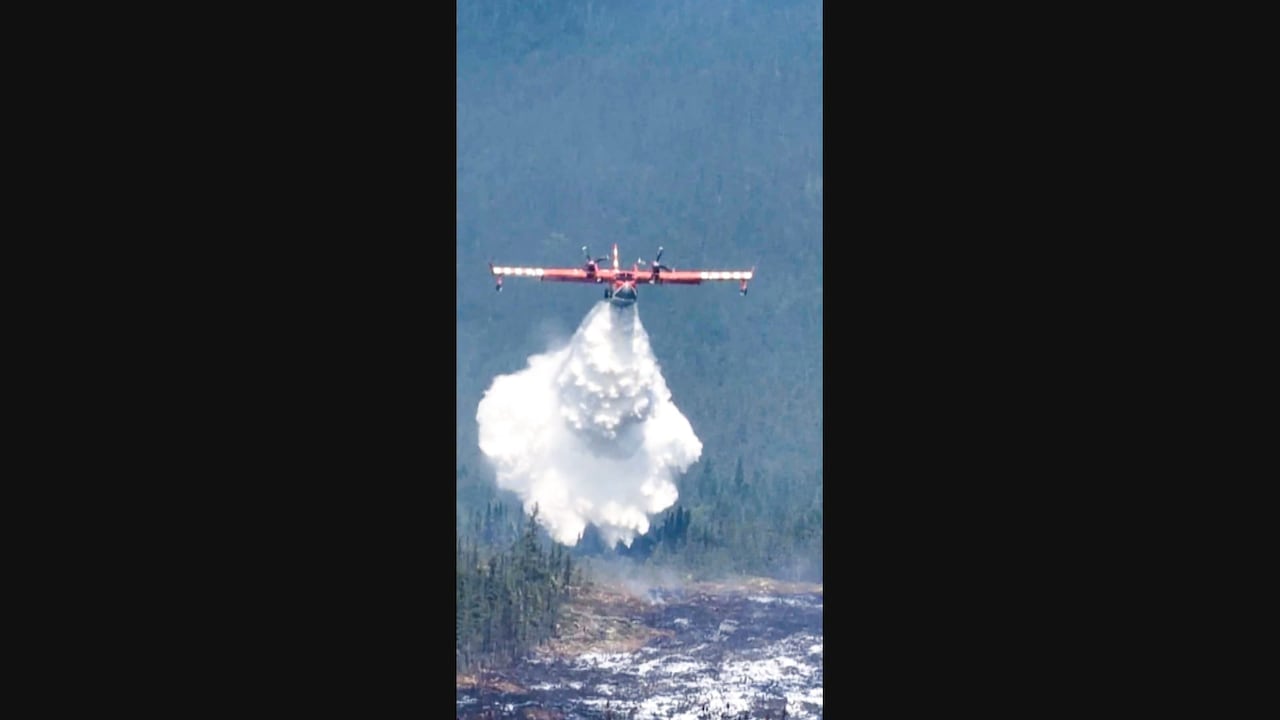
Early Thursday, Cartwright-L’Anse au Clair MHA Lisa Dempster said the distance between Happy Valley-Goose Bay and Port Hope Simpson could play a role in how the water bomber operates.
The two communities are around an hour apart by air. The Department of Forestry, Agriculture and Lands told CBC News in an emailed statement on Wednesday night that water bomber pilots operate four-hour shifts, which gives pilots around two hours of firefighting time before they’d to return to Happy Valley-Goose Bay to refuel.
“We’re an hour [away when] the water bomber has to go back, so that is a concern,” Dempster said. “They do have some resources on the ground, more resources will come in if that’s needed.”

People in Port Hope Simpson continue to be at the ready for a possible widespread evacuation due to a wildfire that broke out near the town Wednesday. The CBC’s Andrea McGuire reports.
Download our free CBC News app to sign up for push alerts for CBC Newfoundland and Labrador. Sign up for our daily headlines newsletter here. Click here to visit our landing page.
Read the full article here