




👋 Happy Friday! Hope you have a great holiday weekend. We’ll see you on Wednesday.
In today’s edition: The Clippers are the latest losers in sports’ game of fine-ers keepers, soccer is spending like its wallet is on fire, the college court caper rolls on, the heartland is college football’s heartbeat, TaylorMade’s tailor-made golf approach, and more.
Yahoo Sports Biz is written by Dylan Dittrich. For the web version, click here. Was this email forwarded to you? Subscribe here.
Time to show you the money…
💰 The Fine Print: The Biggest Financial Penalties in Sports
(Photo by Paul Gilham/Getty Images)
(Paul Gilham)
By now, you know that Adam Silver and the NBA threw the book at the Clippers for salary cap circumvention violations primarily related to alleged inducement and facilitation of third-party endorsement deals for Kawhi Leonard.
The punishment: The NBA stripped the Clippers of five first-round draft picks, suspended owner Steve Ballmer for a year, and fined the team $30 million. The fine is the largest in NBA history, but not in the history of sports. Not by a long shot.
Biggest fines in sports history:
-
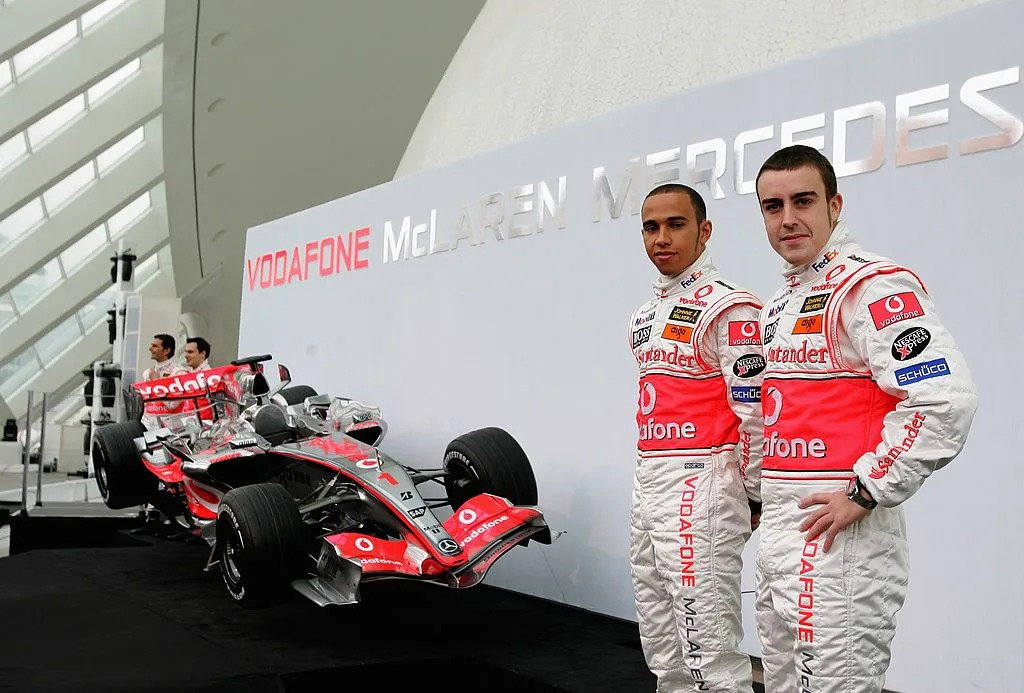
McLaren. McLaren’s Formula 1 team was fined a staggering $100 million for the 2007 “Spygate” scandal, in which it obtained possession of a 780-page technical document from Ferrari. That fine included any prize and television money the team would’ve received from the constructors’ championship; the punishment stripped first-place McLaren of its points.
-
Dan Snyder. The NFL fined outgoing Commanders owner Dan Snyder $60 million in 2023 amid allegations of sexual harassment and shielding team revenues from league revenue sharing. The fine, however, was effectively assessed in conjunction with Snyder’s $6.05 billion sale of the franchise.
-
Penn State. The NCAA assessed Penn State a $60 million sanction in the wake of the Jerry Sandusky scandal in 2012, in addition to levying a four-year postseason ban and vacating all wins dating back to 1998.
-
Queens Park Rangers. QPR agreed a £42 million settlement with the English Football League in 2018 (~$55 million then), consisting of a £17 million fine, £3 million in legal fees, and £22 million in loans to the club written off by shareholders. The club violated Financial Fair Play rules in winning Premier League promotion in 2014; its wages of £75 million were 195% of revenue.
-
Chelsea. In 2025, Chelsea agreed a settlement with UEFA to pay €31 million in fines (~$36.5 million) after violating football earnings and squad cost rules. That settlement included a further €60 million in potential penalties if the agreement is breached in future seasons.
A common thread: In some of these cases, the sanctions resulted from evasion of a competition’s financial rules. No matter the guardrails and the geography, teams seeking a competitive edge exceed their allowances, which should be favorable to ownership in their protection from overspending.
Insufficient deterrent? $30 million is still $30 million, a huge sum of money, but many have been quick to point out that Ballmer likely generates ten times that amount in quarterly Microsoft dividends alone. It would be an exaggeration to say that the NBA’s fine would put even a small dent in his pocket.*
-
The loss of five first-round picks, however, could markedly weaken the trajectory of the franchise — it’s hard to rebuild without a foundation. Will fans still fill the Intuit Dome? Will sponsors second-guess the merits of a business relationship? In that regard, the cost could far exceed $30 million.
-
In other cases, too, like Chelsea’s, a $36.5 million fine means little when the club spends over $470 million in a summer transfer window. But violation of the club’s settlement with UEFA could invite a ban from European competition, which would pressure revenues, and therefore spending, for a club already walking a financial tightrope.
Bottom line: It’s difficult to hurt multi-billionaire owners with a monetary fine. But punishments that inhibit future winning sting for much longer.
*The inclusion of $50 million in legal costs incurred by Ballmer to fund the investigation slightly changes the calculus.
📊 Charted: Transfer Window Edition

Soccer’s summer transfer window slammed shut this week, bringing an end to the most frenzied spending spree in the sport’s history. As is increasingly the case, England’s giants flexed their superior financial might.
Mind the gap: Premier League transfer spending topped €4.1 billion ($4.8 billion) this summer, almost €3 billion more than the next-highest league (Serie A, €1.16 billion). Though any recent episodes of spending parity have been short-lived blips, a previously concerning gap in spend has widened into an unbridgeable chasm. The Premier League’s spending is 154% higher than it was in 2017; no other major European league is up more than 20%.

Top-to-bottom dominance: Premier League clubs account for eight of the summer’s top 10 spenders, leaving only the Spanish heavyweights — Real Madrid and Barcelona — capable of joining them in splashing cash. Ipswich Town, newly promoted from the Championship, spent more than Barcelona. Hull City, also promoted, was just outside the top 10. In the current market, European giants are decidedly less giant-sized when set against English spending power.

Merci beaucoup: The English money has to flow somewhere, much of it back into Premier League coffers, but other European leagues also benefit from the binge. Without a lucrative domestic broadcast deal, Ligue 1 clubs are increasingly reliant on transfer income, with four clubs ranking in the top 10 transfer surpluses. The financial struggles don’t apply to PSG, though, as the reigning European champions refreshed their squad in preparation for a third consecutive Champions League title bid.

Shallow buyer pool: $100 million transfers were historically rarefied air. This summer, 10 players commanded more than $100 million; the previous high watermark was five in 2023. Of those 10, nine were purchased by Premier League clubs. And of those nine, six were purchased from Premier League clubs. England’s financial resources are so superior that when their clubs need to raise funds to comply with financial rules, they can turn only to division rivals for their desired fees.
🏈 With the first pick in the Big Ten Draft…

(Photo by Justin Casterline/Getty Images)
(Justin Casterline)
Every team has its war room, its big board, its comprehensive data and scouting reports. They’ve practiced their mock drafts and considered the scenarios. But they’re not drafting players. They’re picking games.
What’s the deal? The Big Ten’s media deal, which began in 2023, is a seven-year agreement with Fox, CBS, and NBC reportedly worth more than $7 billion. When it comes to football Saturdays, Fox airs the noon game, CBS the afternoon slot, and NBC the primetime game. But how are the matchups allocated? This is America. This is football. Via a draft, of course…
The rules of the road: The Athletic’s Scott Dochterman pulled back the curtain on the process last spring.
-
Fox receives five of the top 11 picks, including the top three selections. The fourth pick rotates between CBS and NBC.
-
Picks can be traded; in 2024, Fox traded its third selection (Ohio State at Oregon) to NBC.
-
The selections, which are technically dates (rather than the games themselves), are conducted via email. Refresh. Refresh again. Check your spam!
This year’s draft: According to Dochterman, this season’s draft played out as follows, with Fox using its early selections to secure the conference’s marquee matchups.
-
No. 1-3 (Fox): Michigan at Ohio State, 11/28
-
No. 1-3 (Fox): Ohio State at Indiana, 10/17
-
No. 1-3 (Fox): Oklahoma at Michigan, 9/12
-
No. 4 (CBS): Oregon at Ohio State, 11/7
-
No. 5 (NBC): USC at Penn State, 10/10
Needle movers: The selections are not trivial formalities. Instead, securing the right games might represent the difference between ratings booms and busts, translating to ROI impact. “The Game” is a safe bet to anchor Fox’s slate for the balance of the agreement, and jockeying for key Ohio State games is vital, with three Buckeyes games in the top five picks.
Give us a peek: Do we need a Big Ten Draft version of Mel Kiper? Or live coverage with media executives walking through their picks? Mock drafts and draft grades? Surely, if the NFL draft can draw 805,000 people, more than a few football nuts would tune in. We nominate our friends at Awful Announcing, who recently covered the draft in our Sports Business Hub.
⚡️ Lightning Round

(Photo by Parker S. Freedman/Getty Images)
(Parker S. Freedman)
👨⚖️Judge rules for players, SEC sues Kiffin: The SEC filed a lawsuit against LSU and Lane Kiffin on Thursday, seeking an injunction to block the program from compelling the conference’s association with its plans to roster players recently dismissed from NFL training camp. However, on Thursday night, a Louisiana judge ruled in favor of the plaintiffs (including those players), protecting their ability to be rostered. Now, the question is whether Kiffin will play them and risk the continued ire of the SEC.
🏀 Engelbert to retire: WNBA commissioner Cathy Engelbert will retire at the end of 2026 after seven years in the role. Engelbert has overseen tremendous business growth, with a landmark media deal, a new collective bargaining agreement, and significant league expansion. However, she has also come under recent pressure amid consistent league controversy.
🏈 Seahawks reveal minority investors: The Seahawks announced that their $9.6 billion sale to a group led by Vinod Khosla has been completed. The team also revealed several of the investors who have joined Khosla’s group. Among them are three private equity firms: Sixth Street, Carlyle, and Dynasty Equity. Individual investors include Warriors investor Mark Stevens (remember him?), former U.S. Commerce Secretary Penny Pritzker, and the Aramburuzabala family, which founded Grupo Modelo.
💰 Bain leads $250 million Playfly credit facility: One of the largest revenue growth engines in sports, PlayFly Sports, gained its own ammunition for growth, announcing a $250 million credit facility led by Bain Capital. The company works with over 2000 brands, 100 professional teams, and 65 college athletic departments, maximizing revenue for rightsholders.
See what else is trending on the Yahoo Sports Business Hub.

Nielsen released its Local College Football Fandom Index this week, determining America’s top 20 most avid college football markets. The map is unlike any in popular American sports.
The coast is lava: The easternmost market in the rankings is Jacksonville. The westernmost market is Austin. The longitudinal distance between those two covers only 28% of the width of the continental United States. When it comes to college football, the middle of America is the “Double Stuf” that makes the Oreo.

No pros needed: New Orleans and Atlanta are the only markets in the top 10 that boast multiple professional sports teams, and the balance of the list is only lightly sprinkled with pro representation. The markets that top the rankings have effectively no competition from professional sports, as locals channel all of their rooting energies toward their beloved universities.
Opportunity spotted: Nielsen’s rankings demonstrate that there’s rabid fanhood in underserved sports markets. Challenger leagues in the U.S. have noticed. For instance, if you overlaid the above map with United Soccer League clubs, there would be significant overlap. The United Football League has also targeted some top college markets. While the NFL and NBA may not be coming to town, that doesn’t mean the foundation for strong regional interest is absent.
🎙️ Notable Quotables: TaylorMade follows the compass, not the clock

Sports Business Radio, part of the Yahoo Sports Business Hub, is the longest-running podcast in sports business, with an A-list guest roster that spans team owners, commissioners, executives, athletes, and more.
This week, Sports Business Radio’s Brian Berger hosted TaylorMade Golf president and CEO David Abeles for an inside look at one of the sport’s most influential companies.
On identifying talent early: Abeles notes that TaylorMade works with golfers long before they become world-class, having nurtured a relationship with Scottie Scheffler, for example, since he was a teenager. How does the company spot talent? With a data-driven approach that identifies emerging stars and helps them improve.
“We have a sports analytics group that is synthesizing mountains of data every day around athletes that could be 12, 14, 16 years old right now. Our partnership with the American Junior Golf Association enables us to engage these athletes as they’re getting started… We make [the data] available to these players, and we do it at the starting point of their career.”
On becoming Tiger’s Sunday Red partner: Abeles recounts how Tiger’s team expressed interest in exploring a new apparel venture, which was all TaylorMade needed to hear to jump at the opportunity. The company’s focus on world-class technical product won Woods over, but the logo review process provided a particularly striking look at Tiger’s competitive thinking.
“He says, ‘What’s that all about?’ I said, ‘Well, Tiger’s about Tiger, but if you look at that logo very closely, there are 15 stripes in that logo.’ And he kind of leaned back. He says, ‘One for each one of my majors.’ … But one of the funniest things was he calls me and says, ‘Hey, DA, out of curiosity, what are you gonna do when I win my 16th?'”

(Photo by Kevork Djansezian/Getty Images)
(Kevork Djansezian)
On the prospect of a sale: TaylorMade’s current owner, Centroid Investment Partners, has begun conducting a sale process. While there have been reported bids, Abeles cautions that a sale will only happen when the buyer is aligned strategically, with that strategic alignment providing a connective thread between previous ownership by Solomon, Adidas, New York-based private equity, and current ownership.
“Regardless of what the ownership structure looks like, we always align with future investment around our growth strategies that are organic and that are specifically defined for the success of both the TaylorMade brand, the Sunday Red brand, and our investment in other businesses over time. So, as it relates to a timeline, we’re hopeful we’ll see something to conclusion by the end of this year. But we follow the compass, not the clock here.”
Go deeper: Inside the Innovative Business of TaylorMade Golf with President & CEO David Abeles.
⚽️ Over/Under: Major League Soccer’s major signing

(Photo by Kevork Djansezian/Getty Images)
(Kevork Djansezian)
The biggest reported transfer fee paid during this transfer window was the $168 million Manchester City paid for Enzo Fernandez.
Over/Under: Was the biggest transfer fee paid by an MLS club in the league’s history over or under $40 million?
Bonus points: Who was the player acquired?
Answer at the bottom.
🐐 Is the Rams’ owner the GOAT?

Current valuations: Forbes and CNBC, most recent published editions. Independent estimates, not transaction prices. Portfolio CAGR via XIRR on dated entry values and total current value. As of Sept. 2, 2026. For other notes and methodology, see the full article. (The 4th Quarter)
Is Angels buyer Stan Kroenke the greatest sports team owner of all time? Our friends at The 4th Quarter think so. A key supporting argument? The massive appreciation in value he’s overseen at the helm of his portfolio. But that’s just one piece of the puzzle.
Suraj Peramanu, The 4th Quarter:
Even excluding the Angels, his sports empire is worth ~$22.9B compared to a combined purchase price of ~$2.3B to procure those franchises: roughly 10x value appreciation and a 13% value CAGR on just the franchise value alone. Over the same time period, the S&P 500 has experienced an 8-9% annualized return.
Over/Under answer: Under! LAFC paid a reported sum of $26 million for Son Heung-Min.
Thanks for reading! Wanna talk shop? Follow me on X and Linkedin, or drop me a line: dylan.dittrich@yahooinc.com.d
Read the full article here