




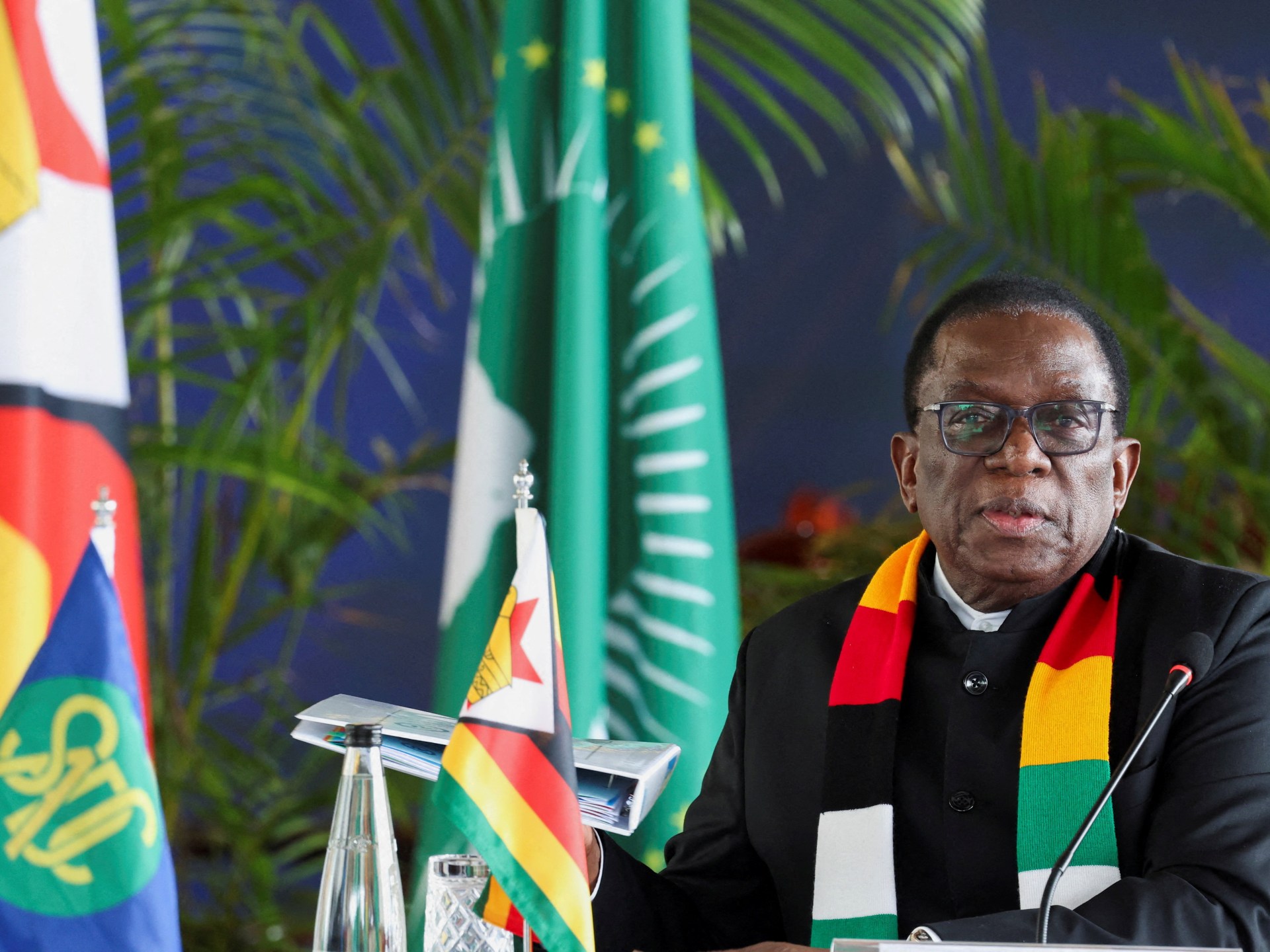
Lower house of parliament passes legislation to extend presidential terms from five to seven years.
Published On 18 Jun 2026
Zimbabwe’s lower house of parliament has passed a bill to extend presidential terms, which would allow President Emmerson Mnangagwa to remain in power until 2030.
Some 216 lawmakers in the National Assembly voted in favour of the draft legislation on Thursday, passing the 187 mark needed for a two-thirds majority.
Recommended Stories
list of 3 itemsend of list
The constitutional amendments would postpone elections due in 2028 to 2030 and extend Mnangagwa’s term from five to seven years.
The bill, which also proposes shifting presidential elections from direct popular vote to selection by lawmakers, has to be approved by the Senate, where it is also expected to pass.
Mnangagwa’s governing ZANU-PF party controls the upper house of parliament through traditional leaders and other proxies who generally vote with the party.
Signs that Mnangagwa, 83, wanted to stay in power beyond the end of his second term in 2028 emerged about two years ago, when his supporters started chanting slogans at ZANU-PF rallies that he needed more time to complete his agenda.
Last year, the party resolved to change the constitution to lengthen presidential terms, and the plan received cabinet backing in February.
Critics say the bill is a means for Mnangagwa to stay in power for longer, though its backers say it will strengthen accountability and foster political stability.
Africa’s veteran leaders
Mnangagwa came to power after a 2017 military coup ousted longtime leader Robert Mugabe, who had been in power since independence in 1980.
Until they fell out in the months leading up to the coup, Mnangagwa was one of Mugabe’s closest lieutenants, serving in top government positions, including vice president.
Some activists and veterans of the country’s liberation war launched court challenges against the plan to extend Mnangagwa’s time as head of state, but they were struck off the court roll this week for technical reasons.
Zimbabwe would find itself among other African countries that have changed the law to keep leaders in power for longer, entrenching a trend on the continent where some of the world’s oldest leaders govern its youngest populations.
Cameroon’s Paul Biya is the world’s oldest head of state at 93. He has been in power since 1982 in a country in which about 70 percent of the population is under 35. Biya first assumed office a year after Ronald Reagan became US president, and the US has had seven presidents since Reagan.
Teodoro Obiang Nguema Mbasogo has been in power for 47 years in Equatorial Guinea. At 84, he remains Africa’s longest-serving ruler and has even appointed his son as vice president.
In Ivory Coast, Alassane Ouattara, 84, was sworn in for a fourth term in December 2025 after winning an election marked by low turnout and unrest.
Malawi elected Peter Mutharika again last year, now 85, returning him to office after serving as president from 2014 to 2020.
While in Uganda, 81-year-old Yoweri Museveni, a US ally on regional security who has faced accusations of authoritarianism from critics, was sworn in for a seventh consecutive term in May, extending his rule to four decades.
Like Mnangagwa, Museveni, Ouattara, Biya and Obiang have altered or removed constitutional restrictions to prolong their time in office.
Read the full article here