




The Old Shape Of Security
Since my early years as a junior researcher, I have remained fascinated by Frank H. Knight’s distinction between risk and uncertainty. In his 1921 work, Risk, Uncertainty and Profit, Knight made a deceptively simple point: risk can often be measured, priced, pooled, or insured. Uncertainty is different. It involves situations where the probabilities themselves are not knowable in the same way.
When I think of professional life today, that distinction feels increasingly relevant. For decades, security had a familiar shape: a full-time employer, predictable salary, benefits, a mortgage, insurance, and retirement savings moving quietly in the background.
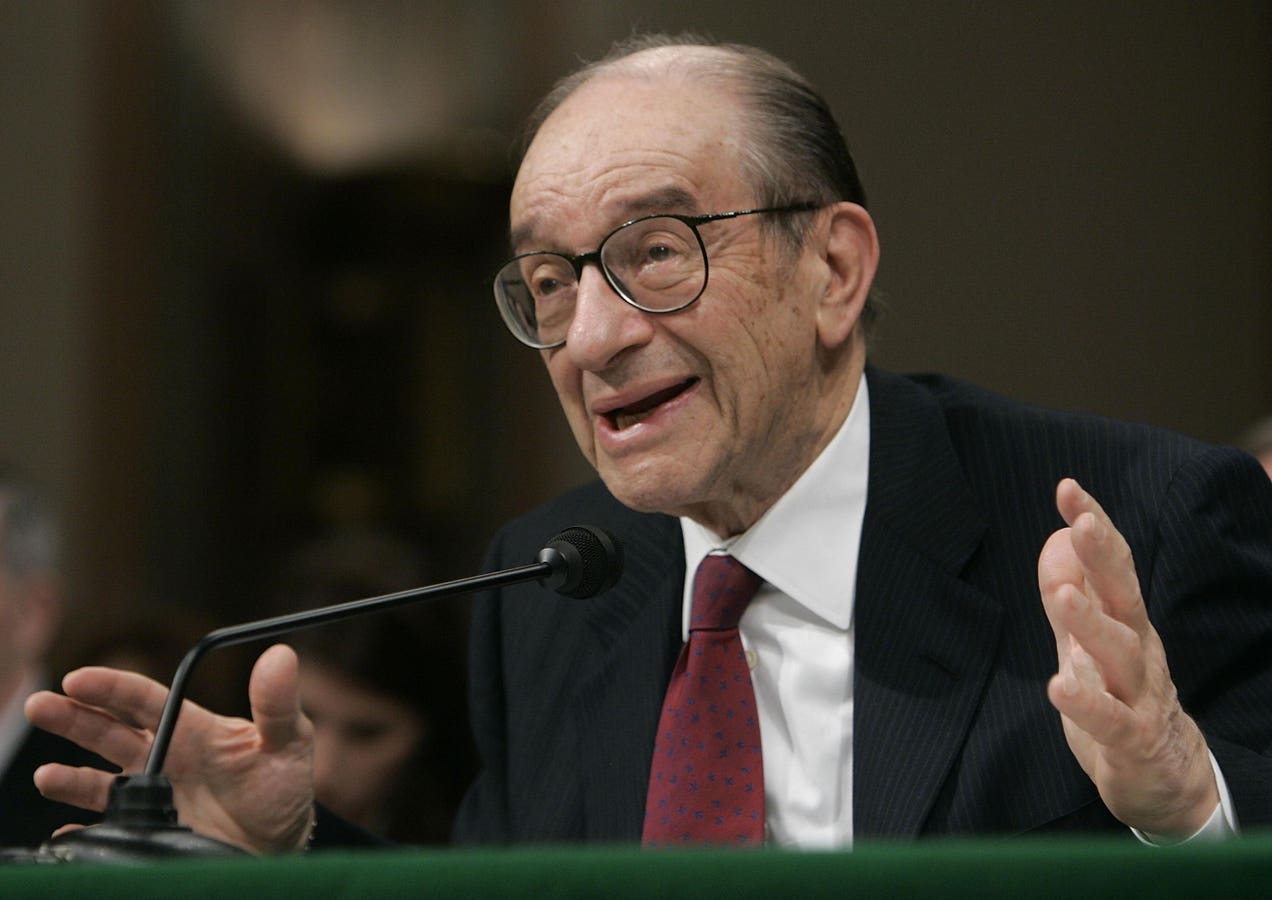
Alan Greenspan’s passing is useful not as the subject of my column, but as a marker of an era when many professionals believed large institutions could absorb volatility on their behalf. He chaired the Federal Reserve from 1987 to 2006, a period that helped define how markets, households, and professionals came to think about institutional stability. During his tenure, the U.S. economy experienced long periods of growth, lower inflation, rising market confidence, and a strengthened belief that central banks could help stabilize the economy during shocks. The Fed would smooth shocks. Employers would provide continuity. Housing would build wealth. Banks and insurers would price risk in familiar ways.
But security never meant risk disappeared. It meant the risk was held elsewhere.
The Assumption We Still Carry
I’m often reminded that the old assumption still shapes how professionals think about their lives: full-time work, especially in larger organizations, is seen as relatively secure, while entrepreneurship or working across multiple employers is regarded as a lot riskier. As I have discussed in this column before, that belief is not just a general perception; it actually appears in mortgage underwriting, career advice, benefits design, retirement planning, and even family conversations.
Entrepreneurship or a portfolio of roles feels messier than earning a regular salary because the risk is more visible. But visible risk is not always the greater risk. Sometimes it is simply a more honest risk.
We often forget that many entrepreneurs and portfolio leaders operate with buffers, staged commitments, and an affordable-loss mentality. At least among the ones I know, the better ones rarely bet the whole structure at once. When done well, entrepreneurship or a portfolio career can resemble a stool with several legs: each leg matters, but the structure does not depend entirely on any single point of support.
Security Is Not A Job Category
In fact, I would argue for a sharper frame: security is not an employment category; it is a risk structure. This is where I keep coming back to the simple beauty of Frank H. Knight’s reasoning. Risk can often be measured, priced, insured, or transferred. Uncertainty is harder because the probabilities are not fully knowable in advance. That distinction matters for modern careers.
The real question is not whether you have a salary, a fractional role, advisory work, consulting income, board fees, or a business. The real question is where the risk — and the uncertainty — actually sits. Who can stop the income? Who can reprice your costs? Who controls your access to credit, customers, insurance, healthcare, retirement savings, or future opportunity?
This is especially important in the U.S., where employers have long carried much of the practical responsibility for organizing healthcare coverage and retirement contributions. That is a real counterargument to romanticizing entrepreneurship or portfolio work. The solution is not to ignore it, but to design for it: build a benefits architecture alongside the income architecture, including health coverage, retirement contributions, insurance, tax planning, and liquidity buffers.
Security is no longer something institutions simply provide. It is something professionals increasingly have to design.
The Data No Longer Fits The Old Story
The data no longer fits the old story quite as neatly. Median employee tenure with a current employer was 3.9 years in January 2024, according to the Bureau of Labor Statistics. Household financial resilience also remains uneven, even when many adults report doing okay or living comfortably. At the same time, AI is now being cited directly in corporate layoff announcements. Challenger, Gray & Christmas reported that AI was cited as the reason for 21,490 job cuts in April 2026.
Companies are also thinning management layers, rethinking structure, and shifting costs from permanent capacity to flexible capability. The data does not need to prove panic. It only needs to show that the old institutional container is thinner than many professionals assume.
The AI cost story is more complicated than “AI is getting cheaper” or “AI is getting more expensive.” Token prices and inference costs may continue to fall, but total AI bills can still rise as companies use more tokens, deploy longer-context and agentic workflows, and fund the data-center, power, and frontier-model infrastructure behind them. Whether cutting middle managers and employees to fund AI proves wise or mistaken over time, the direction is already clear: organizations are finding new ways to move risk quickly.
A Risk Location Map
To evaluate professional security, it is necessary to map where the risk actually lies. Start with five questions.
- Counterparty exposure: Who can stop the income?
- Correlation: Do the income streams fail together?
- Repricing exposure: which costs can be reset by others, such as debt, insurance, rent, or healthcare?
- Renewal and liquidity: how often must the work be resold, and how long can disruption be absorbed?
- Institutional legibility: can banks, insurers, tax systems, and retirement structures understand the way your professional life is built?
What Would Actually Break First?
Applied this way, the old hierarchy of safety becomes less obvious. A full-time executive may have high institutional legibility and low daily renewal pressure, but also high counterparty exposure. A portfolio professional may have lower single-employer dependency, but higher renewal risk and greater complexity. A homeowner may appear asset-rich, but still be exposed to interest rates, insurance repricing, taxes, and local market shifts. The model forces a more honest question: not “does this look secure?” but “what would actually break first?”
The old question was, “Who employs you?” The better question is, “Where does your risk live?” That question changes how we understand salaries, layoffs, fractional roles, side income, homeownership, insurance, savings, and professional identity. It moves the conversation from job status to resilience design.
The Load-Bearing Walls
Alan Greenspan’s era and Knight’s distinction between risk and uncertainty remind us that institutions can shape how risk feels, but they do not make risk disappear. Nor can they make uncertainty fully knowable. Institutions can smooth shocks, price capital, influence confidence, and create a sense of stability. But they cannot remove uncertainty. They can only change where it sits, how visible it becomes, and who is expected to absorb it when conditions shift.
For professionals, security is not the absence of risk or uncertainty. It is the ability to see where risk sits, how it moves, and what would happen if one part of the structure failed. The most secure professional life may not be the one that looks most traditional. It may be the one where the load-bearing walls are visible.
In that sense, the lesson is not to trust institutions less. It is to better understand what they can hold — and what we now have to hold ourselves.
Read the full article here