




Last week I attended the Investment U conference in Las Vegas, where I presented on gold and the great digital transformation. Sentiment among investors was upbeat, despite great uncertainty in the world right now.
As you know, card counting is banned at blackjack tables. The casinos don’t want gamblers using probabilities to tilt the odds in their favor.
In the stock market, though, applying math, standard deviation and mean reversion to your investment decision is perfectly legal. In fact, I’d argue it’s essential.
Take a look at the chart below. It shows the S&P 500’s 20-day percent change expressed in standard deviation terms over the past five years. As you can see, the market has just fallen to -2 sigma, deep into oversold territory.
That’s a level the S&P has touched only about five or six times in the past five years. And every single time, it was followed by a recovery.
The bounce doesn’t always come overnight, of course. In the worst case, during the spring of 2025, the market stayed below -2 sigma for more than a month, from mid-March through late April. The 2022 selloffs showed a similar pattern, with oversold conditions lasting roughly 30 days before reverting to the mean.
The point I’m making is that they all did move back to the mean eventually. Markets don’t stay at extreme levels forever.
None of this guarantees the exact timing of a reversal. But history suggests the probabilities right now favor a move higher, and, as I’ve been saying all along, I believe investors who stay disciplined will be rewarded.
The 106-Year-Old Law Holding Back American Energy
Recently, the Department of Homeland Security (DHS) issued a 60-day waiver of the Jones Act, allowing foreign-flagged vessels to transport oil, natural gas, fertilizer and other resources between U.S. ports. The suspension was requested by the Department of Defense (DoD) to address supply chain disruptions caused by Operation Epic Fury.
For those unfamiliar, the Jones Act is a 106-year-old law—officially the Merchant Marine Act of 1920—that requires all goods shipped between U.S. ports to be carried on vessels that are American-built, American-owned and American-crewed.
On paper, it sounds like a somewhat reasonable protectionist measure.
In practice, however, it’s become one of the most costly and counterproductive regulations in the U.S. economy, particularly when it comes to energy.
White House Press Secretary Karoline Leavitt framed the waiver as part of a broader effort to strengthen U.S. supply chains. But as the Cato Institute pointed out, the need to suspend a law in order to strengthen supply chains is itself an indictment of that law. I tend to agree.
The U.S. Builds Almost No Ships
The Jones Act, named for Senator Wesley Livsey Jones (R-WA), was supposed to guarantee a domestic market for American-made vessels. Instead, it’s created a closed system of artificially expensive ships with no competitive pressure to innovate.
Consider the chart below. It shows each country’s share of global commercial shipbuilding. China dominates at nearly 55%, following by South Korea at 28% and Japan at nearly 13%. Those three countries alone account for more than 95% of the world’s commercial ships.
The U.S., by comparison, manufacturers only 0.04%. The world’s largest economy and the nation with one of the longest coastlines on the planet builds essentially zero commercial ships.
After the Reagan administration ended federal subsidies for shipbuilding in 1982, U.S. commercial production collapsed virtually overnight. Output fell from about 20 large vessels a year to just five, and roughly 75,000 shipbuilding jobs were lost.
Today, operating a U.S.-flagged ship is roughly four times more expensive as an internationally flagged one, and building ships domestically costs at least four times more than in other nations like South Korea. The result is a fleet so small and so costly that it can’t even serve America’s own energy needs.
The LNG Paradox
That brings me to what I think is the most striking irony of all.
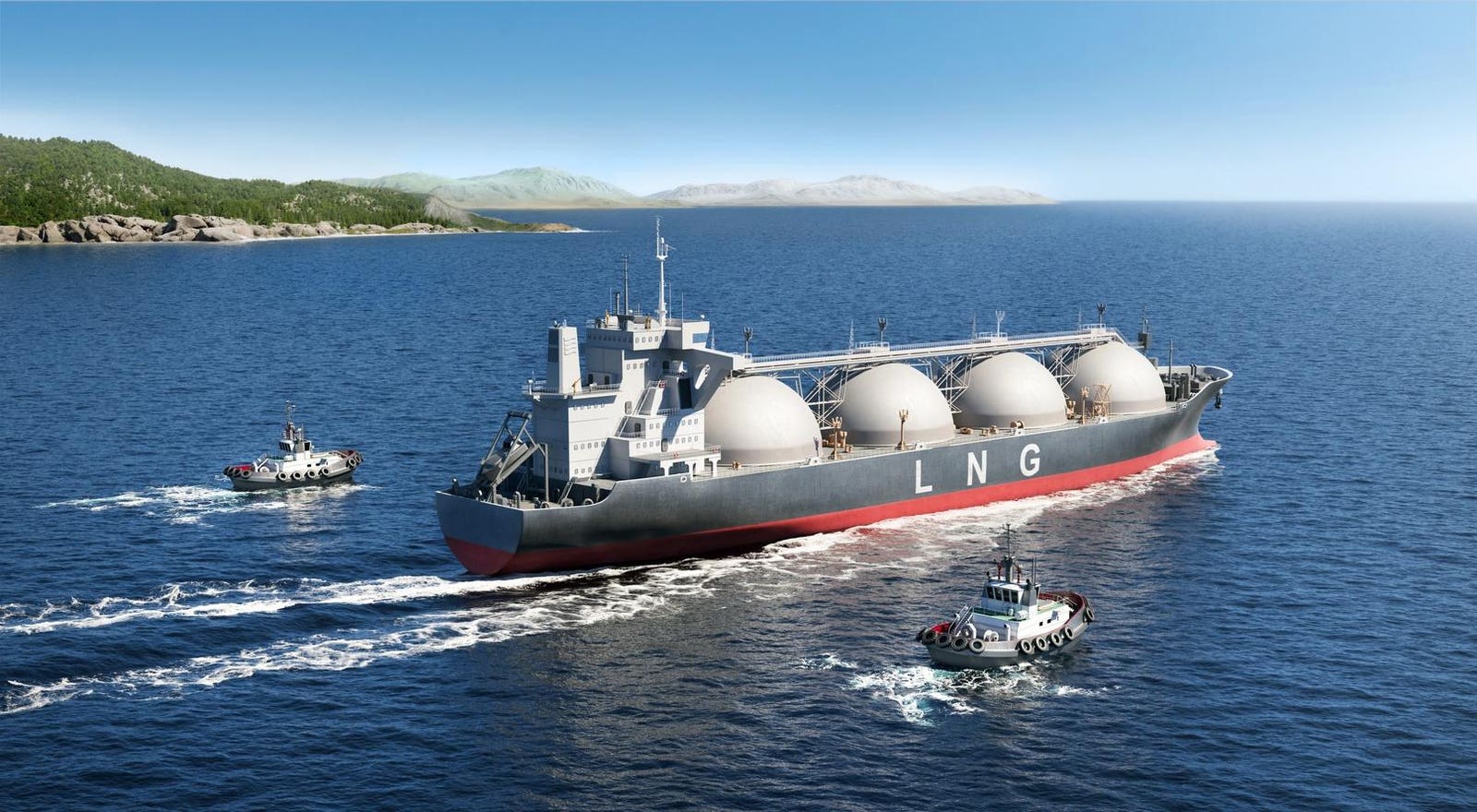
The U.S. is the world’s largest exporter of liquefied natural gas (LNG). Exports have surged from virtually nothing a decade ago to 8.9 trillion cubic feet in 2025, according to the Energy Information Administration (EIA).
Cheniere Energy, which shipped the first commercial LNG cargo from Savine Pass in February 2016, has since committed more than $50 billion to build and expand its Gulf Coast terminals, with production capacity expected to potentially exceed 100 million metric tons per year by the mid-2030s.
Yet there’s not a single LNG tanker that fully meets Jones Act requirements. Not one.
That means the U.S. can export LNG to Europe, Asia and everywhere else, but it can’t transport LNG from the Gulf Coast to New England or Puerto Rico using the kind of large-scale vessels the trade requires.
The consequences, frankly, are absurd. It’s actually cheaper for New England to import LNG from overseas—including, until recently, from Qatar—than to purchase it from fellow Americans on the Gulf Coast. We’re the world’s largest natural gas producer, and millions of Americans can’t affordably access their own supply. As I see it, that’s a policy failure of the highest order.
Goldman Sachs notes that the 60-day waiver could ease oil and refined product transport from the Gulf Coast to the East Coast and may even reduce fuel prices. But it’s a Band-Aid, not a long-term solution.
Follow the Money
For investors, the set-up could be compelling. The Iran conflict has taken roughly one-fifth of global LNG supply offline. Iran’s retaliatory strikes damaged 17% of Qatar’s LNG export capacity, and repairs could take up to five years. Spot tanker rates are reportedly running at about $180,000 per day, and Goldman Sachs expects the LNG market to stay disrupted through 2027.
The UP World LNG Shipping Index, which tracks 20 publicly traded LNG shipping companies, surged nearly 8% in the week ended March 20, even as the S&P 500 fell almost 2%.
Goldman has identified three companies it believes are best positioned right now: Venture Global LNG, Cheniere Energy and Golar LNG. Year-to-date, Venture Global is up more than 150%, while Cheniere is up approximately 50%, Golar a little less so. These are companies with real assets, real cash flows and a strong tailwind that could last for years.
I should also point out just how different America’s situation is compared to the last Middle Eastern conflict. During the Iraq War in 2003, the U.S. was an energy importer. Today, it’s the world’s largest producer and exporter of natural gas. As I write this, the Henry Hub natural gas spot price (the U.S. benchmark) is just under $2 per million British thermal units (MMBtus). In Europe, it’s over $18 MMBtus. America’s ingenuity and energy dominance have protected consumers and businesses in ways that would have been unimaginable two decades ago.
What This Means for Your Portfolio
The Jones Act waiver is a telling sign that the law has been holding back American energy logistics for over a century. Whether or not this suspension leads to permanent reform is a political question I can’t answer. But the investment implications seem clear to me.
U.S. LNG producers and exporters are the direct beneficiaries of the global supply gap. LNG shipping companies are enjoying record rates with no relief in sight. And the broader energy sector remains well-supported by geopolitical risk premiums and strong domestic fundamentals.
As always, I recommend a 10% weighting in gold—5% in physical bullion and 5% in high-quality gold mining names—as a hedge against the fiscal and inflationary pressures that wars inevitably produce.
Read the full article here