



Over the past year, the Russian offensive has effectively stalled, unable to push through Ukraine’s drone-patrolled “kill zones.” As a result, Russia has had to adopt new approaches to break through these defenses, with its current strategy centered on the creation of what can be termed “drone corridors.” These are pathways through contested areas where Russian tactical drones can operate in sufficient numbers to dominate the local airspace. The goal appears to be for these drone corridors to turn into mobility corridors that allow Russian forces to move through Ukrainian kill zones without suffering the heavy losses currently associated with direct assaults. However, while these tactics may improve Russia’s ability to penetrate Ukraine’s defenses, they have yet to produce meaningful operational gains.
Russia’s Drone Corridors
Despite Russia’s advantages in manpower, weapons, and armored vehicles, it has generally struggled with the Ukrainian kill zones. These areas are heavily patrolled by Ukrainian drones that can detect Russian formations, especially squad-sized units or larger, long before they are within range of the Ukrainian lines. Once detected, those formations are targeted with drones and artillery. These kill zones can extend several kilometers forward of Ukrainian lines and have been used extensively around urban areas such as Kostyantynivka and Chasiv Yar.
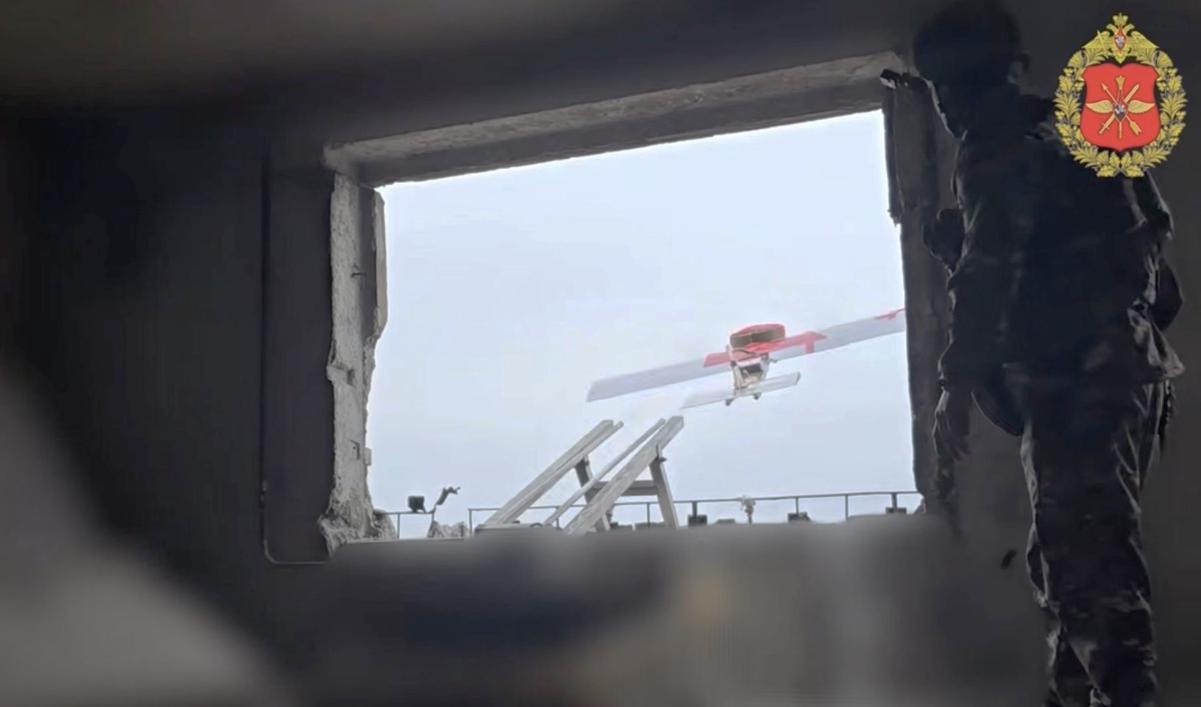
Given the effectiveness of these kill zones, the Russian military has had to move away from the large-scale armored assaults common in its doctrine. Instead, Russian forces are sending small groups of three to five soldiers into these contested areas to infiltrate the Ukrainian defenses. These teams consist primarily of drone operators, though they may include a security element. Given their size, they are able to avoid detection by Ukrainian drones. The teams move quickly to designated sites that offer cover and concealment, including basements, damaged buildings, and tree lines, where they establish forward outposts for launching and operating drones. Once established, they may deploy counter-drone systems to reduce the effectiveness of Ukrainian drones.
Russian forces are establishing a large number of these drone outposts, which collectively form drone corridors through the kill zone where Russian drones can dominate the local airspace. These forward drone outposts can then support larger Russian elements as they push through the kill zone. They launch drones to hunt for Ukrainian drone teams and artillery positions, both of which become more visible when engaging advancing Russian forces. Russian drones are also used to intercept Ukrainian drones already in flight. In addition, they can monitor and strike Ukrainian ground forces moving into position to counter the assault. These strikes have been highlighted by the Russian Ministry of Defense which has released numerous videos showing drones launching from these forward positions and destroying various Ukrainian targets in support of assault operations.
Current Russian Drone Corridors Around Kostyantynivka
Russia recently established drone corridors in Kostyantynivka, in its effort to take the city. They have spent the past year trying to seize the city as part of a broader effort to capture the Slovyansk-Kramatorsk urban belt, which anchors Ukraine’s defenses in Donetsk Oblast. Russia currently controls approximately ten percent of the city, primarily in the eastern sector. According to the Institute for the Study of War, Russian forces are conducting infiltration missions, pushing numerous small teams of drone operators into the western portion of the city. These forward outposts, scattered throughout western Kostyantynivka, combine to form a series of drone corridors intended to support broader assaults.
While the Russian infiltration teams have established temporary footholds and are disrupting Ukrainian operations, they have not translated into meaningful operational gains. According to Ukrainian sources, Russian advances toward Kostyantynivka have slowed to approximately one kilometer per week over the past month despite the significant manpower and equipment Russia has committed to the effort.
There are several factors affecting Russia’s inability to exploit these drone corridors. One key issue is the broader battlefield picture, where Ukraine is strategically launching counterattacks to disrupt Russian operations. In particular, Ukrainian forces have launched counterattacks against Russian positions in Kostyantynivka as well as neighboring areas, including Chasiv Yar. These attacks force Russian commanders to divert forces away from offensive operations in order to defend vulnerable positions and maintain their infiltration routes.
Another key factor is resources. While Russia maintains an advantage in manpower and equipment in the region, Ukraine holds an advantage in drones. The forward Russian drone teams require a constant resupply of drones and batteries, and these resupply missions are easy targets for Ukrainian strikes. Therefore, Russian drone teams are constrained in the number of drones that they can operate compared to the Ukrainian defensive positions, which generally have larger stockpiles and more consistent resupply.
In addition to holding an advantage in drone quantity, Ukraine also maintains an edge in drone quality. Over the course of the war, Ukraine has consistently fielded a wide range of cutting-edge drone systems. Russia has generally lagged behind, most recently in interceptor drones. While Russia has developed the Yolka interceptor, which was carried by security personnel at recent public events in Moscow, these systems appear to be fielded only in limited quantities and not at a scale sufficient to support tactical operations across the front. As a result, Ukrainian drones continue contesting the airspace over these corridors, limiting Russia’s ability to fully suppress Ukrainian defenses during assaults.
Longer Term Tactical Implications Of Drone Corridors
Despite the current drone corridors not translating into operational gains for Russia, they remain Russia’s most viable approach for getting through the Ukrainian kill zones. For these drone corridors to become effective, Russia must improve its ability to sustain their forward drone teams. Russia will also need better drone systems, especially interceptor drones and more survivable reconnaissance platforms. At the same time, these improvements would need to outpace continuing Ukrainian drone developments. Ukrainian drones are increasingly integrating improved optics, allowing them to more effectively detect Russian infiltration teams and their forward drone outposts.
However, the kill zones are only one portion of Ukraine’s defenses. Even if Russian forces succeed in pushing through the kill zones, they would still face Ukraine’s layered obstacle belts and defensive fortifications. Breaching those positions would require armor and engineering assets to move forward, which would require larger and more secure drone corridors. This would become even more difficult as Ukrainian forces continue launching frequent counterattacks designed to disrupt large Russian maneuvers.
Over the past year, Russian forces have struggled with Ukraine’s drone-patrolled kill zones, where persistent surveillance and precision strikes have made maneuver difficult and costly. In response, Russia is attempting to regain battlefield mobility through the creation of drone corridors, using its own drones to dominate the local airspace and suppress Ukrainian defenses. As the war continues to evolve, both sides will find more ways to deeply integrate cutting-edge drone technology across all levels of their operations.
Read the full article here