




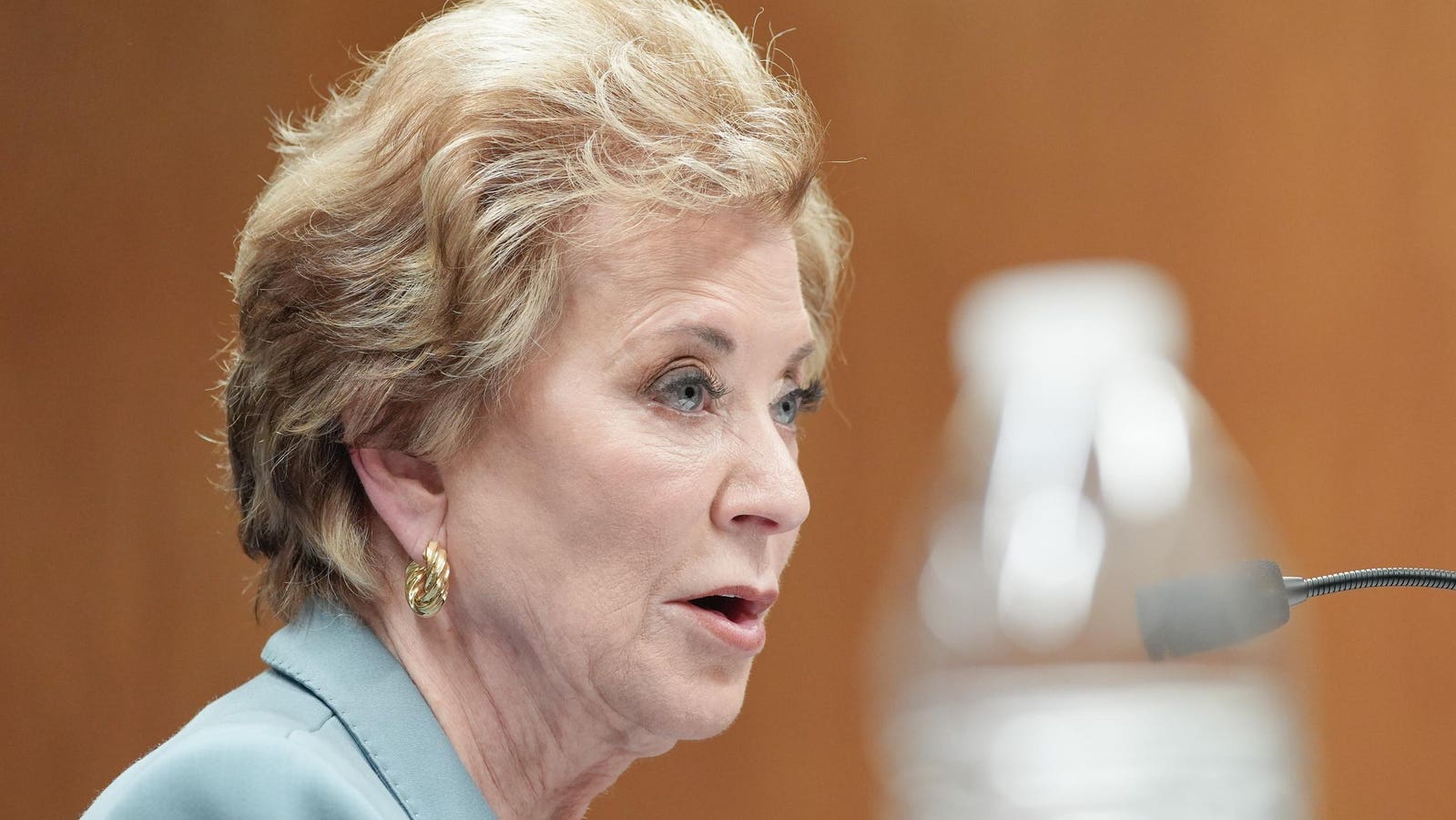
The Trump administration released major updates on a troubled student loan forgiveness “buyback” program this week. The new data, included in a court filing on Wednesday by the Education Department and Secretary of Education Linda McMahon, provides updated statistics on processing for the program as well as new insights on the ongoing backlog. But many key questions remain unanswered.
The update centers on Public Service Loan Forgiveness, or PSLF, and the associated PSLF Buyback program. PSLF allows borrowers to discharge their student loans in as little as 10 years if they work in certain public service jobs. PSLF requires 120 qualifying monthly payments, each of which must meet strict eligibility rules. Payments must be made on Direct federal student loans under certain specific qualifying repayment plans (predominantly income-driven repayment plans) while the borrower works as a full-time employee for an eligible nonprofit or public organization. PSLF Buyback gives borrowers the opportunity to potentially make a lump sum payment (or “buy back”) certain non-payment periods so that they can count toward student loan forgiveness under PSLF.
But the PSLF Buyback program has been plagued by longstanding problems including shifting rules and an ever-growing application backlog. Many student loan borrowers have reported waiting more than a year (and in some cases, more than two years) for a decision as the department slowly works through the increasing queue of applications.
The Education Department’s new PSLF Buyback data, published on Wednesday in a court-ordered status report related to ongoing litigation over processing delays associated with student loan forgiveness and repayment programs, gives borrowers and the public at large new insights on what’s going on with the program. Here’s a breakdown.
How Student Loan Forgiveness Works Under PSLF Buyback
PSLF Buyback is a relatively new program, enacted under the Biden-Harris administration, that gives borrowers a pathway to getting PSLF credit for certain periods of deferment and forbearance, during which no student loan payments are typically required. Since the PSLF program requires that borrowers make payments while officially in a repayment status under specific qualifying repayment plans (in addition to complying with other program rules), most periods of deferment and forbearance don’t count toward student loan forgiveness under the program. That includes the SAVE plan forbearance, an involuntary status that has stopped the clock on student loan forgiveness under PSLF for millions of borrowers who got caught up in the legal challenges surrounding the soon-to-be-defunct program.
“Due to changes in PSLF regulation, you can now buy back certain months in your payment history to make them qualifying payments for PSLF,” says the Education Department on its PSLF Buyback website. “Specifically, you can buy back months that don’t count as qualifying payments because you were in an ineligible deferment or forbearance status.”
The PSLF Buyback program has fairly strict rules, however. First, borrowers can only apply for buyback once they have 120 months of certified, qualifying PSLF employment. And the bought back period, if approved, must allow the borrower to reach the 120 qualifying payment threshold so that they qualify for student loan forgiveness under the program.
“The buyback opportunity is only available to you if you already have 120 months of qualifying employment and buying back months in forbearance or deferment would result in forgiveness under PSLF or Temporary Expanded PSLF (TEPSLF),” explains the department.
In addition, not all non-payment periods are eligible for PSLF Buyback. This includes in-school periods, post-graduation grace periods, default periods, bankruptcy periods, and any deferment and forbearance periods before the most recent consolidation of a borrower’s federal student loans.
To apply, borrowers must submit a formal PSLF Buyback request through the Education Department’s PSLF Reconsideration portal accessible via StudentAid.gov. It’s then in the department’s hands, and department officials must determine what the buyback amount should be (it typically would be based on what the borrower would have paid on their student loans under an income-driven repayment repayment plan for the months being bought back). If approved, borrowers would be issued a formal buyback offer and would have a 90-day window to make the payment. They then should be able to receive student loan forgiveness.
Education Department Reduces Backlog For Borrowers Applying For Student Loan Forgiveness Through PSLF Buyback
For the first time since the Education Department began publishing PSLF Buyback processing statistics more than a year ago, the application backlog for the program has gone down.
For context, the first status report the department published exactly one year ago for the month of April 2025 indicated there was a PSLF Buyback application backlog of 49,318. Since then, despite steady processing of these student loan forgiveness requests, the backlog ballooned to nearly 90,000. Even though applications are consistently being processed, and borrowers are getting their student loans forgiven through the program, the rate of incoming applications has consistently exceeded the rate of PSLF Buyback determinations, resulting in an ever-increasing queue.
But finally, the department appears to have reversed that trend. Last month, the PSLF Buyback backlog stood at 89,720. According to the latest status report filing on Wednesday, the backlog now stands at roughly 88,000. This is a marginal reduction, to be sure, but it nevertheless is a significant development, as it is the first time the PSLF Buyback backlog has gone down.
New Insights On Student Loan Forgiveness Processing Under PSLF Buyback
The main driver of the reduction in the PSLF Buyback backlog appears to be a higher rate of application processing than in prior months. According to this week’s status update, the Education Department made determinations on 6,870 requests for student loan forgiveness under the program during the month of April. In contrast, the department processed 3,280 PSLF Buyback applications during March, and 2,520 in February.
The 6,870 applications processed in April also exceed the number of incoming PSLF Buyback applications, which is another significant development and a departure from the previous pattern. The Education Department received 4,790 new applications during April. In previous months, the number of new PSLF Buyback applications has typically exceeded the number of processed applications.
But the story behind the higher rate of processing is unclear. The Education Department provided new insights and context for this higher rate of processing, and suggested that it may be due, at least in part, to the department’s new focus on eliminating duplicate PSLF Buyback requests.
“A borrower may receive a Buyback offer only once for a given loan,” said the department in this week’s court filing. “However, many borrowers have submitted multiple Buyback requests, which inflates the number of pending requests. The currently-stated figure of 88,000 pending applications includes duplicate requests.”
The Education Department indicates that there are nearly 20,000 duplicate requests for student loan forgiveness under PSLF Buyback that are currently reflected in the application backlog. Officials will now work on eliminating those duplicate requests in advance, rather than waiting for a borrower’s application for student loan forgiveness to be reviewed and approved first.
“In past months, such duplicates were resolved at the time of processing: when a borrower received a Buyback offer, ED administratively denied their remaining requests,” said the department in the status report. “Moving forward, ED plans to preemptively identify and remove duplicate requests. Removing duplicates will not alter the substantive analysis ED must conduct for each borrower, or the order in which ED processes requests. ED estimates there are 18,000-19,000 duplicates to be removed.”
Uncertainty Remains For Those Waiting On A Student Loan Forgiveness Offer Through PSLF Buyback
The Education Department did not say how many of the 6,870 PSLF Buyback applications it processed during the month of April included duplicate requests, or how many of those borrowers actually got their student loans forgiven. The department indicated it will publish additional statistics next week.
Many questions remain, however, as borrowers consistently submit new student loan forgiveness requests under PSLF Buyback. It is unclear, for instance, whether the department’s new preemptive approach to tackling duplicate PSLF Buyback applications will speed up processing or continue to reduce the backlog. And the Education Department’s recent announcement that PSLF Buyback offers cannot be based on the SAVE plan formula could mean additional work (and time) as department officials recalculate borrowers’ buyback offers based on what their payments would have been under other income-driven repayment plans. Ultimately, borrowers with student loans that are potentially eligible for a discharge and are waiting for a PSLF Buyback decision got some good news this week, but time will tell whether this is an anomaly, or the beginning of more consistent progress.
Read the full article here