




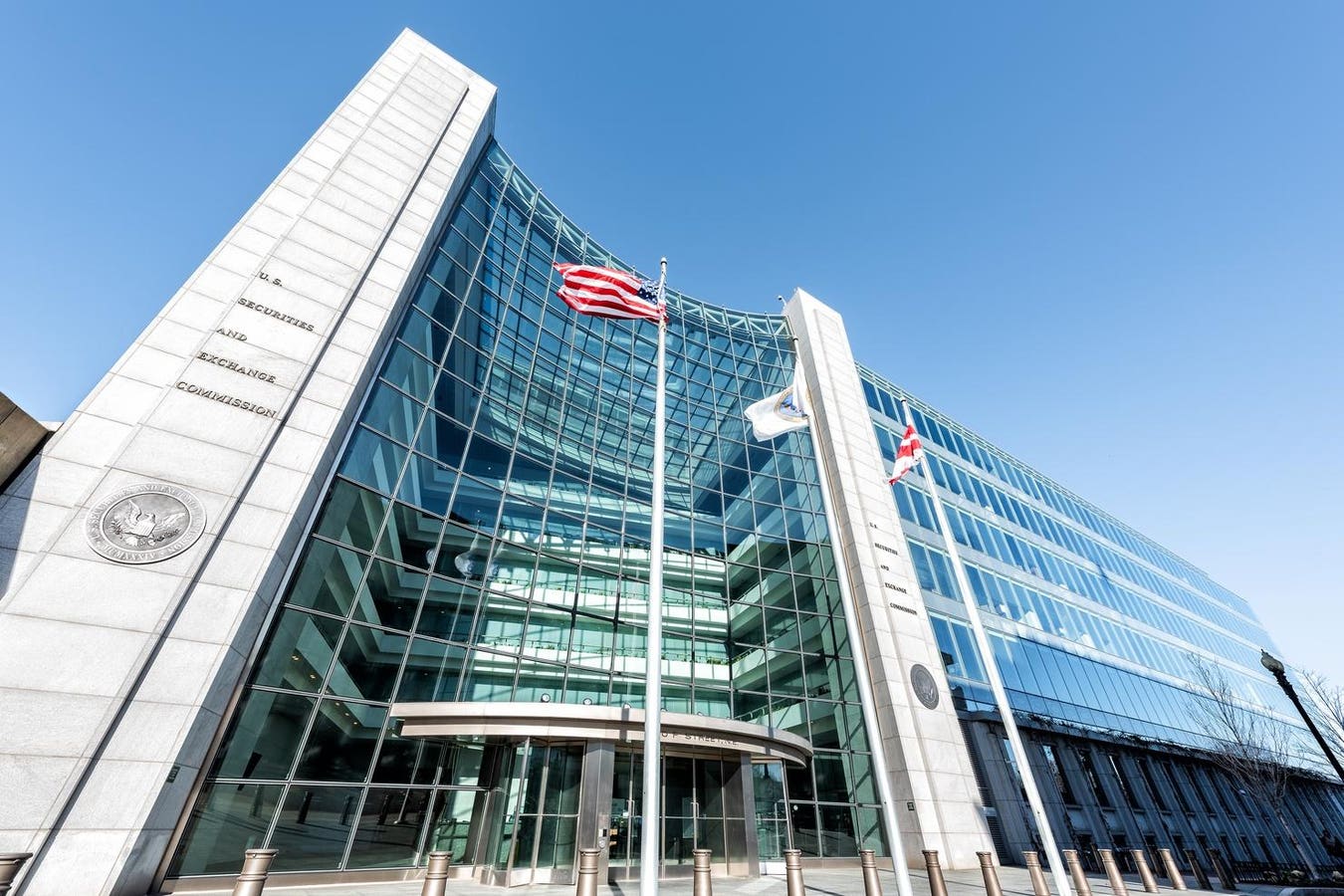
One traditional duty of the federal government is to protect investors, which means you. The protection happens through required disclosure information; limits on risky and speculative investments by people without appropriate resources; protected rights for investors; oversight of financial institutions; the ability to prosecute, fine, and jail those who break financial laws; and other mechanisms.
The Trump administration has been weakening many significant protections. The results might be advantageous to corporations, but likely not for you.
Semiannual Reporting Leaves Small Investors Partly Blind
The Securities and Exchange Commission in May proposed a change that would allow companies to return to semiannual financial filings rather than the quarterly 10-Q reports established in 1970.
“Today’s proposal is just the first step of the larger, comprehensive effort to review and reshape the current SEC rules governing public companies with respect to their ongoing reporting obligations and their ability to raise capital in the public markets,” SEC Chair Paul Atkins wrote at the time. “Over the next few months, I expect that the Commission will be considering a series of proposals that, if adopted, will not only redefine what it means to be a public company, but will make being public attractive again.”
U.K. and many European countries have allowed semiannual reporting for years, although many have continued with quarterly information to appeal to investors, especially in the U.S. And according to one tally, out of 167,802 submitted comments, 167,008, or 99.5%, opposed this.
For an analogy, if a credit card issuer sent only two statements in a year about your account — information about what has happened with something of yours — would you be comfortable?
Yes, regular reporting can be expensive. Being a public company returns much more in benefits, including easier access to capital, credibility, liquidity for shareholders, and stock-based compensation and transactions.
Pushing To Open Risky Investments For Retail Investors
In 2020, the SEC started to push for retail investors to invest in private equity. As recent history has shown, such investments are opaque (you can’t see what’s really going on), largely illiquid (you can’t easily get out if things are going badly), and you become the product (because the big money interests need your cash to help bolster things in tough times).
Dalia Blass, director of the investment management division at the SEC at the time, thought that “main street investors had been left ‘on the outside looking in’ because defined contribution pension plans [like 401(k)s] did not provide access to private investments such as private equity, hedge funds and real estate.”
The Department of Labor interpreted a May 2020 executive order of Donald Trump to mean that retirement funds could include private equity. And yet, pension plans typically need stable investment vehicles. The money absolutely must be there in future years when people retire. Otherwise, their futures have been flushed down the tubes.
A Slap In The Face
Enforcement at the SEC has slowed. “Amid workforce reductions at the SEC and a targeted reorganization of the Enforcement Division, new enforcement actions fell to 313—the lowest in a decade and down 27% from FY 2024—and the new SEC administration initiated only four actions against public companies and/or subsidiaries during FY 2025,” wrote Harris Fischman, Lorin Reisner, and Jessica Carey, partners at Paul, Weiss, Rifkind, Wharton & Garrison LLP, in an article on the Harvard Law School Forum on Corporate Governance website.
“Total monetary settlements also declined 45% to $808 million,” they continued. “However, the new leadership has indicated it will continue to pursue cases involving retail investor harm.”
Forget that, though, as Donald Trump has “pardoned an unusually high number of wealthy people accused of financial crimes, according to an NBC News analysis of the last four administrations.” More than half of 88 individual pardons in 2025 were for white-collar crimes, and full pardons can eliminate fines to the government and restitution to victims.
On January 20m, 2026, NBC News reported that with the pardons in 2025, the financial crimes pardons represented hundreds of millions in punishments that would now disappear.
Read the full article here