



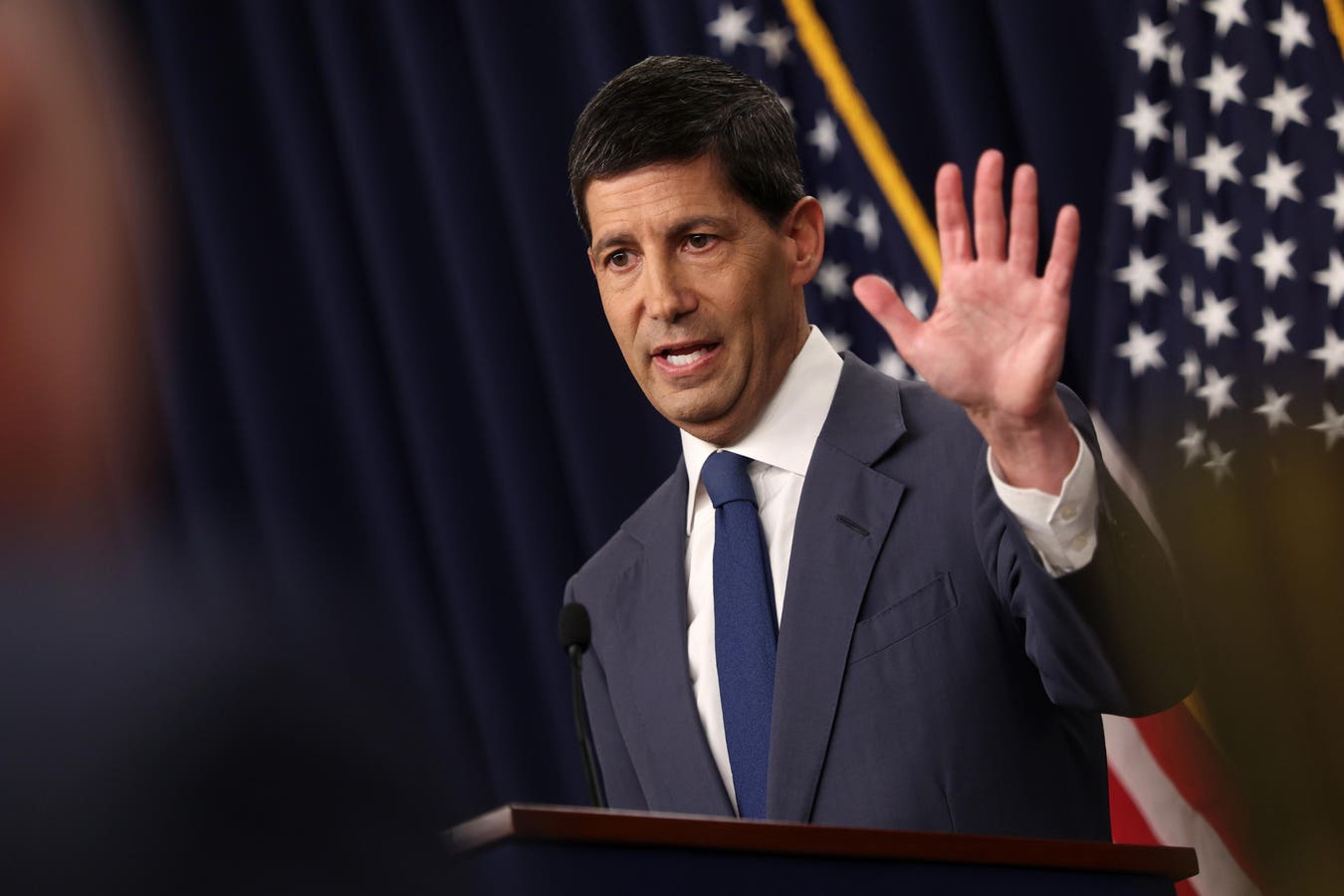
The news was supposed to be good, and to be fair, it was in a way. In other ways, not so. And Wall Street’s trust in Kevin Warsh’s position as the newest chair of the Federal Reserve is already cracking at the ages.
Reviewing June PCE Inflation
The personal consumption expenditures (PCE) price index, the inflation measure from the U.S. Bureau of Economic Analysis, was down slightly in June.
The Core (not counting food or energy) PCE index month-over-month change was 0.1% instead of the median projection of 0.2% gathered by Dow Jones. Year-over-year, it was 3.3%, down from the 3.4% in May.
Including food and energy, the PCE index month-over-month change was 0.0%, down from 0.4% in May. The year-over-year figure dropped from 4.1% to 3.7%. Not so difficult as oil and energy prices, which were inflated by the growing fiasco in the Middle East, dropped again. That is a reduction between months, going from very high to less high. Not a recovery so much as a slight reduction of ongoing accumulating financial pain for regular people.
It seems easy for government officials, people at large companies, and many media pundits to remember that long stretches of rising prices mean a new, higher, more troublesome baseline, even when the inflation rate slows.
But What Does That Mean?
To talk about inflation — how prices rise and fall — you need an ongoing way of measuring it. That has changed over time. In 2020, the Fed embraced chained inflation. Rather than measuring what a type of purchase, maybe steak, was from one month to the next, chained inflation allowed for substitutions that cut the thread of sirloin-to-sirloin comparison. Ground beef? Terrific, practically the same thing, and look at how that reduced inflation.
When people change definitions, they alter discussions and shift history. Inflation is financial history as it affects individuals, families, and businesses. Changing definitions can be a form of a lie.
All of society and the economy depend on information to make plans and to recognize where they are. The Fed and economists pushed to use the chained inflation definition. Below is a graph from the Federal Reserve Bank of St. Louis showing how the Consumer Price Index would appear from January 2000 to the present, both in the classical and chained versions.
By June 2026, the traditional version is 10.2 points higher, a difference of 5.76%. This is significant and limited by the comparisons starting in 2000. Had the data been available before, the separation might have been even more prominent, with prices appearing to grow faster.
Not that chained inflation isn’t reasonable to consider. It helps show how consumers change their behavior in the face of fiscal pressures and realities. But it wipes away the effect of those shifts. What people give up, how they might be struggling, where businesses could need to look to sustain profits. Chained inflation helps make the past invisible. The Personal Consumption Expenditures (PCE) index, the inflation measure from the U.S. Bureau of Economic Analysis, the Fed’s favored so far, is chained.
Warsh’s Data War
As the new Fed chair has stated that he wants to make changes and yet not be forthcoming about what changes that might be. Greg Ip, the chief economics commentator for The Wall Street Journal, mentioned the following on X:
“This Warsh contradiction has been nagging at me. At [the European Central Bank Forum on Central Banking in Sintra, Portugal] at the start of the month, he took comfort at the recent decline in bond yields, implying bond markets understood low inflation was on the way. Today, he took comfort at *higher* bond yields, saying they will deliver low inflation. How can this be: that lower bond yields are reasons to feel good about inflation, but higher bond yields are not a reason to feel bad about it? Without him articulating a monetary and economic framework, these statements make it feel like he’s winging it.”
Warsh wants to make changes to the data used and how it’s collected. He hasn’t said how, other than mentioning that it would include committees of appropriate members. Until people can see what is happening, until there is transparency, no individual or business can tell whether the reports of inflation will seem reasonable.
The Financial Times reported that the Bureau of Economic Analysis is reworking how it calculated prices, which is expected to lower recent PCE readings of inflation. Change the baselines and the result affects interest rate decisions of the Fed, which then goes on to make an impact on financial decisions across the globe.
Bloomberg collected some remarks from economists and financial experts showing concern about Warsh’s performance at the press conference after the latest Federal Open Market Committee meeting and decision to keep the baseline federal funds rate where it has been:
“This is one consequence of ending forward guidance, but Warsh should be careful that the tail does not wag the dog — and that the market does not push the Fed into a policy error,” wrote George Catrambone, head of fixed income at DWS Americas.
“It’s somewhat inevitable that asset prices are going to come down to bring the economy into balance. The question is whether it’s the easy way (Fed guided) or the hard way (long end driven). Yesterday suggested the tougher path is ahead,” wrote Bob Elliott, chief investment officer at Unlimited Funds.
“The Fed is not the referee in this, the referee sets the rules, enforces the rules, is an impartial arbiter and the referee doesn’t care who wins the game. The Fed cares who wins the game, the Fed has goals and objectives and the Fed is a player on the field. The rest cannot play the ball without knowing how the Fed might play the ball,” said Michael Gapen, chief US economist at Morgan Stanley.
“Increased uncertainty around the Fed’s preferred measures should increase long-dated inflation risk premium in CPI breakevens,” wrote Jason Williams, strategist at Citigroup Inc., and team.
Ultimately, without insight, the Fed could make any claims and then wait for markets and investors to take appropriate action. No one could know if they were right or not and what they should do in response.
Read the full article here