



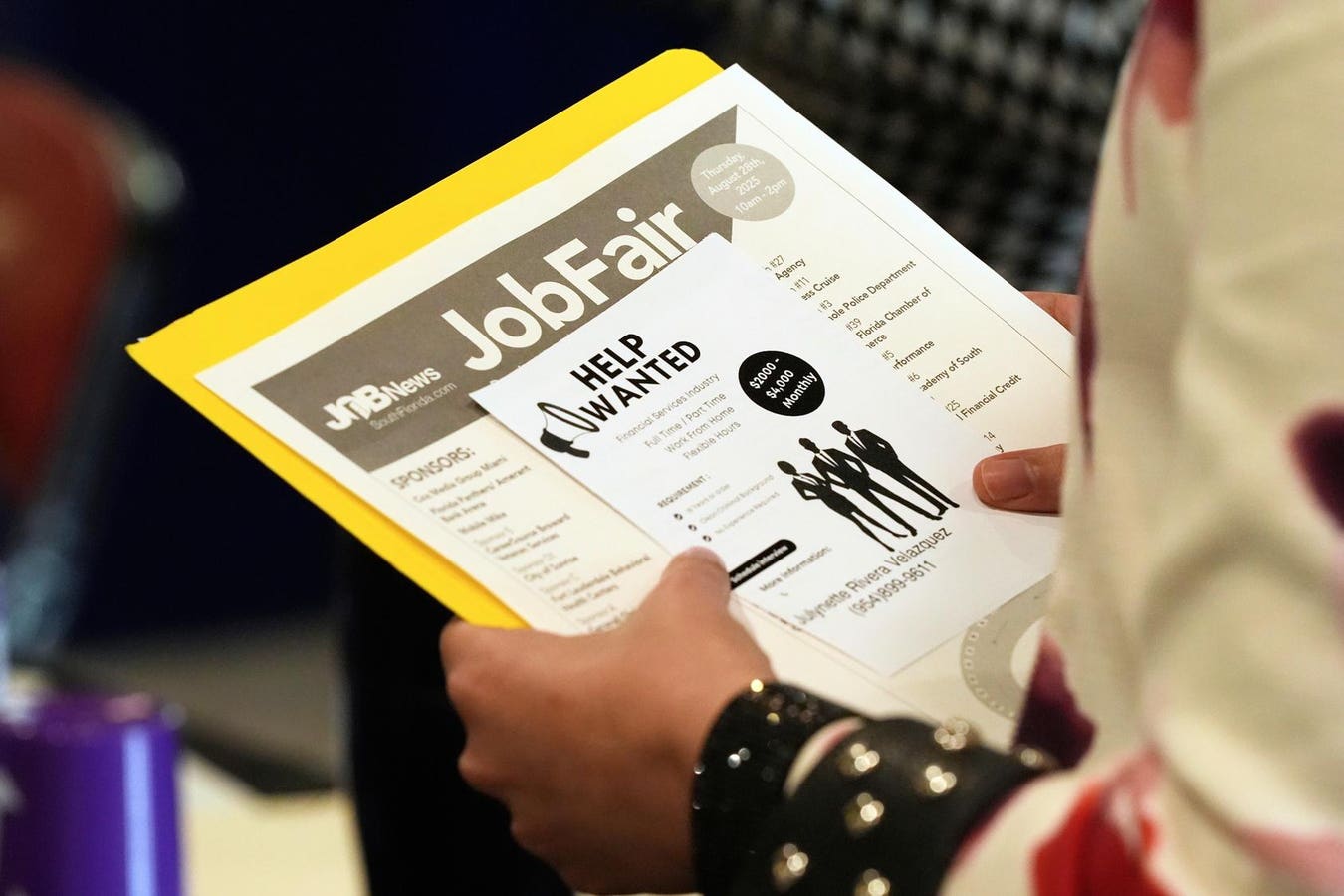
The July jobs numbers loss of 23,000 was bigger than it sounds on the surface. The Dow Jones regular poll of economists showed a median expectation of 83,000 jobs to be added. The actual result was a negative swing of 106,000 jobs. Now add in the revisions that brought the May and June numbers down by 103,000 from the previously reported numbers. (There was also the June revision of May numbers down an additional 43,000, but let’s consider that water under the bridge at this point.)
Call it a collective disappointment of 252,000 fewer jobs than expected Friday morning before the Employment Situation report. This is far from the “happy jobs” talk over the last two months when so many people assumed things were stable.
With all the uncertainty throughout the economy, what the Fed will decide is tough to guess.
Fed Interest Rates
The Federal Reserve sets the federal funds rate, which is a range of rates, the top and bottom differing by a quarter percentage point, that banks charge one another for short-term loans without collateral. Currently, it is 3.50% to 3.75%. The next time the Fed’s Federal Open Market Committee will consider a change in rates will be September 16, 2026.
As of Thursday, August 6, there was a projected 55.0% chance of a 25-percentage-point increase to a 3.75%–4.00% range and a 45.0% chance of rates staying where they were.
On Friday the 7th, after the announcement of the July jobs report, those percentages shifted, according to CME Group’s FedWatch tool, which tracks probabilities of changes to the rate based on 30-Day Fed Funds futures prices. The probability of keeping the current rate swung to 56.1%. The chance of a quarter-point increase to a higher rate range dropped to 43.9%.
FedWatch isn’t a guarantee of what will happen in the future. As this example shows, futures investing — and deductions drawn from it — can shift rapidly. Things could shift multiple ways between now and mid-September. The closer estimates get to the meeting date, the more accurate they tend to be.
The Interest Rate Fallout
The Fed, by statute, has to consider both maintaining stable prices and sustaining maximum employment, all through using tools to influence monetary policy, one of the main ones being interest rates.
If prices jump via higher inflation, then the theory is for the Fed to increase interest rates, which are seen as a baseline for many types of lending beyond inter-bank activity. That drives up the cost of buying things, and so reduces demand, which should, in basic economic theory, draw prices down. It’s treated as obvious, although we’ve seen how, depending on the drivers of inflation, higher rates might only increase inflation on even basic products like soap or toilet tissue.
On the other side of the dual mandate, if the unemployment rate is too high, then the other part of the theory is to loosen monetary policy so companies can get more access to money and expand their businesses, hiring people. Again, that didn’t work so quickly after the Great Recession. Companies sometimes expand when they think there’s an opportunity, but adding employees typically happens when there is enough business to support the hiring. If companies and businesses aren’t confident, they’re unlikely to immediately take up an opportunity to borrow money so they can spend more.
Then there is the huge ongoing economic uncertainty: tariff tussles with Mexico and Canada over Donald Trump’s rejection of the USMCA trade agreement, other tariffs that Trump is trying to introduce after many were rejected by U.S. courts, spiraling national debt, and the ongoing conflict in the Middle East and its impact on energy prices.
Atop all this, understanding the Fed and its decision-making process is becoming much harder, thanks to Fed Chair Kevin Warsh, who is putting a premium on undetailed communications and opacity.
Read the full article here