



Listen to this article
Estimated 4 minutes
The audio version of this article is generated by AI-based technology. Mispronunciations can occur. We are working with our partners to continually review and improve the results.
Rainfall over wildfires burning near Labrador West provided some much needed relief and evacuation orders were lifted for residents of Duley Lake, the Tamarack Golf Course and the Throne Lake area as of Thursday afternoon.
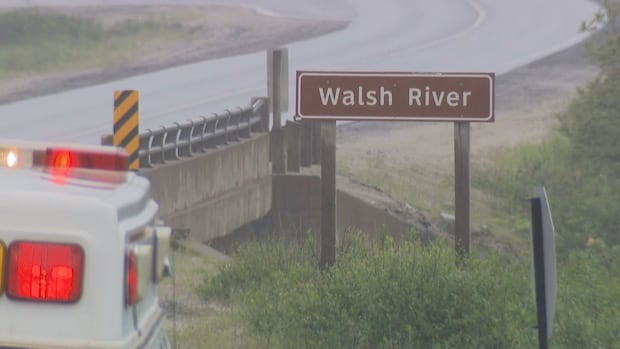
An evacuation order remains in place for Walsh River.
Earlier Thursday, Labrador City Mayor Jordan Brown told CBC News a cautious approach is being taken when it comes to the decision to lift orders.
“We want to make sure that we understand the fire’s behaviour and we’ll be able to, you know, listen to the advice from forestry and their professionals,” Brown said.
A state of emergency remains in place in Labrador City.
A social media update posted just after noon by the Department of Forestry, Agriculture and Lands said additional resources were deployed to support ground crews fighting the Walsh River fire.
Water bombers and bucketing helicopters have been deployed, along with 20 additional firefighters, according to the Town of Labrador City.
Crews are also navigating on fires in the area of Esker Road — near the Trans-Labrador Highway — and Cartwright Junction. Helicopters are also tackling fires in Labrador West at De Mille Lake and Blueberry Hill.
A Labrador-wide fire ban remains in place after it was implemented by the province on Wednesday. The ban will last until at least July 13.
The Walsh River fire remains out of control, and was listed at 682 hectares in size as of 8:30 p.m. NT Wednesday evening, according to Newfoundland and Labrador’s active wildfire dashboard. That status was the same as of 4 p.m. Thursday.
Four other wildfires continue to burn around Labrador West, with the largest burning 10 hectares in size at Swanson Lake — 16 kilometres from Wabush.
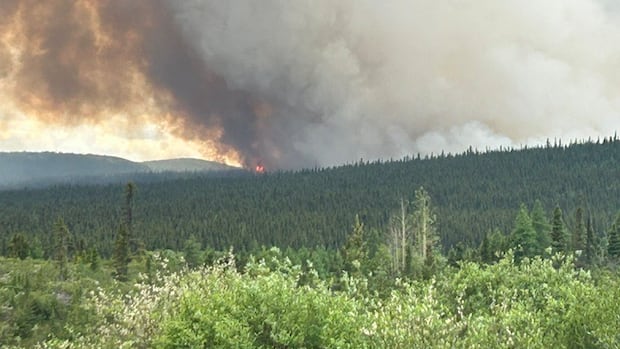
Fires continue to burn in western Labrador. Rain has provided some relief, but as the CBC’s Mark Quinn reports, many people are still on edge.
Labrador West remains under a low-fire risk as a result of rainfall on Wednesday, according to the dashboard. Parts of central and eastern Labrador are under an extreme risk.
The dashboard lists 28 active wildfires burning across Newfoundland and Labrador — 25 across Labrador and three, all deemed under control, in central Newfoundland.
Rain expected to continue
David Neil, an Environment Canada meteorologist at the Gander weather office, said there is a chance of lightning strikes in Labrador West and the Churchill Falls area on Thursday.
But cooler temperatures over the next couple of days and a chance of periods of rain could help crews continue to fight the fires. The area over the Walsh River fire saw around eight millimetres of rain overnight, according to the Town of Labrador City.
“Getting that amount of precipitation should kind of help in kind of fighting them, in ensuring that the spread isn’t too, too far,” Neil said.
“Is it going to be enough to really help kind of put them out? … some of the areas that are going to get lesser rain, probably not. But it should at least help kind of mitigate some of the spread.”
Neil said parts of eastern and central Labrador are expected to see more persistent rain in the coming days.
A yellow-level air quality warning remains in effect for the Labrador City and Wabush area as smoke from the wildfires — along with wildfires burning in Quebec — continues to hang in the air.
Download our free CBC News app to sign up for push alerts for CBC Newfoundland and Labrador. Sign up for our daily headlines newsletter here. Click here to visit our landing page.
Read the full article here